Home · Serranidae · Sixspot grouper
Sixspot grouper (Cephalopholis sexmaculata) — Serranidae

Sixspot grouper

Cephalopholis sexmaculata
Family: Serranidae

The Sixspot grouper (Cephalopholis sexmaculata) is a saltwater fish of the family Serranidae that grows up to 50 cm.

Length
50 cm
Water
Saltwater
Depth
0.0–150.0 m
Diet
Carnivore
Body shape
Torpedo-shaped
Substrate
Stone or rock
Danger
Harmless
Range
Oceania: American Samoa, Australia, Solomon Is., Sri Lanka, Taiwan/Ch Taipei, Christmas I. and others
Edibility
Rarely eaten

Want the complete picture on the Sixspot grouper?

Get the app

Description

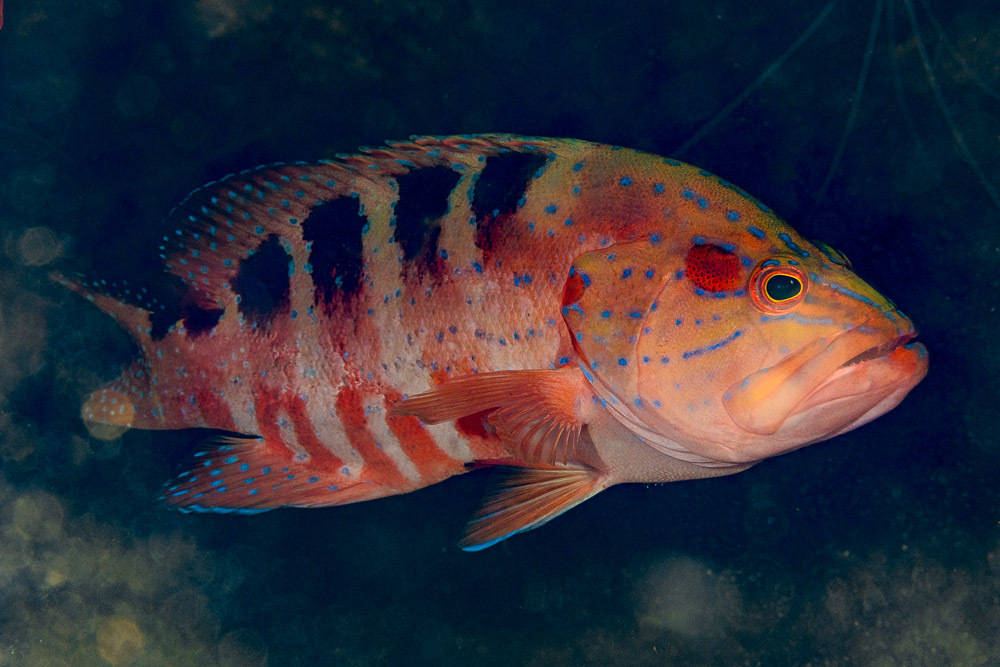
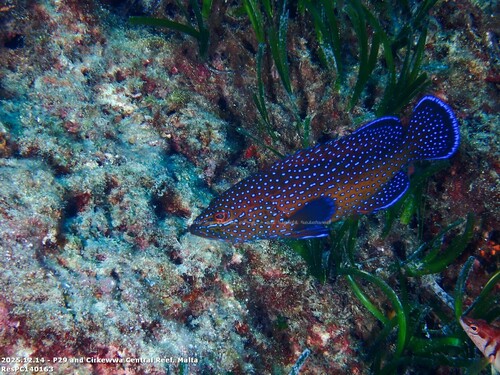
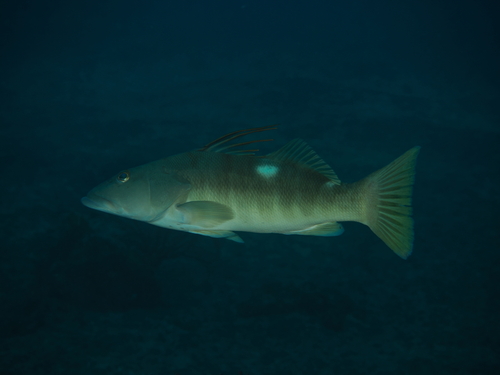
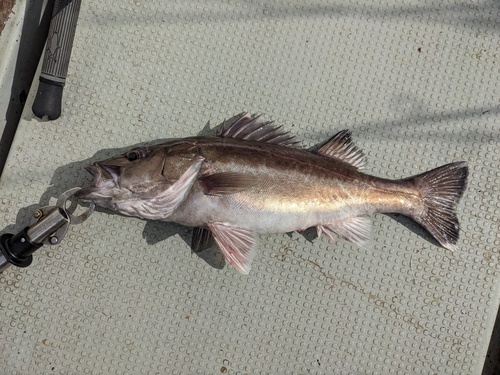
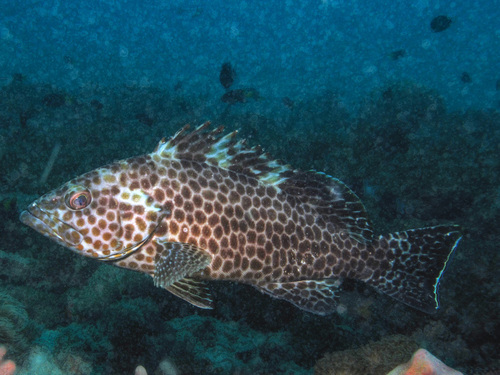
The Sixspot grouper is a grouper (Serranidae) from the Indo-Pacific. The species grows to about 50 cm. The red-orange body is scattered with blue spots and bears a few dark saddle marks; it favours caves. As a bottom-oriented ambush predator it shelters in crevices and caves of coral and rocky reefs and seizes small fish and crustaceans. Many groupers change sex. The fish is harmless to humans.

Frequently asked questions

How do you recognise the Sixspot grouper?

The Sixspot grouper has a torpedo-shaped body and is mainly red-orange.

Where does the Sixspot grouper live?

The Sixspot grouper lives in the sea (marine waters) and is mostly found around stony or rocky ground. Oceania: American Samoa, Australia, Solomon Is., Sri Lanka, Taiwan/Ch Taipei, Christmas I. and others

How big does the Sixspot grouper get?

The Sixspot grouper grows to a maximum of about 50 cm.

Is the Sixspot grouper dangerous to humans?

No, the Sixspot grouper is harmless to humans. This species is harmless to humans. No specific first aid is needed. Still handle the fish with care: mind the fin rays and the sharp edges of the gill cover, and rinse any scratch with clean water and cover it. For a dirty or deep wound check tetanus status.

Is the Sixspot grouper edible?

The Sixspot grouper is rarely eaten.

More photos

Sixspot grouper (Cephalopholis sexmaculata) — Serranidae — 2
Wikimedia Commons — Bernard DUPONT from FRANCE (CC BY-SA 2.0)
Sixspot grouper (Cephalopholis sexmaculata) — Serranidae — 3
Wikimedia Commons — Derek Keats from Johannesburg, South Africa (CC BY 2.0)
Sixspot grouper (Cephalopholis sexmaculata) — Serranidae — 4
Wikimedia Commons — Julien Bidet for MDC Seamarc (CC BY-SA 4.0)
Sixspot grouper (Cephalopholis sexmaculata) — Serranidae — 5
Wikimedia Commons — Julien Bidet for MDC Seamarc (CC BY-SA 4.0)
Fin

Want the complete picture on the Sixspot grouper?

Point your camera at the fish and Fin names the species in seconds. Free, and the Sixspot grouper is one of 12,519 species in the app.

Get the app →

All data

Identification

English name
Sixspot grouper sourced
Scientific name
Cephalopholis sexmaculata
Family
Serranidae
Other names
Freckled cod; Freckled rock cod; Freckled rock-cod; Saddled rock cod; Sixblotch hind; Sixband cod; Six-blotch rockcod; Sixspot rockcod; Cave grouper; Sea bass; Sixband rockcod; Six-banded grouper verified

Appearance

Size class
Large verified
Max length (cm)
50.0 verified
Body shape
Torpedo-shaped sourced
Dominant colour
Red / orange sourced
Tail shape
Rounded inferred

Habitat & distribution

Water type
Saltwater sourced
Substrate
Stone or rock sourced
Min depth (m)
0.0 verified
Max depth (m)
150.0 verified
Natural range
Oceania: American Samoa, Australia, Solomon Is., Sri Lanka, Taiwan/Ch Taipei, Christmas I. and others sourced
Origin
Native inferred

Behaviour & biology

Diet
Carnivore inferred
Diet (detail)
Small fishes, crustaceans and invertebrates inferred
Territorial
No inferred
Reproduction
Protogynous (female first) sourced
Sexual dimorphism
No inferred
Seasonality
Present year-round in its habitat; no pronounced seasonality known. inferred

For anglers

Edibility
Rarely eaten inferred
Fishing method
Fishing with natural bait (fish, shrimp, worm) or lures close to reef and rock structures. inferred
Regulations source
FishBase ↗ inferred

Safety

Danger to humans
Harmless verified
First aid
This species is harmless to humans. No specific first aid is needed. Still handle the fish with care: mind the fin rays and the sharp edges of the gill cover, and rinse any scratch with clean water and cover it. For a dirty or deep wound check tetanus status. verified

Status & sources

Sources
FishBase via GBIF (DwC-A), CC-BY-NC 4.0

Same genus Cephalopholis

More from the family Serranidae

Fin

Want the complete picture on the Sixspot grouper?

Point your camera at the fish and Fin names the species in seconds. Free, and the Sixspot grouper is one of 12,519 species in the app.

Get the app →
Is this the Sixspot grouper? Get the app