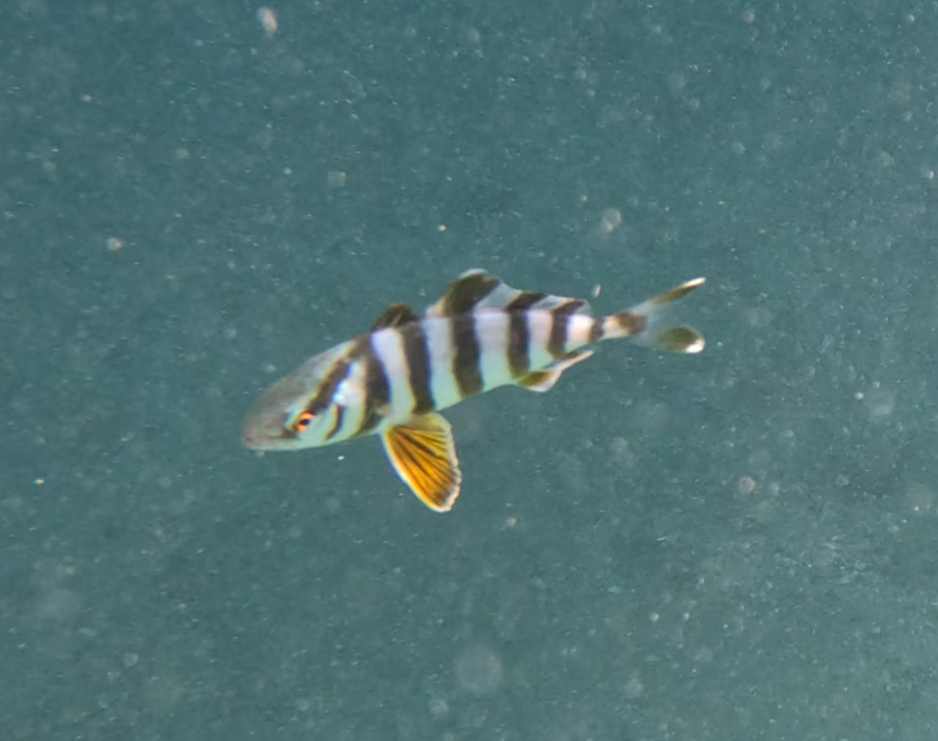
The Amberjack (Seriola zonata) is a saltwater fish of the family Carangidae that grows up to 75 cm.
Description
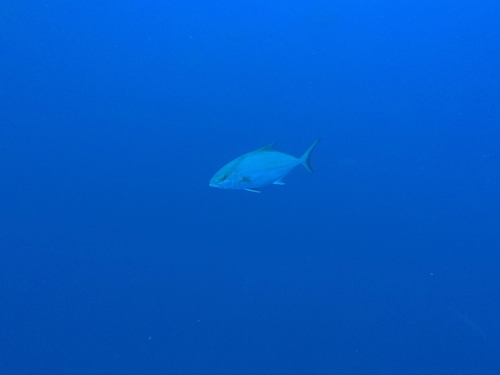
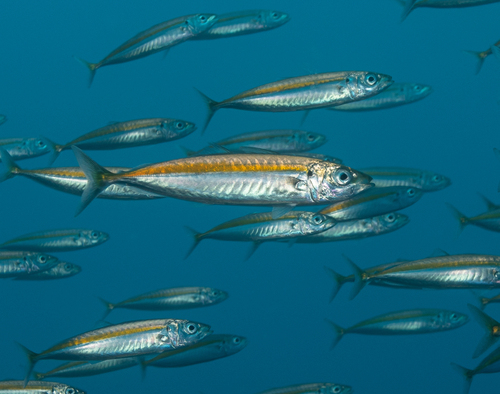
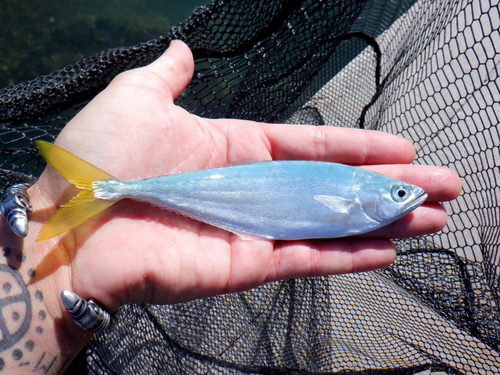
The banded rudderfish (Seriola zonata) is a streamlined predator of the family Carangidae from the western Atlantic. Juveniles bear conspicuous dark cross-bars and often accompany larger fishes or floating objects, hence the name; adults are plain silvery-grey and reach about 75 cm. Adults are pelagic or live close to the bottom and are confined to coastal waters over the continental shelf. They feed on fishes and shrimps. The species is a fast swimmer prized by anglers; it is a reasonable food fish fished locally.
Frequently asked questions
How do you recognise the Amberjack?
The Amberjack has a torpedo-shaped body, is mainly silver-grey and shows a vertical stripes pattern.
Where does the Amberjack live?
The Amberjack lives in the sea (marine waters) and is mostly found around mixed bottom.
How big does the Amberjack get?
The Amberjack grows to a maximum of about 75 cm. On average the species is around 50 cm.
Is the Amberjack dangerous to humans?
No, the Amberjack is harmless to humans.
Is the Amberjack edible?
The Amberjack is rarely eaten.
Download Fin's Fish Guide
Identify fish in seconds, log your catches and dives. Join the TestFlight beta.
All data
Identification
Appearance
Habitat & distribution
Behaviour & biology
For anglers
Safety
Status & sources
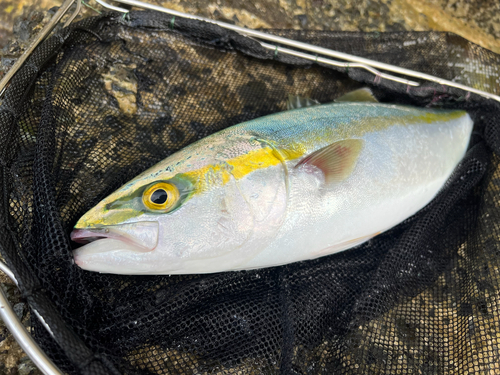
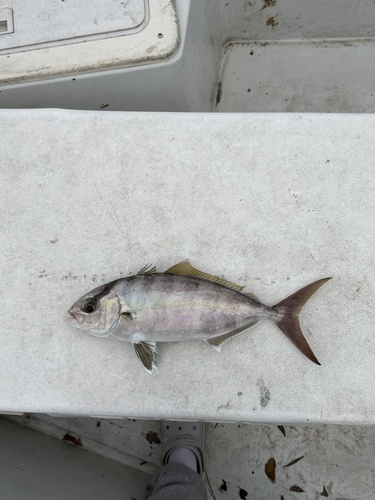
Same genus Seriola
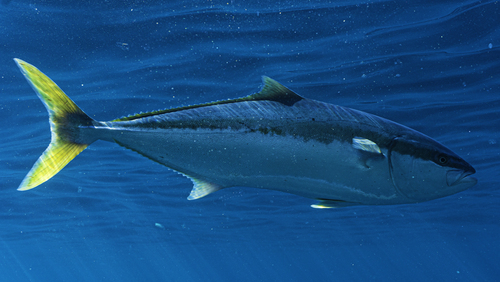
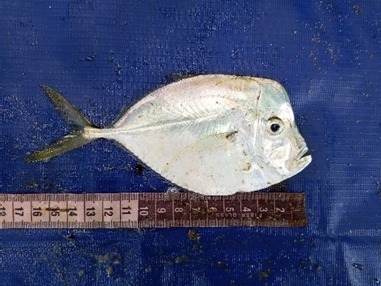
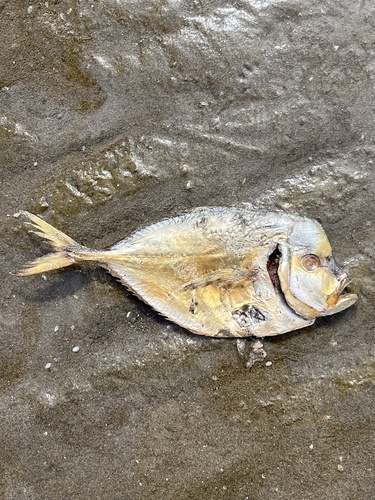
More from the family Carangidae

Download Fin's Fish Guide
Identify fish in seconds, log your catches and dives. Join the TestFlight beta.