 Fin's Fish Guide

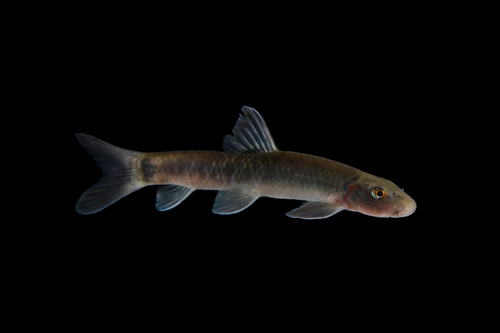
The Red-spot mudsucker (Labeo lukulae) is a freshwater fish of the family Cyprinidae that grows up to 27 cm.
Description
The Lukula labeo is an African cyprinid from the Congo basin in Central Africa. The species grows to about 27 cm and has a streamlined body with an inferior, sucker-like mouth with fleshy lips. It inhabits rivers with flowing water, where it clings to stones and scrapes algae, periphyton and detritus with its rasping suckermouth. Labeo species graze the growth in rivers and so play a role in the ecosystem. The species is eaten locally and is of limited fishery importance. The Lukula labeo is harmless to humans.
Frequently asked questions
How do you recognise the Red-spot mudsucker?
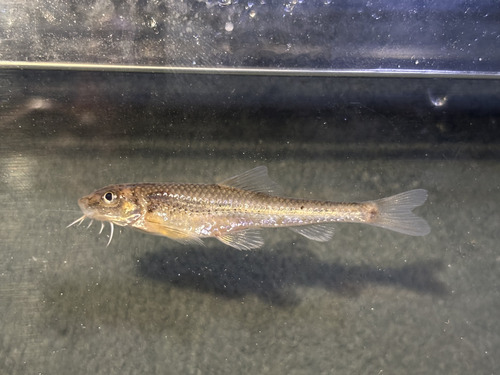
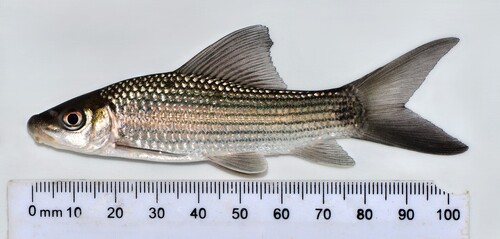
The Red-spot mudsucker has a torpedo-shaped body, is mainly silver-grey and shows a plain pattern. Inferior suction-cup mouth for scraping biofilm off stones in flowing Congo water.
Where does the Red-spot mudsucker live?
The Red-spot mudsucker lives in fresh water and is mostly found around mixed bottom. Central Africa; rivers with flowing water of the Congo basin.
How big does the Red-spot mudsucker get?
The Red-spot mudsucker grows to a maximum of about 27 cm.
Is the Red-spot mudsucker dangerous to humans?
No, the Red-spot mudsucker is harmless to humans. None required: this species is harmless to humans.
Is the Red-spot mudsucker edible?
The Red-spot mudsucker is rarely eaten.

Want the complete picture on the Red-spot mudsucker?
Point your camera at the fish and Fin names the species in seconds. Free, and the Red-spot mudsucker is one of 12,519 species in the app.
All data
Identification
Appearance
Habitat & distribution
Behaviour & biology
For anglers
Safety
Status & sources
Same genus Labeo
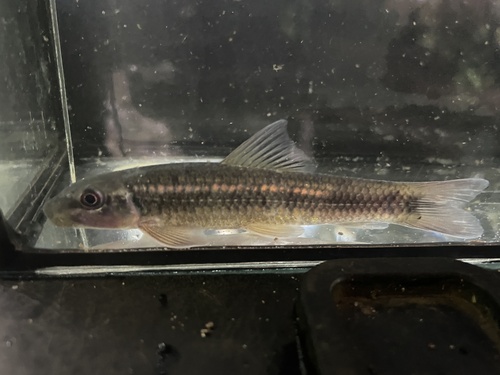
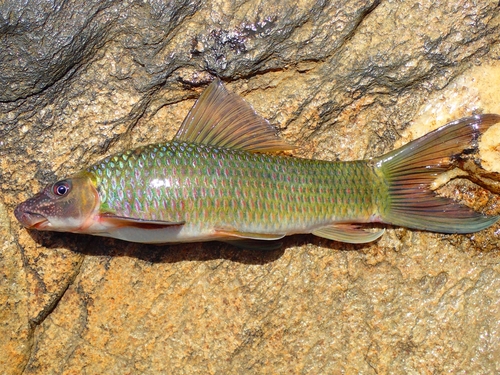
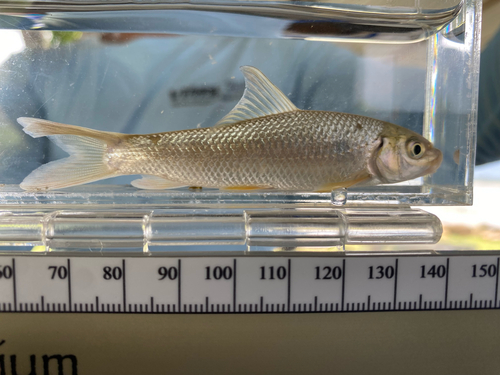

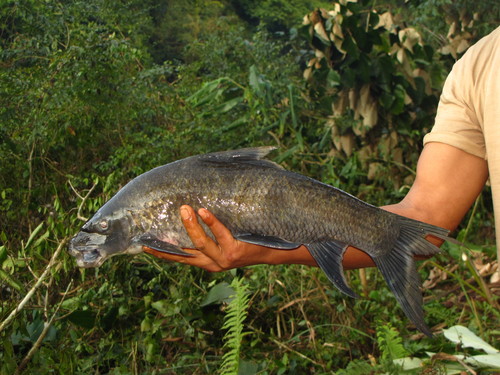
More from the family Cyprinidae



Want the complete picture on the Red-spot mudsucker?
Point your camera at the fish and Fin names the species in seconds. Free, and the Red-spot mudsucker is one of 12,519 species in the app.