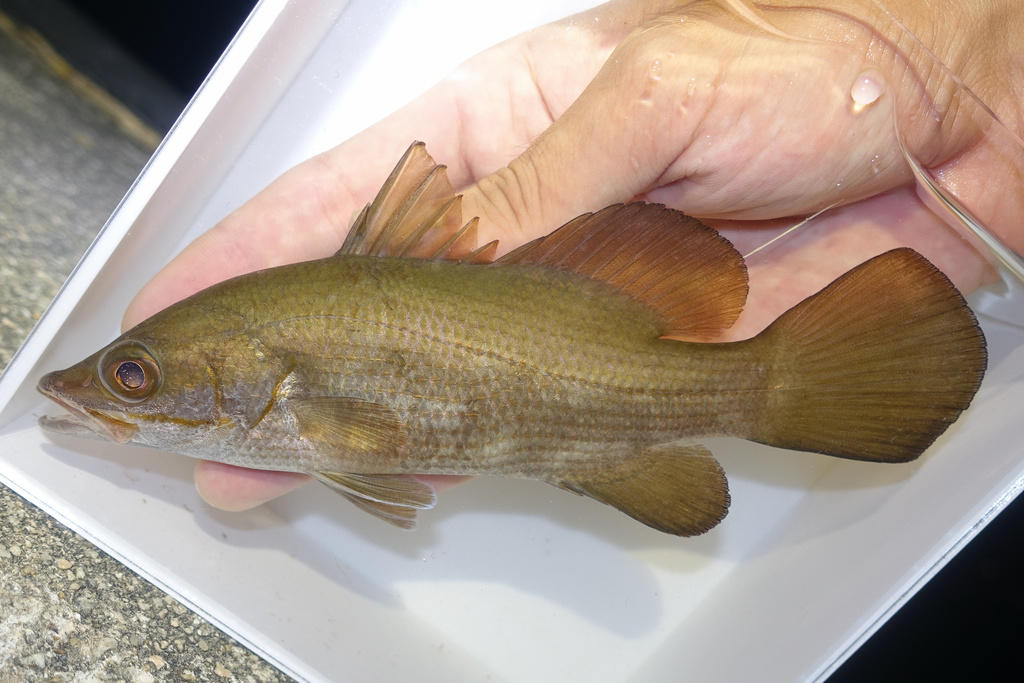
The Dwarf palmer (Psammoperca waigiensis) is a brackish-water fish of the family Latidae that grows up to 47 cm.
Description
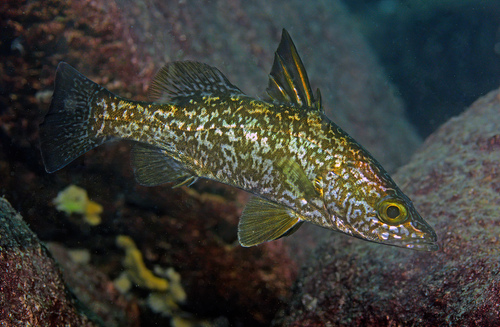
The Waigieu seaperch is a perch-like fish from the Indo-West Pacific, ranging from the Bay of Bengal through the Indo-Australian Archipelago to northern Australia, the Philippines and Japan. The species grows to about 47 cm and has a streamlined, dark brown to golden body with yellow-edged lateral-line scales. It lives on rocky and coral reefs, often in weedy zones, and shelters in holes and crevices by day. At night it hunts fish and crustaceans. It is a valued food and game fish. The IUCN has not evaluated the species (NE).
Frequently asked questions
How do you recognise the Dwarf palmer?
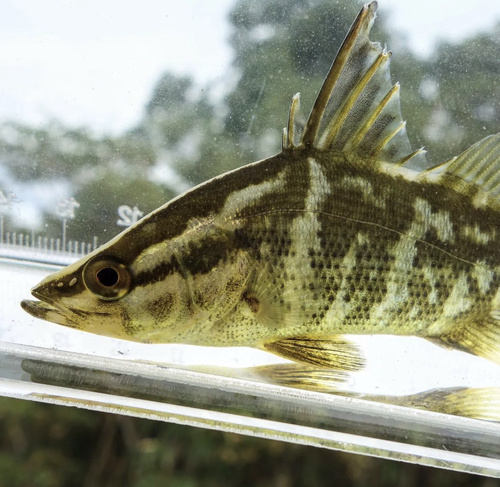
The Dwarf palmer has a torpedo-shaped body, is mainly brown and shows a plain pattern.
Where does the Dwarf palmer live?
The Dwarf palmer lives in brackish water and is mostly found around stony or rocky ground.
How big does the Dwarf palmer get?
The Dwarf palmer grows to a maximum of about 47 cm. On average the species is around 25 cm.
Is the Dwarf palmer dangerous to humans?
No, the Dwarf palmer is harmless to humans.
Is the Dwarf palmer edible?
Yes, the Dwarf palmer is commonly eaten.
Download Fin's Fish Guide
Identify fish in seconds, log your catches and dives. Join the TestFlight beta.
All data
Identification
Appearance
Habitat & distribution
Behaviour & biology
For anglers
Safety
Status & sources
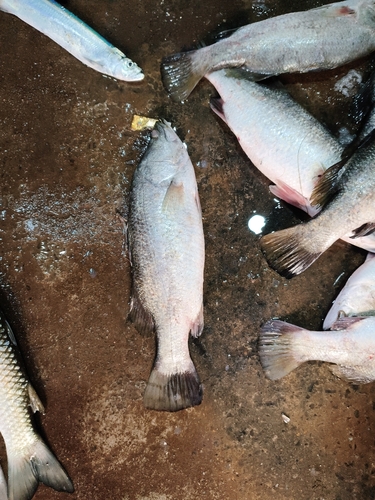
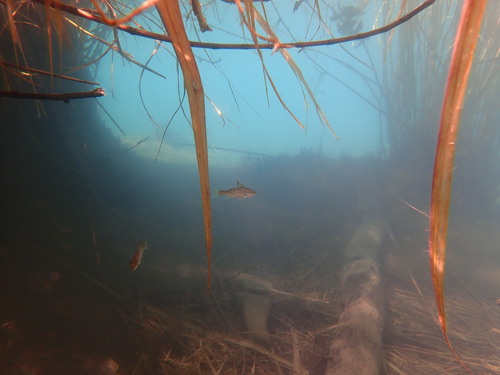
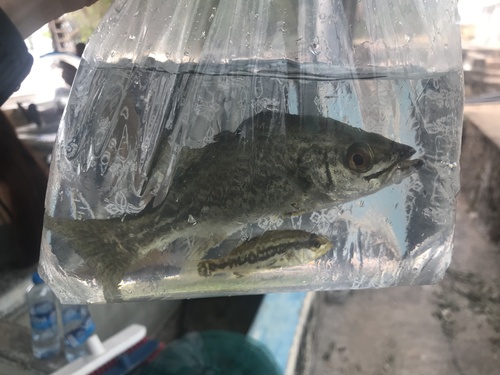
More from the family Latidae

Download Fin's Fish Guide
Identify fish in seconds, log your catches and dives. Join the TestFlight beta.