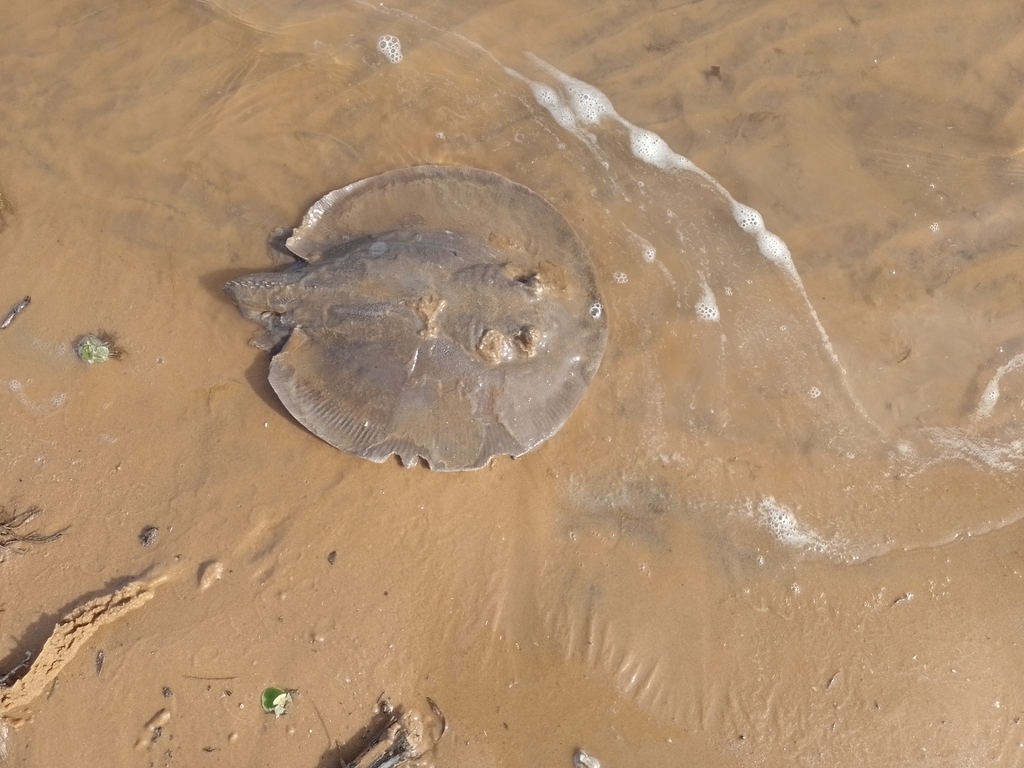
The Porcupine river stingray (Potamotrygon hystrix) is a freshwater fish of the family Potamotrygonidae that grows up to 40 cm.
Description
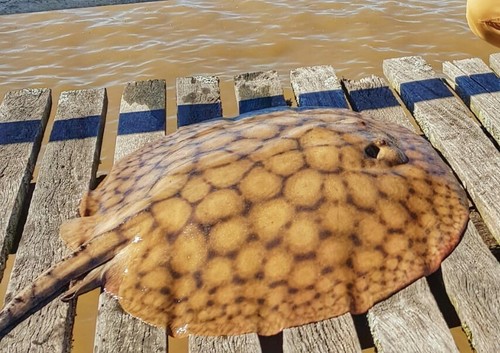
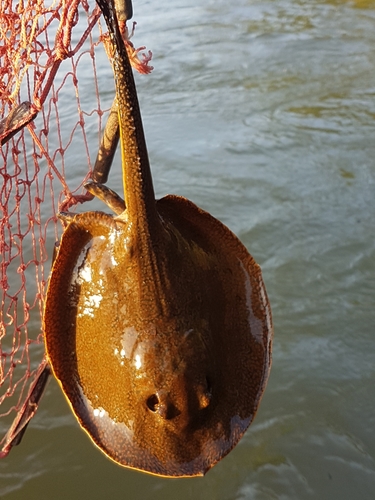
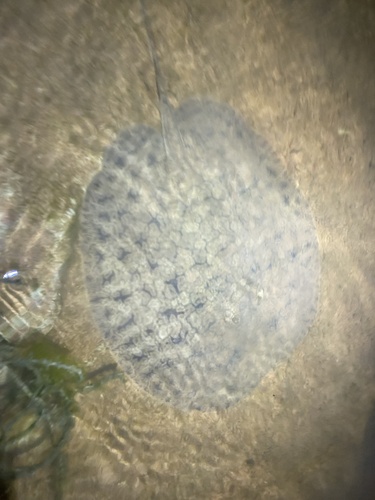
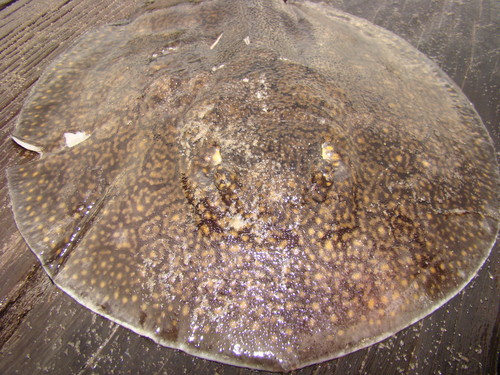
The porcupine river stingray (Potamotrygon hystrix) is a stingray of the family Potamotrygonidae from rivers of South America, including the Paraná-Paraguay basin. The species has a round, flattened, brownish pectoral disc with paler spots, providing camouflage on sand and mud bottoms, and a width of about 40 cm. On the tail it bears one or more venomous spines. It often lies half-buried in wait and feeds on bottom invertebrates, mollusks, crustaceans and small fishes. The species is ovoviviparous. Although not aggressive, stepping on a buried ray can cause a very painful, venomous sting.
Frequently asked questions
How do you recognise the Porcupine river stingray?
The Porcupine river stingray has an irregular in shape body, is mainly brown and shows a spots pattern.
Where does the Porcupine river stingray live?
The Porcupine river stingray lives in fresh water and is mostly found around sand or mud bottom.
How big does the Porcupine river stingray get?
The Porcupine river stingray grows to a maximum of about 40 cm.
Is the Porcupine river stingray dangerous to humans?
The Porcupine river stingray is venomous — handle spines with care and seek medical help after a sting if needed.
Is the Porcupine river stingray edible?
The Porcupine river stingray is rarely eaten.
Download Fin's Fish Guide
Identify fish in seconds, log your catches and dives. Join the TestFlight beta.
All data
Identification
Appearance
Habitat & distribution
Behaviour & biology
Safety
Status & sources
Same genus Potamotrygon
More from the family Potamotrygonidae
Download Fin's Fish Guide
Identify fish in seconds, log your catches and dives. Join the TestFlight beta.