 Fin's Fish Guide
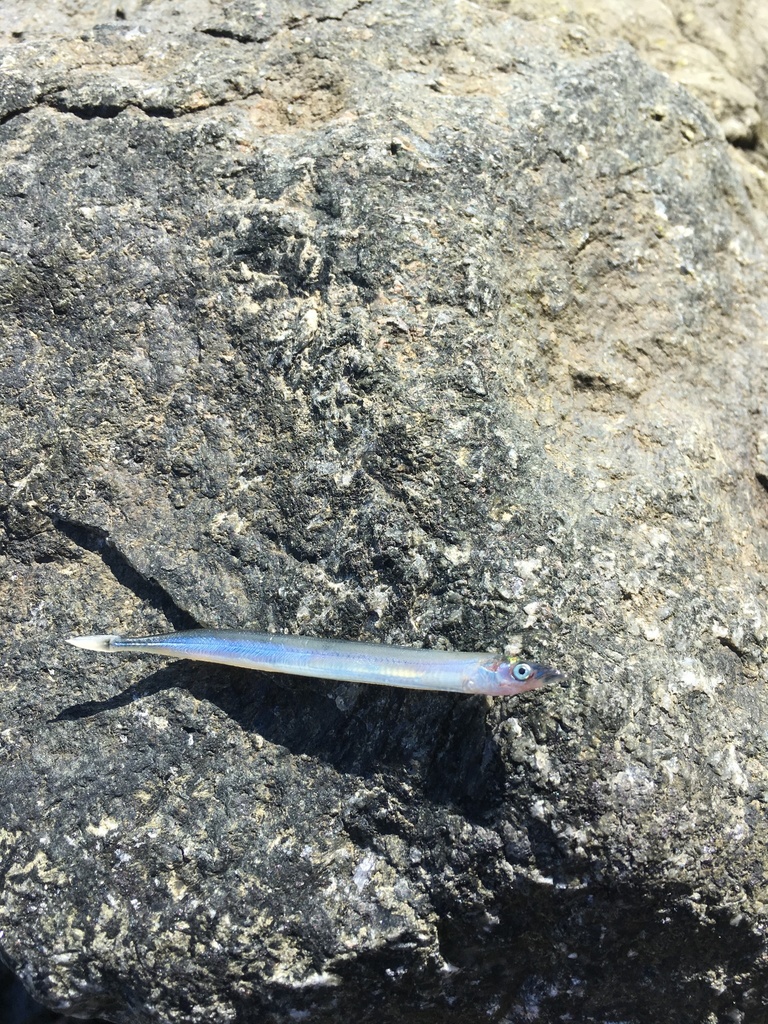
The Pacific sand lance (Ammodytes hexapterus) is a brackish-water fish of the family Ammodytidae that grows up to 30 cm.
Description
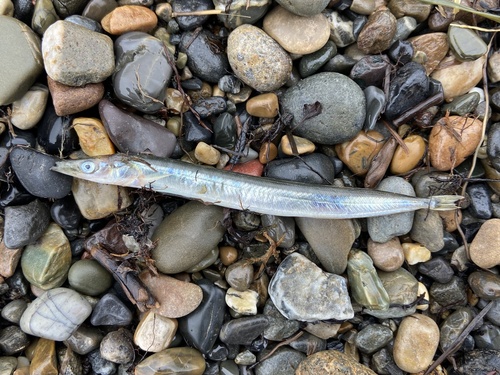
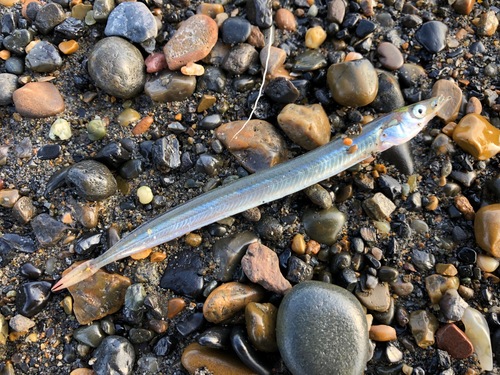
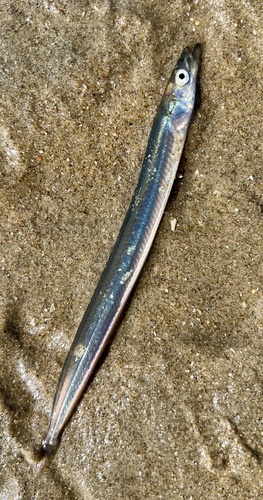
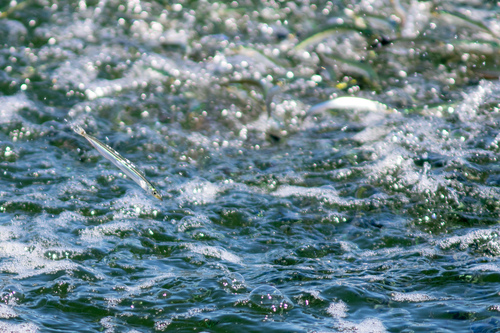
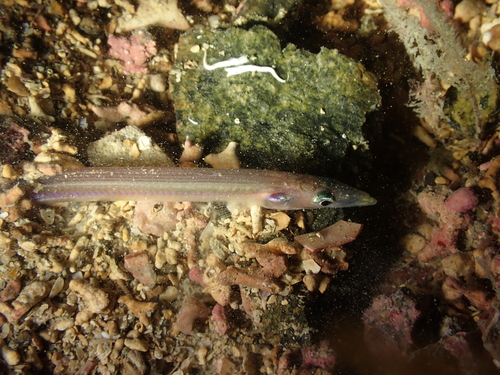
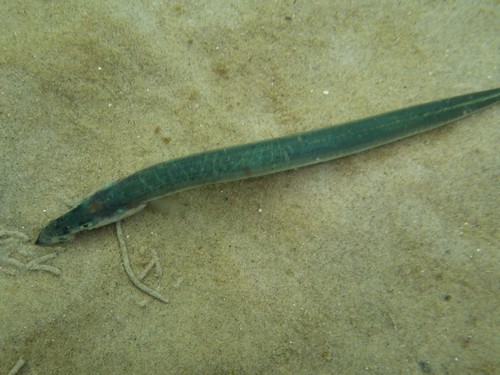
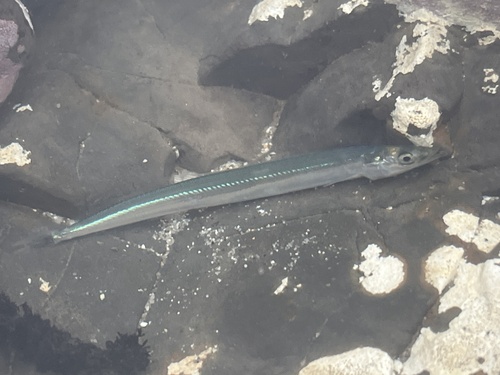
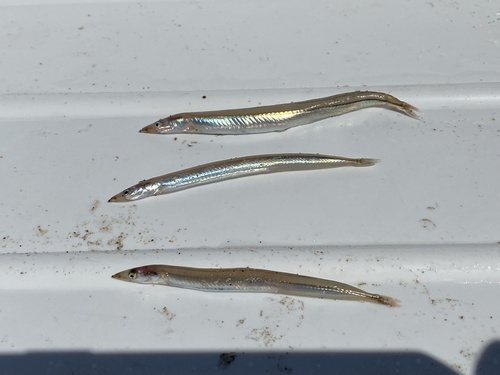
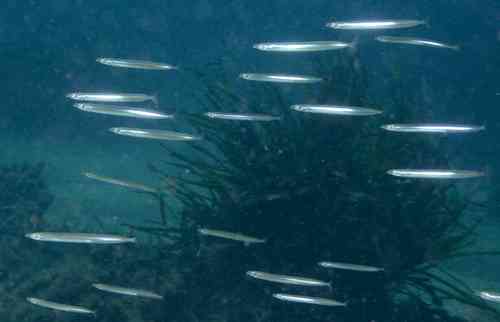
The Pacific sand lance is a slender marine fish of the sand lance family (Ammodytidae) from the northern Pacific. The species grows to about 30 cm and has a strongly elongate, silvery body with a pointed snout. It can burrow into sandy bottoms extremely fast to escape predators, but also forms large schools near the surface, both inshore and offshore. The fish feeds on zooplankton. As an abundant prey fish the sand lance is of great importance to seabirds, marine mammals and larger fishes. It is also commercially fished and is harmless to humans.
Frequently asked questions
How do you recognise the Pacific sand lance?
The Pacific sand lance has an elongate, eel-like body, is mainly silver-grey and shows a plain pattern. Buries itself in sand extremely quickly; numerous prey fish for seabirds and marine mammals.
Where does the Pacific sand lance live?
The Pacific sand lance lives in brackish water and is mostly found around mixed bottom. North Pacific; coastal and open waters above sandy bottoms.
How big does the Pacific sand lance get?
The Pacific sand lance grows to a maximum of about 30 cm. On average the species is around 17 cm.
Is the Pacific sand lance dangerous to humans?
No, the Pacific sand lance is harmless to humans. None required: this species is harmless to humans.
Is the Pacific sand lance edible?
Yes, the Pacific sand lance is commonly eaten.
More photos

Want the complete picture on the Pacific sand lance?
Point your camera at the fish and Fin names the species in seconds. Free, and the Pacific sand lance is one of 12,519 species in the app.
All data
Identification
Appearance
Habitat & distribution
Behaviour & biology
For anglers
Safety
Status & sources
Same genus Ammodytes
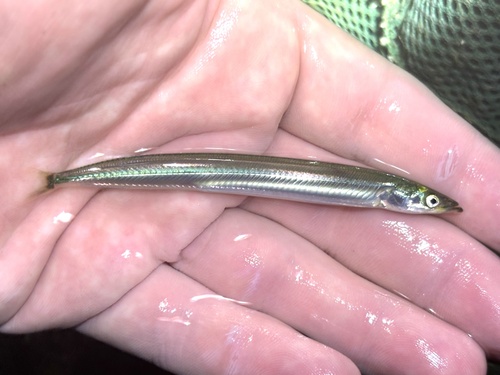
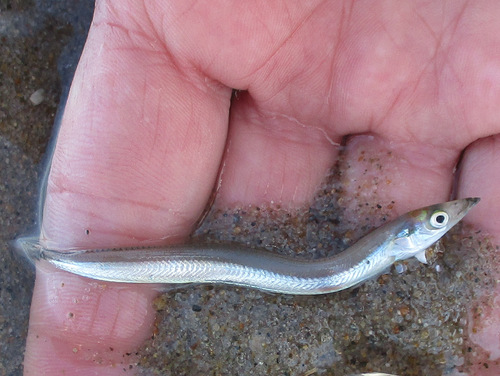
More from the family Ammodytidae
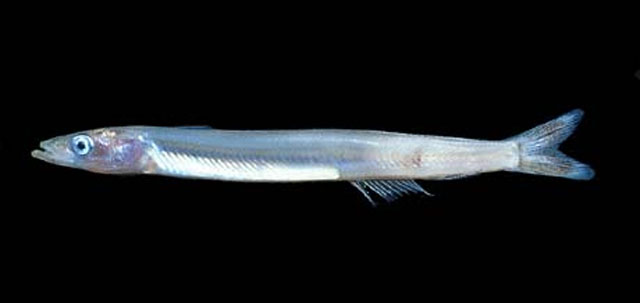

Want the complete picture on the Pacific sand lance?
Point your camera at the fish and Fin names the species in seconds. Free, and the Pacific sand lance is one of 12,519 species in the app.