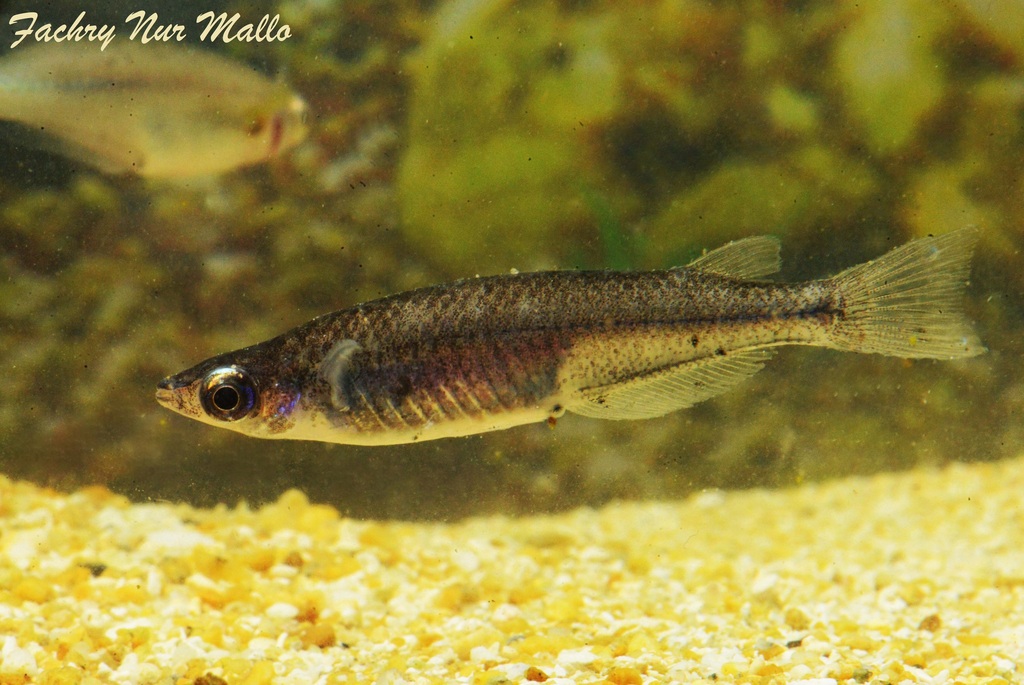
The Black medaka (Oryzias nigrimas) is a freshwater fish of the family Adrianichthyidae that grows up to 5 cm.
Description
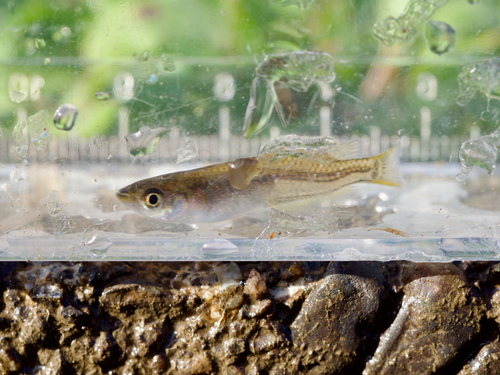
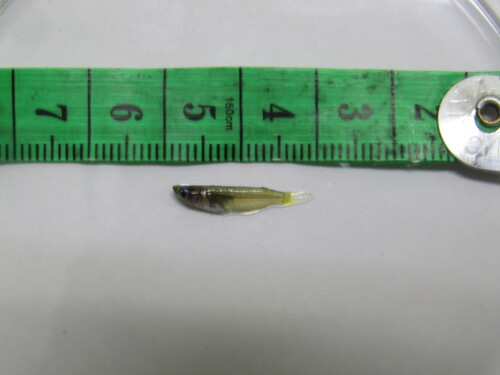
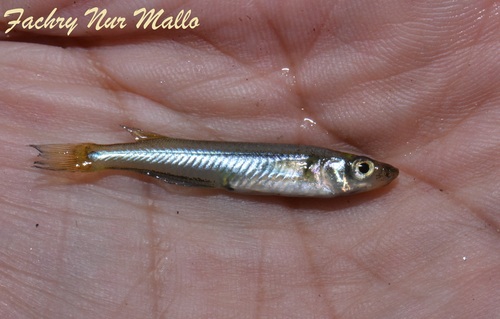
The black medaka is a small ricefish (Adrianichthyidae) endemic to Lake Poso on Sulawesi in Indonesia. The species grows to about 5 cm and has a slender body that in adults is strikingly dark to black. It lives in schools near the surface of the clear lake and eats small zooplankton, insects and larvae. The female carries the eggs for a time as a cluster at the belly. Through introduced species the Lake Poso ricefishes are under pressure. The fish is harmless to humans.
Frequently asked questions
How do you recognise the Black medaka?
The Black medaka has an elongate, eel-like body and is mainly black.
Where does the Black medaka live?
The Black medaka lives in fresh water and is mostly found around mixed bottom.
How big does the Black medaka get?
The Black medaka grows to a maximum of about 5 cm.
Is the Black medaka dangerous to humans?
No, the Black medaka is harmless to humans.
Is the Black medaka edible?
Yes, the Black medaka is commonly eaten.
Download Fin's Fish Guide
Identify fish in seconds, log your catches and dives. Join the TestFlight beta.
All data
Identification
Appearance
Habitat & distribution
Behaviour & biology
For anglers
Safety
Status & sources
Same genus Oryzias
More from the family Adrianichthyidae
Download Fin's Fish Guide
Identify fish in seconds, log your catches and dives. Join the TestFlight beta.