 Fin's Fish Guide
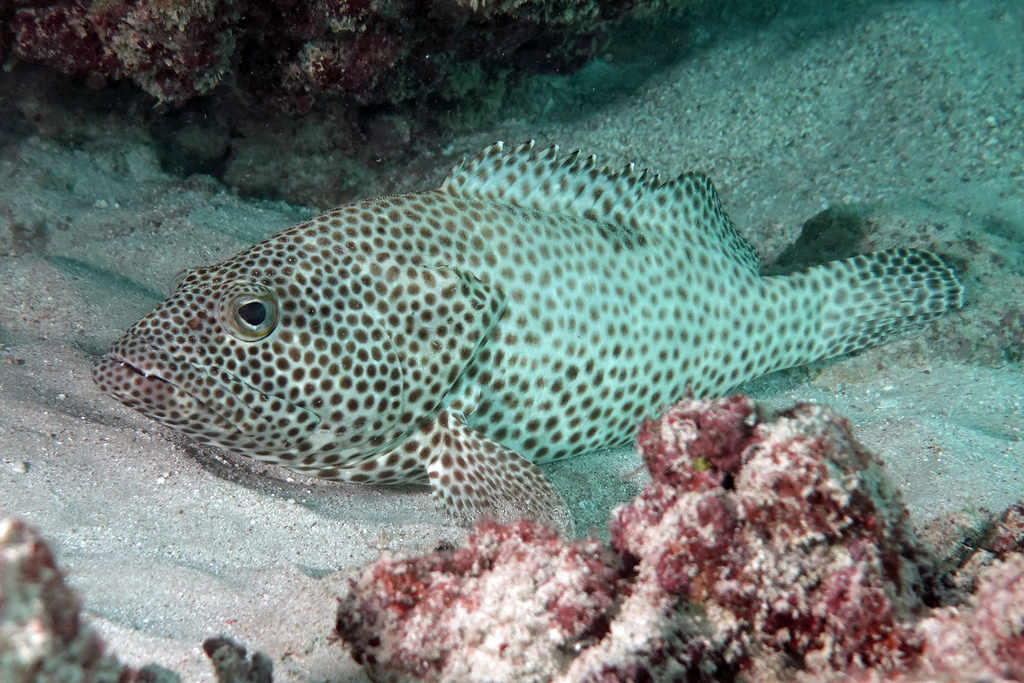
The One-blotch grouper (Epinephelus melanostigma) is a saltwater fish of the family Serranidae that grows up to 55 cm.
Oceania: American Samoa, Australia, Solomon Is., Taiwan/Ch Taipei, Mayotte, Cook Is. and others
Description
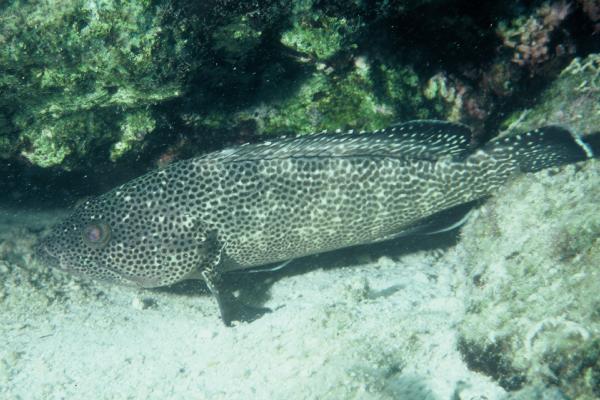
The One-blotch grouper is a grouper (Epinephelidae) from reef water of the Indo-West Pacific. The species grows to about 40 cm and has a robust, brown with fine spots and a dark blotch under the dorsal fin body with a large mouth. As a bottom-oriented ambush hunter it shelters among rocks and coral and engulfs fish and crustaceans with a sudden suction strike. Like many groupers a female changes sex on loss of the male. The fish is harmless to humans.
Frequently asked questions
How do you recognise the One-blotch grouper?
The One-blotch grouper has a torpedo-shaped body and is mainly brown. Note: in tropical areas this species can cause ciguatera poisoning when eaten; large specimens of coral reef predators can accumulate the toxin. Eat with care or avoid in risk areas.
Where does the One-blotch grouper live?
The One-blotch grouper lives in the sea (marine waters) and is mostly found around stony or rocky ground. Oceania: American Samoa, Australia, Solomon Is., Taiwan/Ch Taipei, Mayotte, Cook Is. and others
How big does the One-blotch grouper get?
The One-blotch grouper grows to a maximum of about 55 cm. On average the species is around 25 cm.
Is the One-blotch grouper dangerous to humans?
No, the One-blotch grouper is harmless to humans. This species is harmless to humans. No specific first aid is needed. Still handle the fish with care: mind the fin rays and the sharp edges of the gill cover, and rinse any scratch with clean water and cover it. For a dirty or deep wound check tetanus status.
Is the One-blotch grouper edible?
The One-blotch grouper is rarely eaten.

Want the complete picture on the One-blotch grouper?
Point your camera at the fish and Fin names the species in seconds. Free, and the One-blotch grouper is one of 12,519 species in the app.
All data
Identification
Appearance
Habitat & distribution
Behaviour & biology
For anglers
Safety
Status & sources
Same genus Epinephelus


More from the family Serranidae



Want the complete picture on the One-blotch grouper?
Point your camera at the fish and Fin names the species in seconds. Free, and the One-blotch grouper is one of 12,519 species in the app.