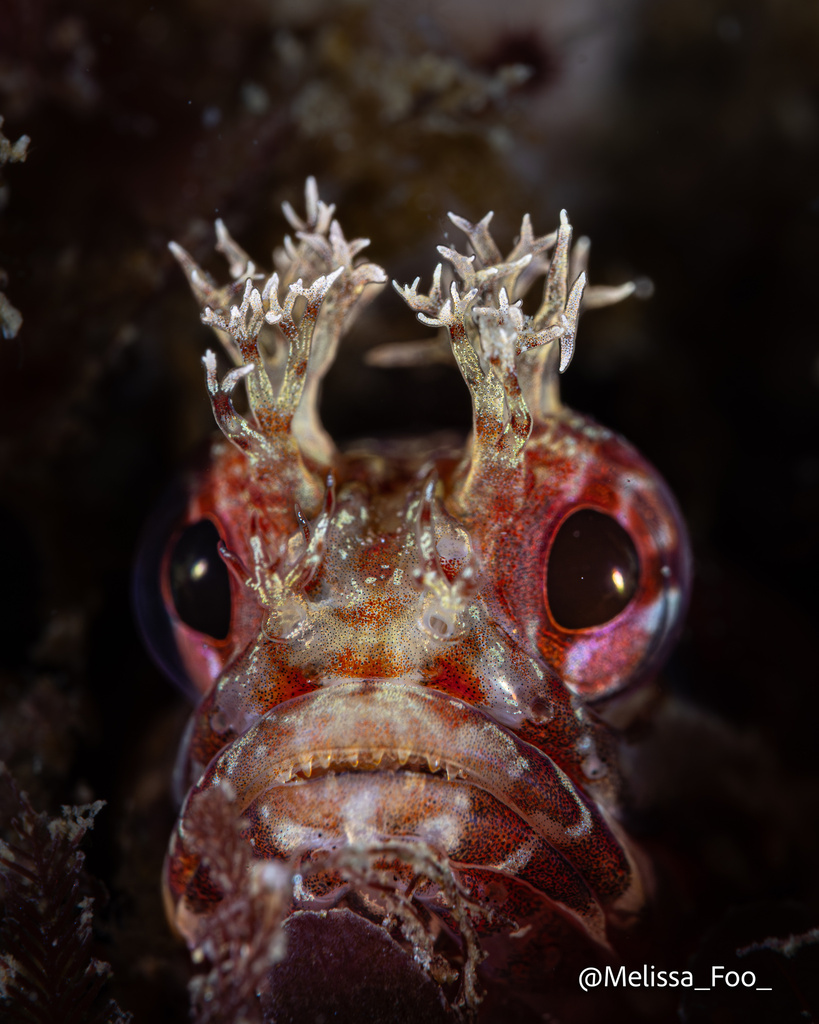
The Yellowfin fringehead (Neoclinus stephensae) is a saltwater fish of the family Chaenopsidae that grows up to 10 cm.
Description
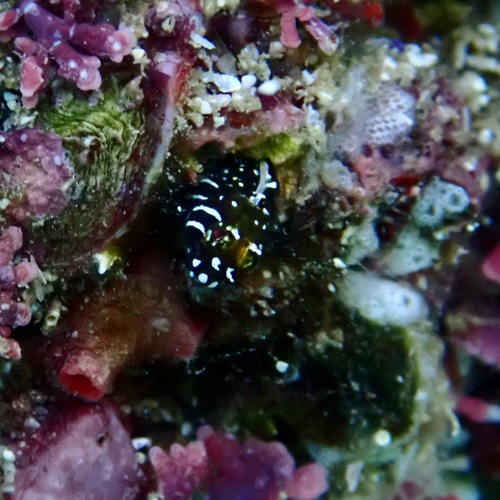
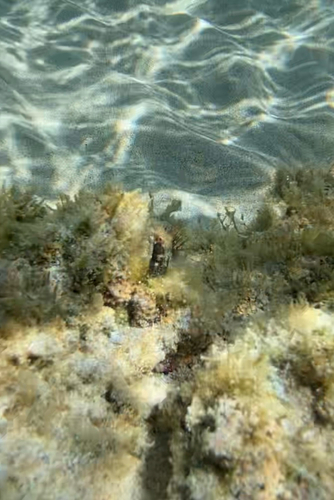
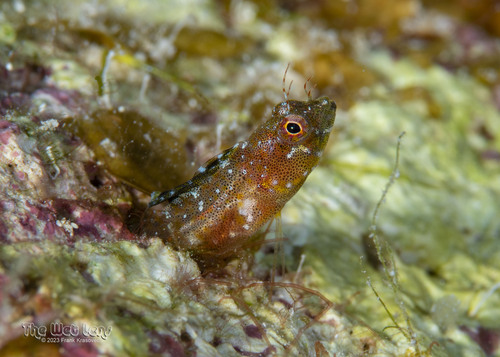
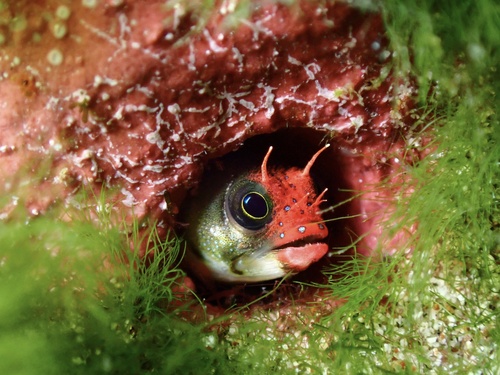
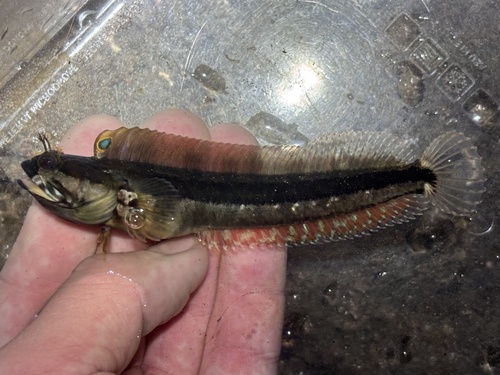
The yellowfin fringehead is a small blenny-like fish from the eastern Pacific, ranging from Monterey Bay in California to central Baja California. The species grows to about 10 cm and has an elongate body with a strikingly large mouth and fringe-like head cirri. It lives among rocks and in bays near jetties, often hidden in empty shells and holes, from which it seizes prey. The fish feeds on small invertebrates and is harmless to humans. The IUCN assesses the species as Least Concern (LC).
Frequently asked questions
How do you recognise the Yellowfin fringehead?
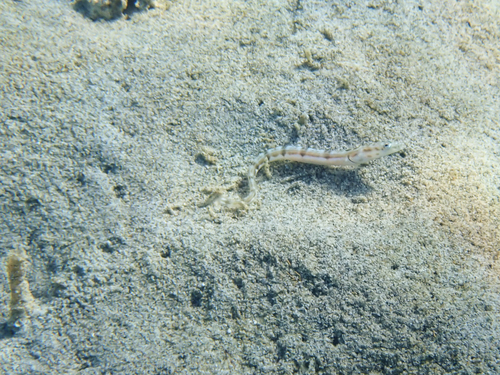
The Yellowfin fringehead has an elongate, eel-like body, is mainly brown and shows a marbled pattern.
Where does the Yellowfin fringehead live?
The Yellowfin fringehead lives in the sea (marine waters) and is mostly found around sand or mud bottom.
How big does the Yellowfin fringehead get?
The Yellowfin fringehead grows to a maximum of about 10 cm.
Is the Yellowfin fringehead dangerous to humans?
No, the Yellowfin fringehead is harmless to humans.
Is the Yellowfin fringehead edible?
The Yellowfin fringehead is not usually eaten.
Download Fin's Fish Guide
Identify fish in seconds, log your catches and dives. Join the TestFlight beta.
All data
Identification
Appearance
Habitat & distribution
Behaviour & biology
For anglers
Safety
Status & sources
Same genus Neoclinus
More from the family Chaenopsidae

Download Fin's Fish Guide
Identify fish in seconds, log your catches and dives. Join the TestFlight beta.