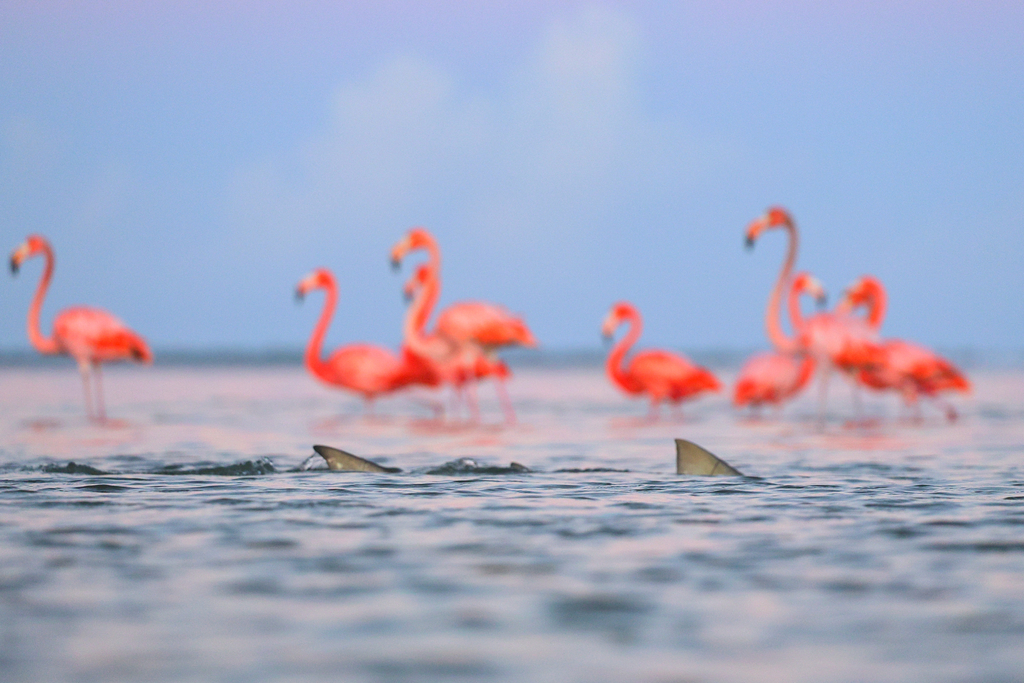
The Lemon shark (Negaprion brevirostris) is a brackish-water fish of the family Carcharhinidae that grows up to 340 cm.
Description
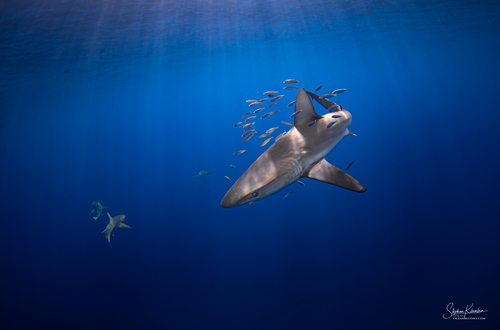
The lemon shark is a robust predatory shark of the family Carcharhinidae from the western Atlantic and parts of the eastern Pacific. The species owes its name to its yellow-brown colour, which serves as camouflage over sandy bottoms, and has two nearly equal-sized dorsal fins. It reaches about 3.4 m and inhabits coastal waters, mangroves, bays and river mouths; it can even enter fresh water. The fish is viviparous and feeds mainly on fishes, supplemented with crustaceans and molluscs. The species is vulnerable to fishing and has been involved in a few incidents with people.
Frequently asked questions
How do you recognise the Lemon shark?
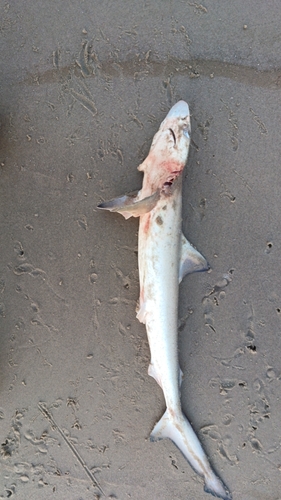
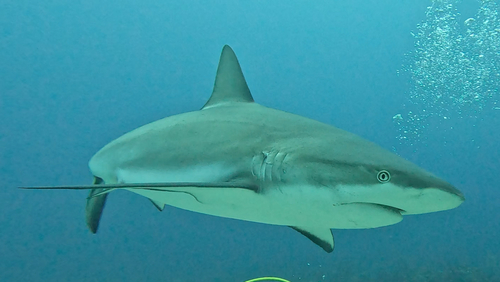
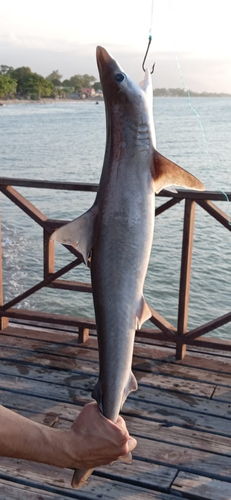
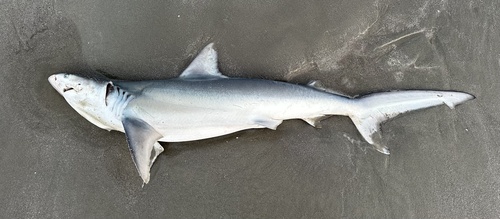
The Lemon shark has a torpedo-shaped body, is mainly yellow-gold and shows a plain pattern.
Where does the Lemon shark live?
The Lemon shark lives in brackish water and is mostly found around stony or rocky ground.
How big does the Lemon shark get?
The Lemon shark grows to a maximum of about 340 cm. On average the species is around 240 cm.
Is the Lemon shark dangerous to humans?
The Lemon shark can bite, but is otherwise not dangerous to humans.
Is the Lemon shark edible?
Yes, the Lemon shark is commonly eaten.
Download Fin's Fish Guide
Identify fish in seconds, log your catches and dives. Join the TestFlight beta.
All data
Identification
Appearance
Habitat & distribution
Behaviour & biology
For anglers
Safety
Status & sources
Same genus Negaprion
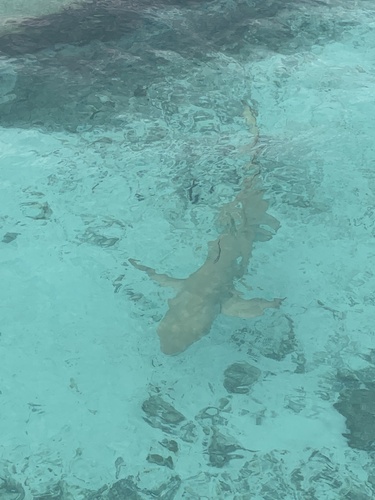
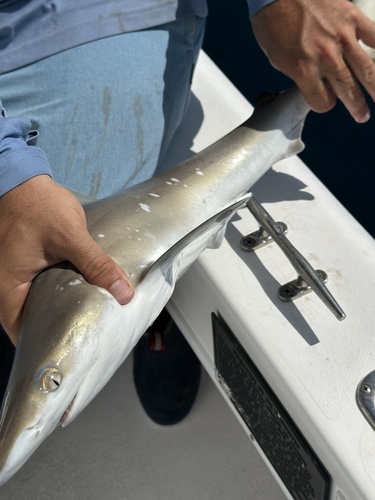
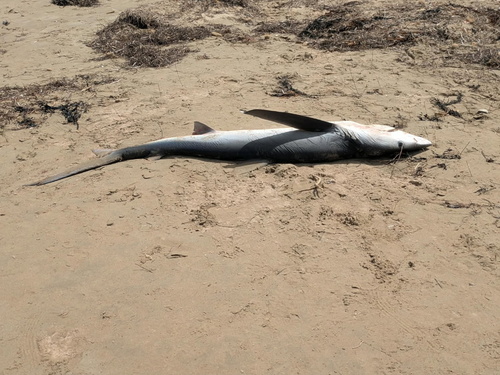
More from the family Carcharhinidae
Download Fin's Fish Guide
Identify fish in seconds, log your catches and dives. Join the TestFlight beta.