The Daggernose shark (Isogomphodon oxyrhynchus) is a brackish-water fish of the family Carcharhinidae that grows up to 160 cm.
Description
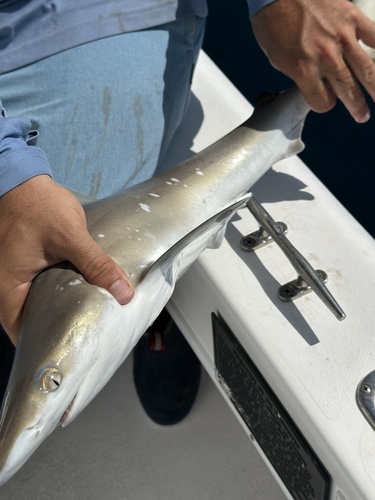
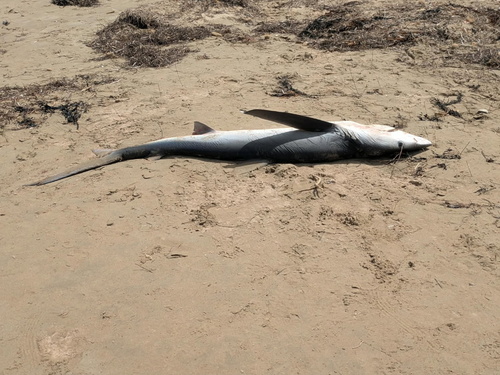
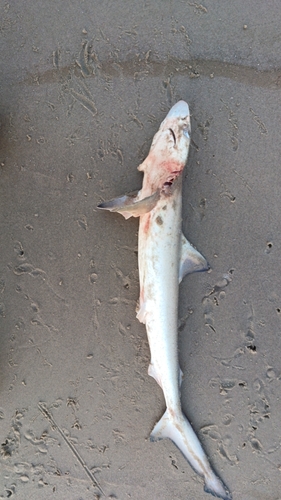
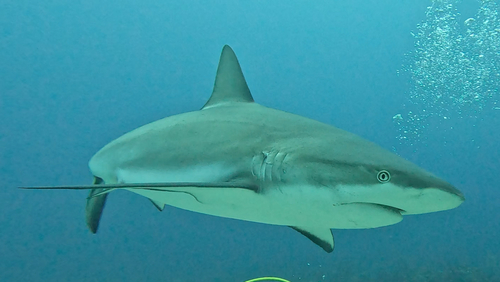
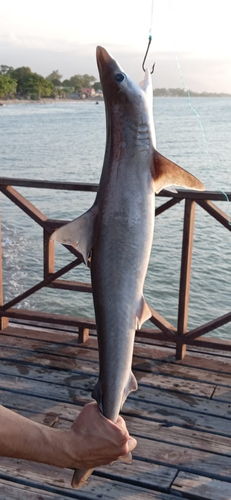
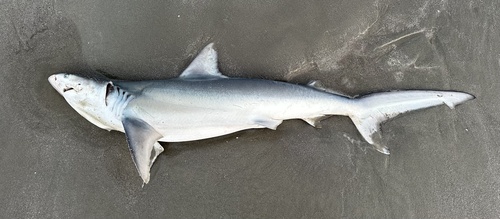
The daggernose shark (Isogomphodon oxyrhynchus) is a small requiem shark of the family Carcharhinidae from coastal waters of northern South America. The species is instantly recognised by its extremely long, pointed, dagger-shaped snout and very small eyes, and reaches about 1.6 metres. It lives close inshore over rocky bottoms and enters estuaries and river mouths. The diet consists of small schooling fishes such as herrings, anchovies and croakers. The species is viviparous, usually with four embryos per litter. Owing to its very limited range and bycatch in coastal fisheries it is Critically Endangered (CR) and is considered one of the most threatened sharks.
Frequently asked questions
How do you recognise the Daggernose shark?
The Daggernose shark has a torpedo-shaped body, is mainly silver-grey and shows a plain pattern.
Where does the Daggernose shark live?
The Daggernose shark lives in brackish water and is mostly found around sand or mud bottom.
How big does the Daggernose shark get?
The Daggernose shark grows to a maximum of about 160 cm. On average the species is around 100 cm.
Is the Daggernose shark dangerous to humans?
No, the Daggernose shark is harmless to humans.
Is the Daggernose shark edible?
Yes, the Daggernose shark is commonly eaten.
Download Fin's Fish Guide
Identify fish in seconds, log your catches and dives. Join the TestFlight beta.
All data
Identification
Appearance
Habitat & distribution
Behaviour & biology
For anglers
Safety
Status & sources
More from the family Carcharhinidae
Download Fin's Fish Guide
Identify fish in seconds, log your catches and dives. Join the TestFlight beta.