Home · Cyclopteridae · Lumpfish
Lumpfish (Cyclopterus lumpus) — Cyclopteridae

Lumpfish

Cyclopterus lumpus
Family: Cyclopteridae
NE · Not Evaluated

The Lumpfish (Cyclopterus lumpus) is a saltwater fish of the family Cyclopteridae that grows up to 61 cm.

Length
61 cm
Water
Saltwater
Depth
0.0–868.0 m
Diet
Carnivore
Behaviour
Solitary
Activity
Crepuscular
Body shape
Flat / disc-shaped
Substrate
Mixed bottom
Danger
Harmless
Range
North Atlantic, the North Sea and the Baltic Sea, from coastal water to hundreds of metres depth.
Edibility
Commonly eaten

Want the complete picture on the Lumpfish?

Get the app

Description

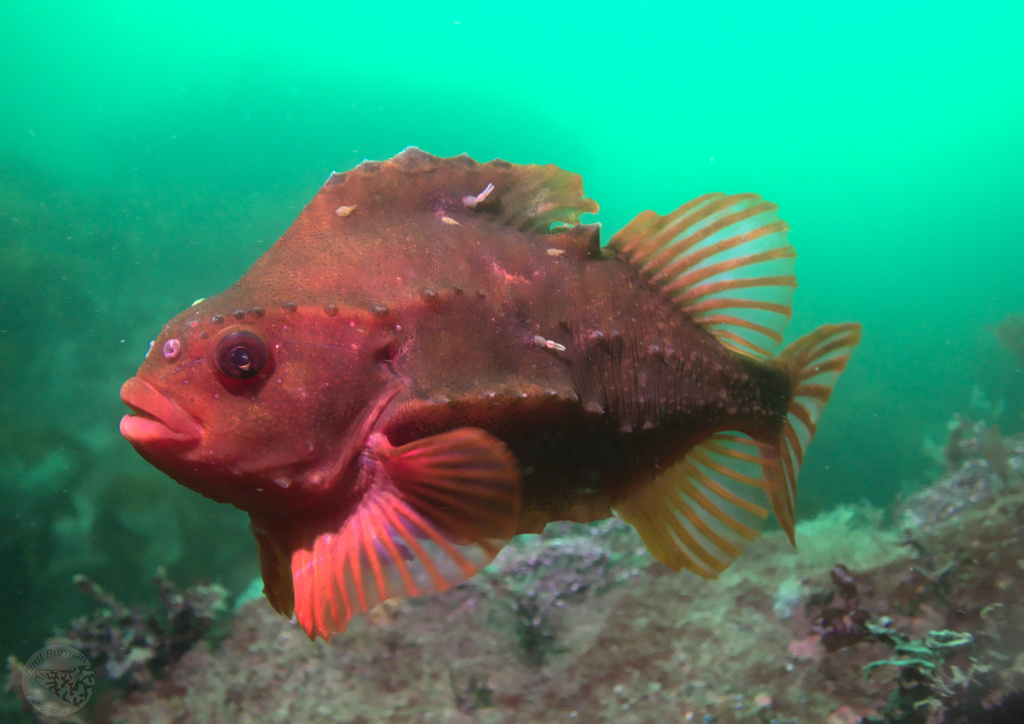
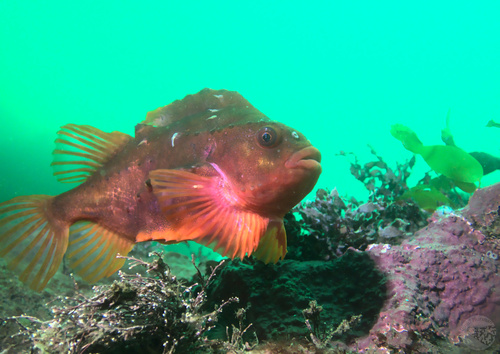
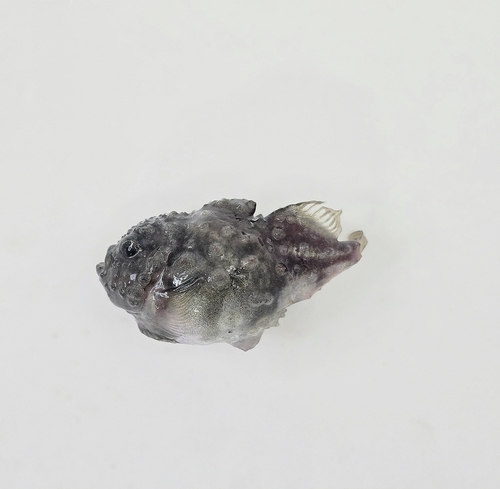
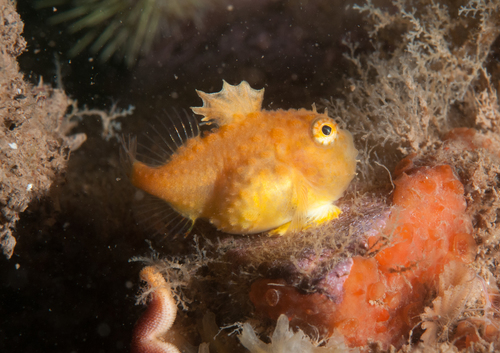
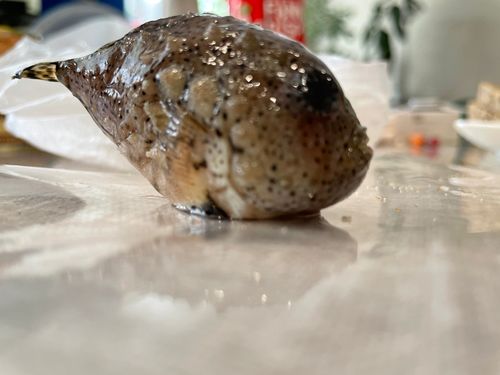
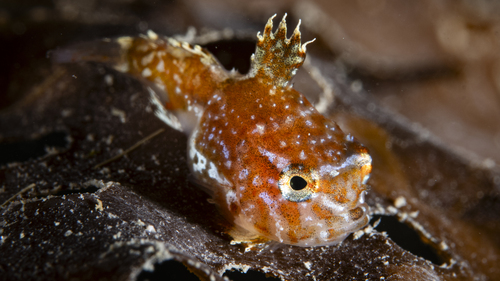
The lumpfish is a stout, almost globular marine fish of the family Cyclopteridae reaching about 60 cm. The scaleless body bears rows of bony knobs and has a sucking disc on the belly, formed from fused pelvic fins, with which it clings firmly to stones. Outside the breeding season it is blue-grey; breeding males turn orange-red. The species lives in the northern Atlantic, the North Sea and the Baltic and eats small crustaceans, jellyfish and worms. In spring it spawns in shallow water, after which the male guards the sticky egg masses and fans them with oxygen. The eggs are sold as 'lumpfish caviar'.

Frequently asked questions

How do you recognise the Lumpfish?

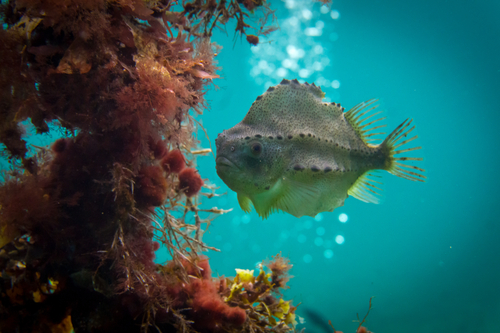
The Lumpfish has a flattened, disc-shaped body, is mainly blue and shows a plain pattern. Stocky, globular fish with rows of bony tubercles and a sucker on the belly (fused pelvic fins) with which it attaches itself to the bottom; males turn red in the spawning season.

Where does the Lumpfish live?

The Lumpfish lives in the sea (marine waters) and is mostly found around mixed bottom. North Atlantic, the North Sea and the Baltic Sea, from coastal water to hundreds of metres depth.

How big does the Lumpfish get?

The Lumpfish grows to a maximum of about 61 cm.

Is the Lumpfish dangerous to humans?

No, the Lumpfish is harmless to humans. None required: this species is harmless to humans.

Is the Lumpfish edible?

Yes, the Lumpfish is commonly eaten.

More photos
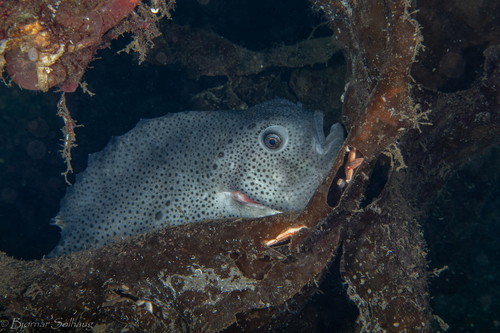
Lumpfish (Cyclopterus lumpus) — Cyclopteridae — 2
sunhill (http://creativecommons.org/licenses/by-nc/4.0/) via GBIF
Lumpfish (Cyclopterus lumpus) — Cyclopteridae — 3
iNaturalist ((c) Emil B, some rights reserved (CC BY-NC))
Lumpfish (Cyclopterus lumpus) — Cyclopteridae — 4
iNaturalist ((c) Christopher Power, some rights reserved (CC BY-NC))
Lumpfish (Cyclopterus lumpus) — Cyclopteridae — 5
iNaturalist ((c) Stefan, some rights reserved (CC BY-NC))
Fin

Want the complete picture on the Lumpfish?

Point your camera at the fish and Fin names the species in seconds. Free, and the Lumpfish is one of 12,519 species in the app.

Get the app →

All data

Identification

English name
Lumpfish verified
Scientific name
Cyclopterus lumpus
Family
Cyclopteridae
Other names
Hen-fish; Kiark-varrey; Lumpfish; Lumpsucker; Lump verified

Appearance

Size class
Large verified
Max length (cm)
61.0 verified
Body shape
Flat / disc-shaped sourced
Dominant colour
Blue sourced
Pattern
Plain sourced
Tail shape
Straight inferred
Mouth position
Terminal inferred
Lips
Thick / fleshy inferred
Barbels
No verified
Dorsal fins
One continuous sourced
Dorsal spines
No verified

Habitat & distribution

Water type
Saltwater sourced
Substrate
Mixed bottom sourced
Min depth (m)
0.0 verified
Max depth (m)
868.0 verified
Natural range
North Atlantic, the North Sea and the Baltic Sea, from coastal water to hundreds of metres depth. verified
Origin
Native verified

Behaviour & biology

Diet
Carnivore verified
Diet (detail)
Worms, crustaceans, molluscs and benthic invertebrates inferred
Social behaviour
Solitary verified
Territorial
No verified
Activity
Crepuscular inferred
Reproduction
Separate sexes verified
Sexual dimorphism
Yes verified
levensduur_max_jaar
13.0 verified
Seasonality
Spawns in spring in shallow coastal water; the male fiercely guards the sticky egg clumps until they hatch. sourced
Special features
Stocky, globular fish with rows of bony tubercles and a sucker on the belly (fused pelvic fins) with which it attaches itself to the bottom; males turn red in the spawning season. sourced

For anglers

Edibility
Commonly eaten verified
Fishing method
Bottom fishing with natural bait (worm, shrimp or fish) on or just above the seabed. inferred
Regulations source
FishBase ↗ inferred

Safety

Danger to humans
Harmless sourced
First aid
None required: this species is harmless to humans. sourced

Status & sources

Sources
FishBase via GBIF (DwC-A), CC-BY-NC 4.0

More from the family Cyclopteridae
Fin

Want the complete picture on the Lumpfish?

Point your camera at the fish and Fin names the species in seconds. Free, and the Lumpfish is one of 12,519 species in the app.

Get the app →
Is this the Lumpfish? Get the app