 Fin's Fish Guide
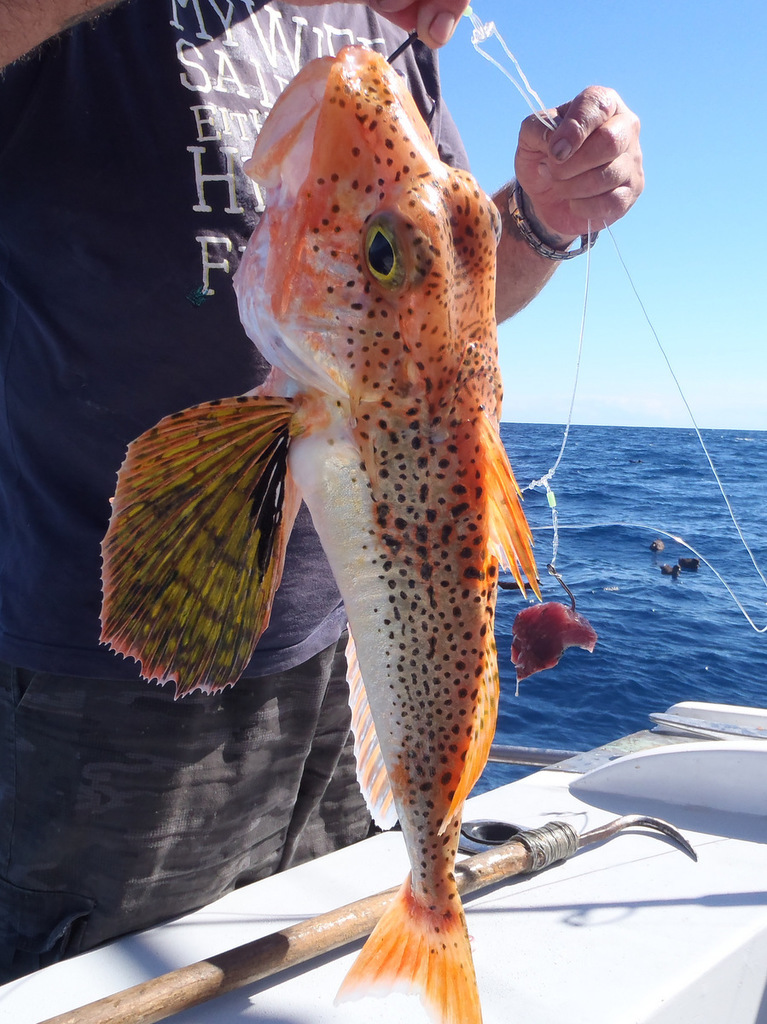
The Japanese gurnard (Pterygotrigla picta) is a saltwater fish of the family Triglidae that grows up to 38 cm.
Southeast and central Pacific; around Juan Fernández, Easter Island and westward to New Caledonia.
Description
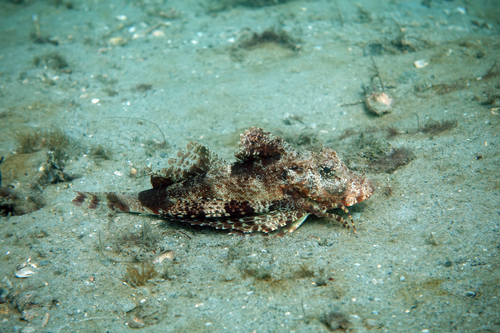
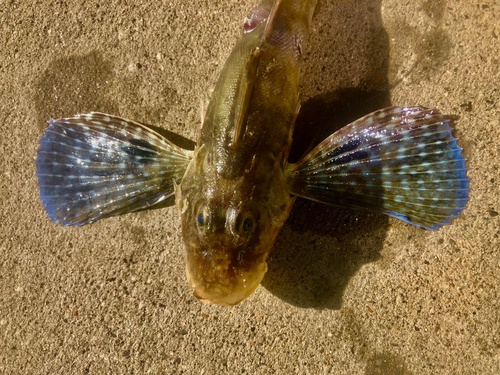
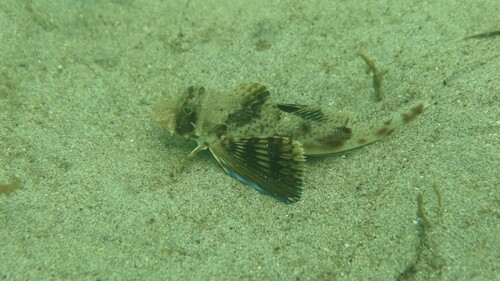
The spotted gurnard is a sea robin of the gurnard family (Triglidae) from the south-eastern and central Pacific around Juan Fernández, Easter Island and New Caledonia. The species grows to about 38 cm and has a reddish body with an armoured, spiny head and large, fan-like pectoral fins with a handsome, painted pattern and often a conspicuous eyespot. The lower pectoral rays are modified into free, finger-like feelers with which it probes the soft bottom for prey. It lives on the continental shelf and slope. As a bottom searcher it feeds on small crustaceans, worms and molluscs. Gurnards make grunting sounds with the swim bladder. The species is harmless to humans.
Frequently asked questions
How do you recognise the Japanese gurnard?
The Japanese gurnard has a torpedo-shaped body, is mainly red-orange and shows a spots pattern. Large, fan-shaped pectoral fins with a painted pattern and an eyespot; finger-like feelers for probing the bottom.
Where does the Japanese gurnard live?
The Japanese gurnard lives in the sea (marine waters) and is mostly found around sand or mud bottom. Southeast and central Pacific; around Juan Fernández, Easter Island and westward to New Caledonia.
How big does the Japanese gurnard get?
The Japanese gurnard grows to a maximum of about 38 cm.
Is the Japanese gurnard dangerous to humans?
No, the Japanese gurnard is harmless to humans. None required: this species is harmless to humans.
Is the Japanese gurnard edible?
The Japanese gurnard is rarely eaten.

Want the complete picture on the Japanese gurnard?
Point your camera at the fish and Fin names the species in seconds. Free, and the Japanese gurnard is one of 12,519 species in the app.
All data
Identification
Appearance
Habitat & distribution
Behaviour & biology
For anglers
Safety
Status & sources
Same genus Pterygotrigla
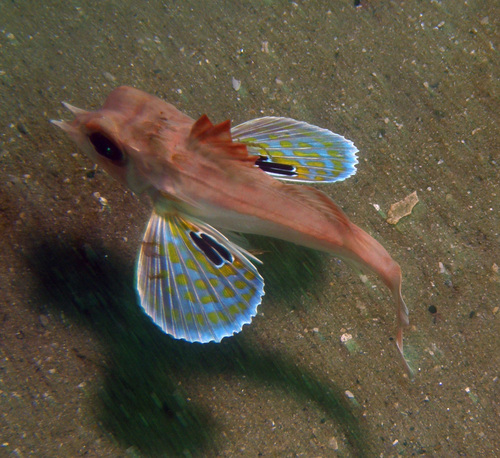

More from the family Triglidae
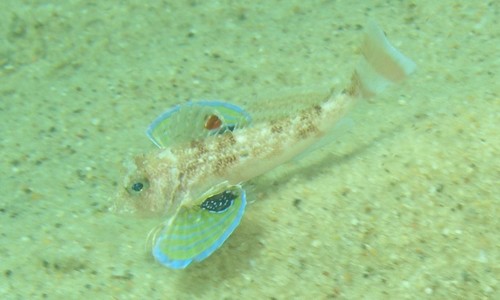
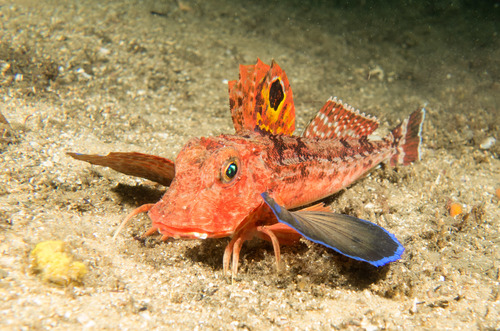


Want the complete picture on the Japanese gurnard?
Point your camera at the fish and Fin names the species in seconds. Free, and the Japanese gurnard is one of 12,519 species in the app.