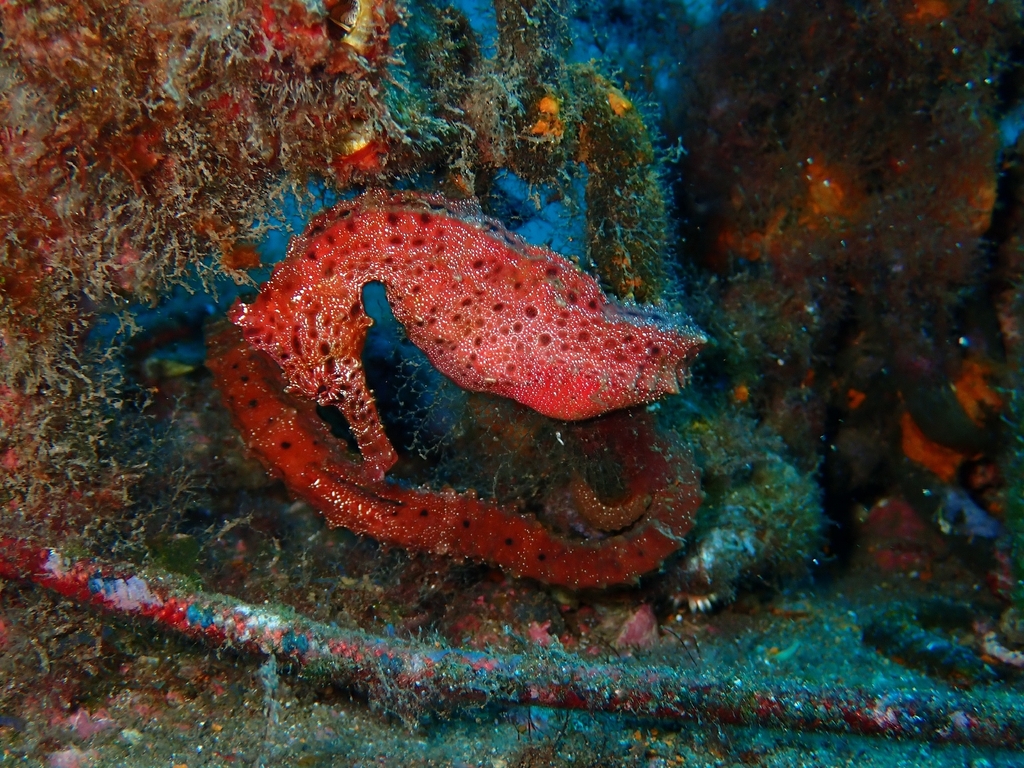
The West African seahorse (Hippocampus algiricus) is a saltwater fish of the family Syngnathidae that grows up to 19 cm.
Description
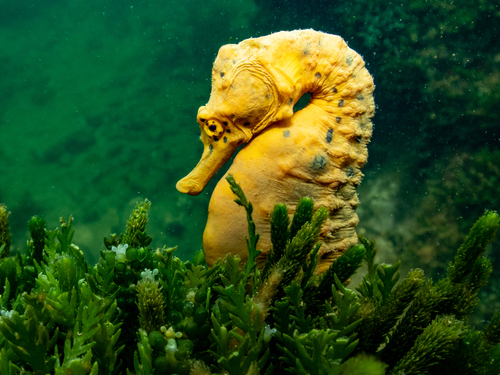
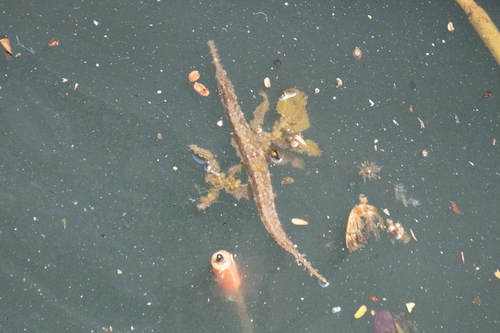
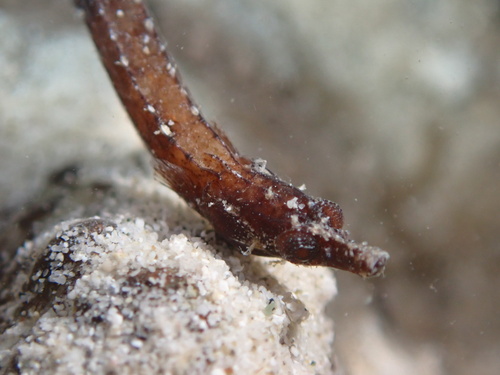
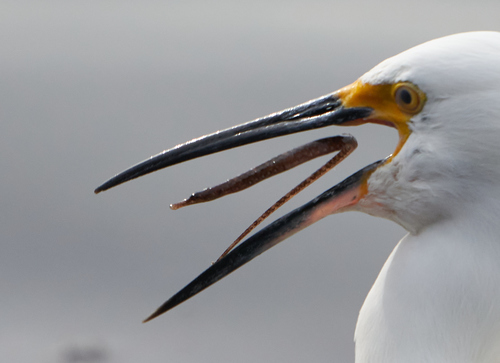
The West African seahorse is a seahorse of the family Syngnathidae reaching about 19 cm. The upright-swimming body has a horse-like head, a tube-shaped snout and a prehensile tail without a caudal fin, with which it holds onto seagrass and weeds; the body is encased in bony rings instead of scales. It sucks small zooplankton and shrimp-like crustaceans in through its snout. The species lives among seagrass, weeds and growth of shallow coastal water along the West African coast and around the Canary Islands. As in other seahorses the male broods the eggs in a pouch and 'gives birth' to live young. Through fishing for traditional medicine and the souvenir trade the species is assessed as Vulnerable (VU) and is listed on CITES Appendix II.
Frequently asked questions
How do you recognise the West African seahorse?
The West African seahorse has an irregular in shape body, is mainly brown and shows a plain pattern.
Where does the West African seahorse live?
The West African seahorse lives in the sea (marine waters) and is mostly found around algae or seagrass beds.
How big does the West African seahorse get?
The West African seahorse grows to a maximum of about 19 cm.
Is the West African seahorse dangerous to humans?
No, the West African seahorse is harmless to humans.
Is the West African seahorse edible?
The West African seahorse is not usually eaten.
Download Fin's Fish Guide
Identify fish in seconds, log your catches and dives. Join the TestFlight beta.
All data
Identification
Appearance
Habitat & distribution
Behaviour & biology
For anglers
Safety
Status & sources
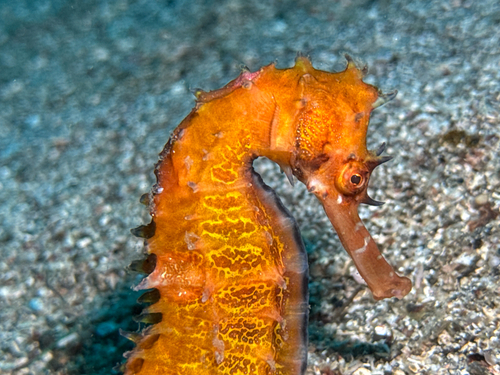
Same genus Hippocampus
More from the family Syngnathidae
Download Fin's Fish Guide
Identify fish in seconds, log your catches and dives. Join the TestFlight beta.