 Fin's Fish Guide
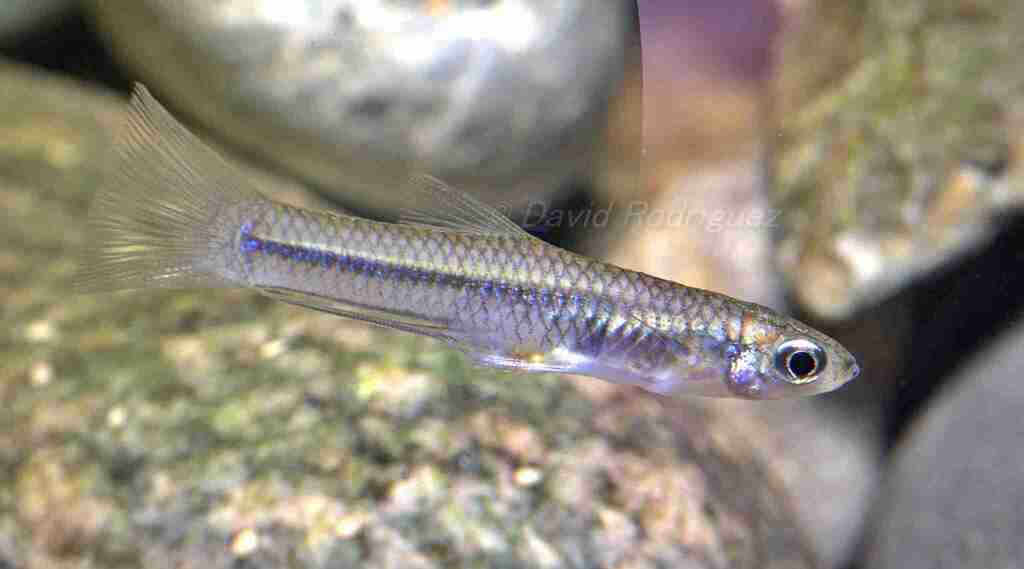
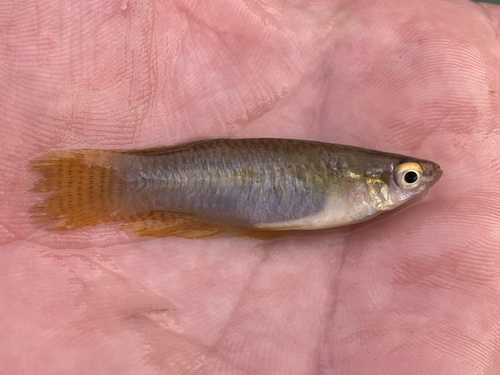
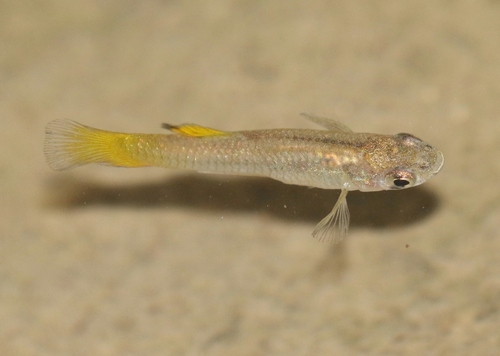
The Grijalva studfish (Xenodexia ctenolepis) is a freshwater fish of the family Poeciliidae that grows up to 4 cm.
Description
The Grijalva studfish is a livebearing toothcarp (Poeciliidae) from Central America. The species is small and stands out by an enlarged, grasping pectoral fin base in the male that helps in mating. Unlike egg-laying fishes the female gives birth to live young. It inhabits both slow- and fast-flowing streams and lives together with other livebearing genera. It feeds on small invertebrates, insect larvae and algae. The species is harmless to humans.
Frequently asked questions
How do you recognise the Grijalva studfish?
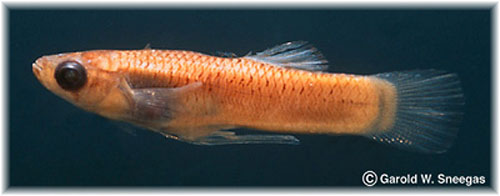
The Grijalva studfish has an elongate, eel-like body, is mainly silver-grey and shows a plain pattern. Male with an enlarged, grasping pectoral fin base as a mating aid; ovoviviparous.
Where does the Grijalva studfish live?
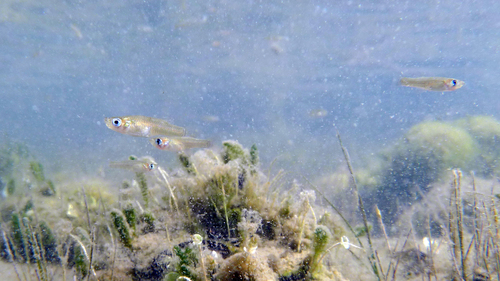
The Grijalva studfish lives in fresh water and is mostly found around open water. Central America; slow- and fast-flowing streams.
How big does the Grijalva studfish get?
The Grijalva studfish grows to a maximum of about 4 cm.
Is the Grijalva studfish dangerous to humans?
No, the Grijalva studfish is harmless to humans. None required: this species is harmless to humans.
Is the Grijalva studfish edible?
The Grijalva studfish is not usually eaten.

Want the complete picture on the Grijalva studfish?
Point your camera at the fish and Fin names the species in seconds. Free, and the Grijalva studfish is one of 12,519 species in the app.
All data
Identification
Appearance
Habitat & distribution
Behaviour & biology
For anglers
Safety
Status & sources
More from the family Poeciliidae


Want the complete picture on the Grijalva studfish?
Point your camera at the fish and Fin names the species in seconds. Free, and the Grijalva studfish is one of 12,519 species in the app.