 Fin's Fish Guide
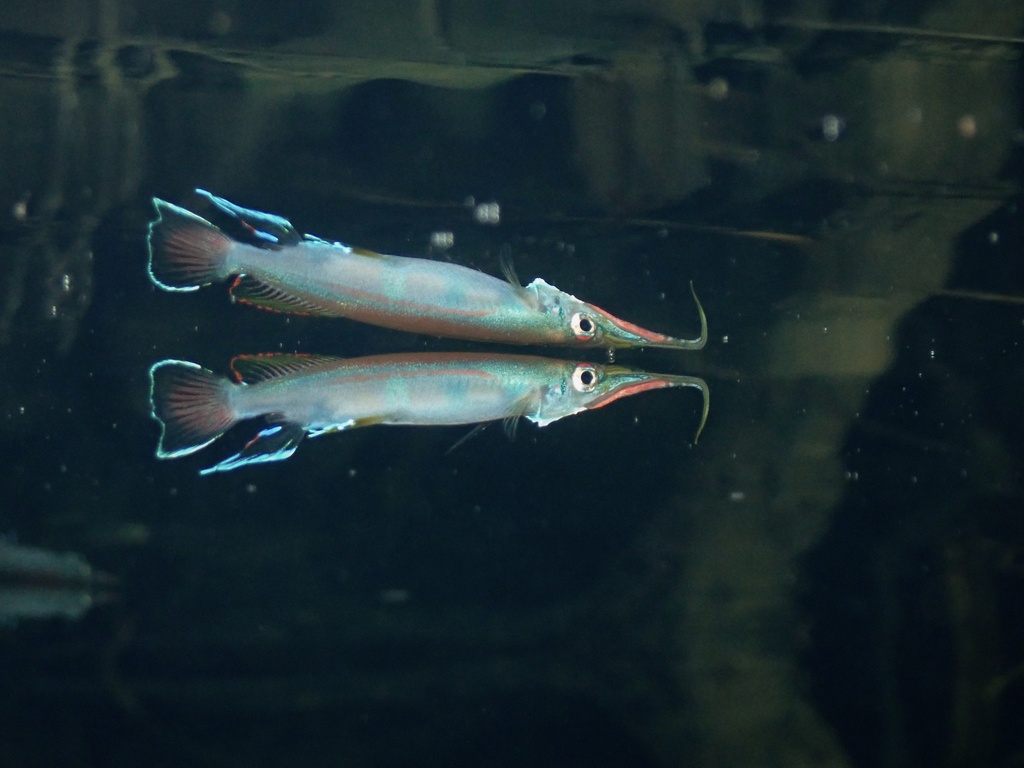
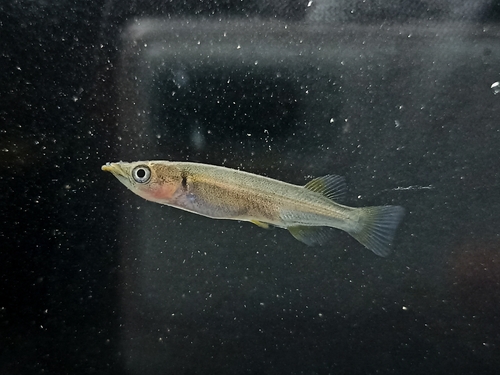
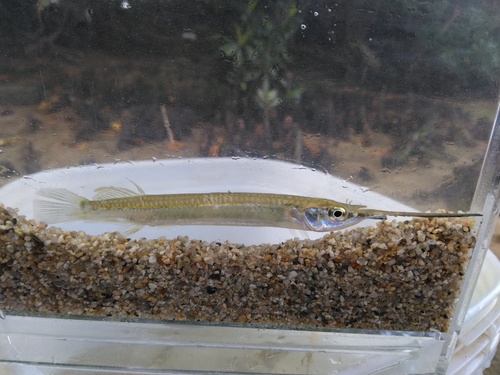
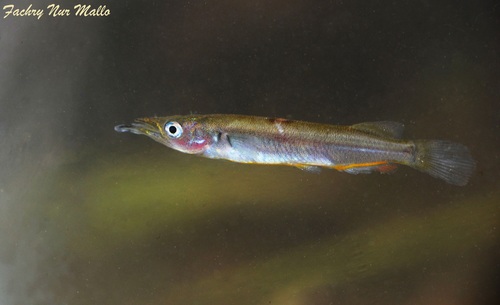
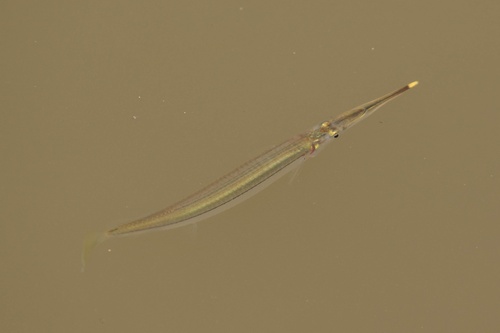
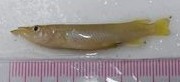
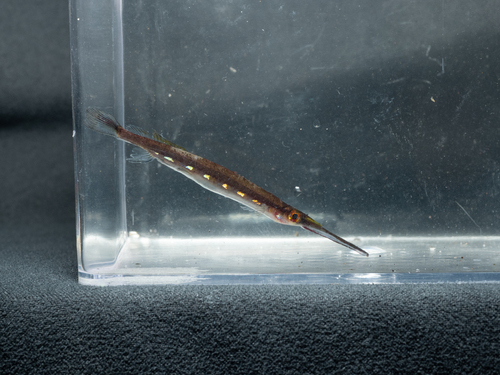
The Forest halfbeak (Hemirhamphodon pogonognathus) is a brackish-water fish of the family Zenarchopteridae that grows up to 10 cm.
Description
The forest halfbeak is a small, elongate fish from forested streams and peat swamps of the Malay Peninsula, Sumatra and Borneo. The species grows to about 10 cm and has a strongly elongated lower jaw, characteristic of the halfbeaks, and swims just below the water surface. There it grabs insects and other small food that falls onto the water. It is livebearing: females give birth to live young. The fish is harmless to humans, occurs in the aquarium trade and is assessed as Least Concern (LC) by the IUCN.
Frequently asked questions
How do you recognise the Forest halfbeak?
The Forest halfbeak has an elongate, eel-like body, is mainly brown and shows a plain pattern. Greatly elongated lower jaw; small surface fish; ovoviviparous
Where does the Forest halfbeak live?
The Forest halfbeak lives in brackish water and is mostly found around open water. Southeast Asia
How big does the Forest halfbeak get?
The Forest halfbeak grows to a maximum of about 10 cm.
Is the Forest halfbeak dangerous to humans?
No, the Forest halfbeak is harmless to humans. This species is harmless to humans. No specific first aid is needed. Still handle the fish with care: mind the fin rays and the sharp edges of the gill cover, and rinse any scratch with clean water and cover it. For a dirty or deep wound check tetanus status.
Is the Forest halfbeak edible?
The Forest halfbeak is not usually eaten.

Want the complete picture on the Forest halfbeak?
Point your camera at the fish and Fin names the species in seconds. Free, and the Forest halfbeak is one of 12,519 species in the app.
All data
Identification
Appearance
Habitat & distribution
Behaviour & biology
For anglers
Safety
Status & sources
Same genus Hemirhamphodon
More from the family Zenarchopteridae

Want the complete picture on the Forest halfbeak?
Point your camera at the fish and Fin names the species in seconds. Free, and the Forest halfbeak is one of 12,519 species in the app.