Home · Triakidae · Eastern school shark
Eastern school shark (Galeorhinus galeus) — Triakidae

Eastern school shark

Galeorhinus galeus
Family: Triakidae
CR · Critically Endangered

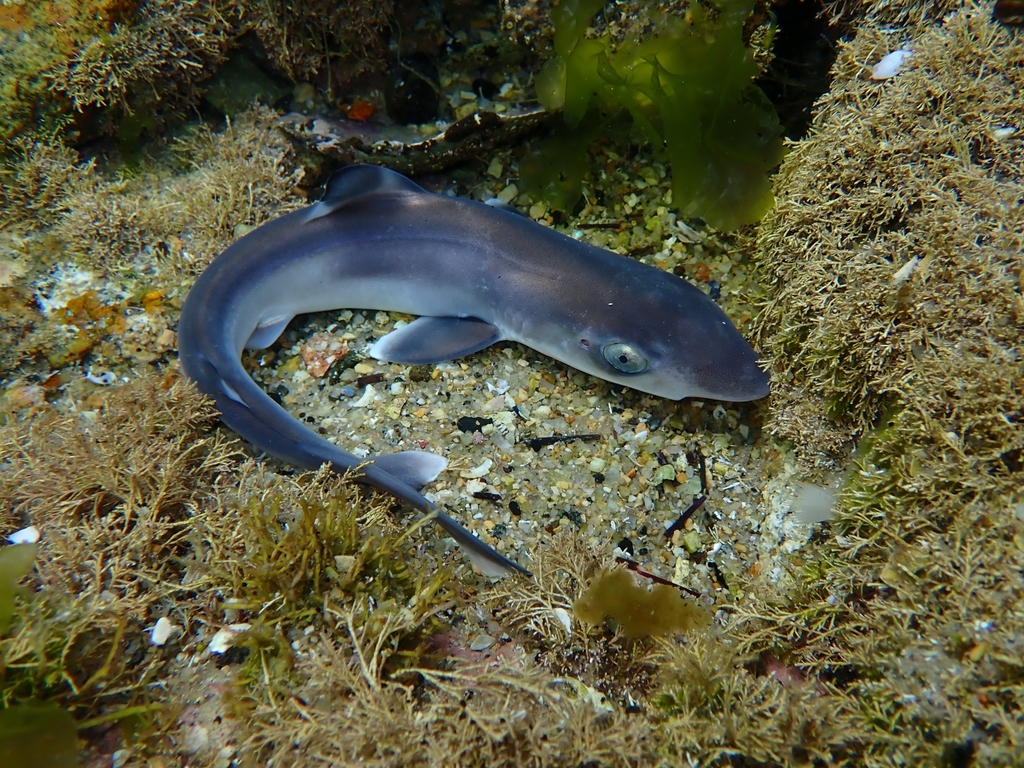
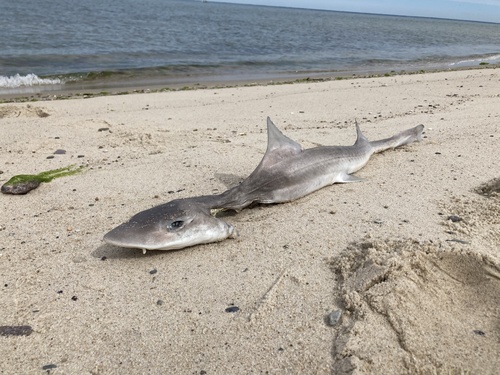
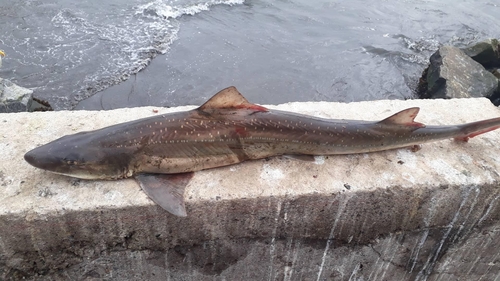
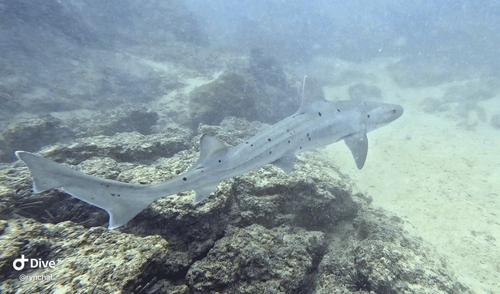
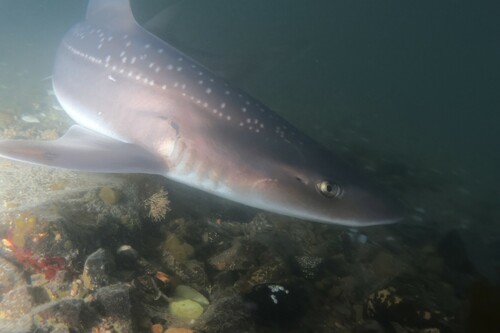
The Eastern school shark (Galeorhinus galeus) is a saltwater fish of the family Triakidae that grows up to 193 cm.

Length
193 cm
Water
Saltwater
Depth
0.0–1100.0 m
Diet
Carnivore
Behaviour
Small groups
Activity
Diurnal
Body shape
Elongated (eel-like)
Substrate
Mixed bottom
Danger
Harmless
Range
Worldwide in cool to warm-temperate waters (70°N-58°S), including the eastern Atlantic and the Mediterranean Sea.
Edibility
Commonly eaten

Want the complete picture on the Eastern school shark?

Get the app

Description

The tope shark or soupfin shark is a slender shark of the family Triakidae reaching about 195 cm. The body is greyish above and white below, with juveniles showing black markings on the fins. The large mouth carries small, blade-like teeth, and the lower lobe of the tail is almost as long as the rest of the caudal fin. The species occurs worldwide in cool to warm-temperate waters and is highly migratory, forming schools that are sometimes segregated by size and sex. It is ovoviviparous with 6 to 52 pups per litter. Because of heavy fishing and slow reproduction the tope is assessed as Critically Endangered; its flesh is regularly eaten.

Frequently asked questions

How do you recognise the Eastern school shark?

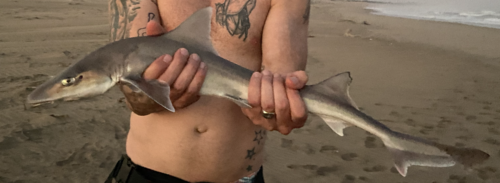
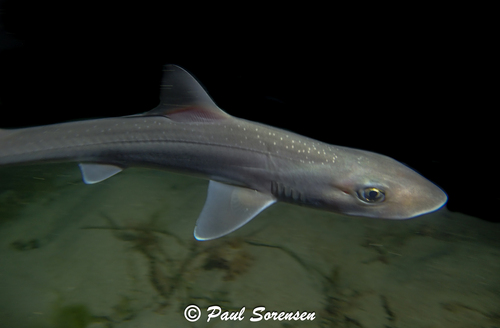
The Eastern school shark has an elongate, eel-like body, is mainly silver-grey and shows a plain pattern. Slender, highly migratory shark with a large mouth and small, blade-shaped teeth; the lower lobe of the tail is almost as long as the rest of the caudal fin.

Where does the Eastern school shark live?

The Eastern school shark lives in the sea (marine waters) and is mostly found around mixed bottom. Worldwide in cool to warm-temperate waters (70°N-58°S), including the eastern Atlantic and the Mediterranean Sea.

How big does the Eastern school shark get?

The Eastern school shark grows to a maximum of about 193 cm. On average the species is around 160 cm.

Is the Eastern school shark dangerous to humans?

No, the Eastern school shark is harmless to humans. None required: this species is harmless to humans.

Is the Eastern school shark edible?

Yes, the Eastern school shark is commonly eaten.

More photos
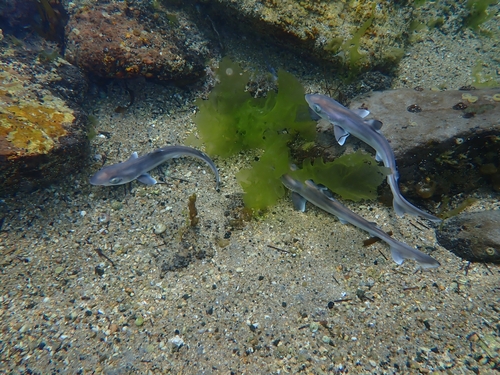
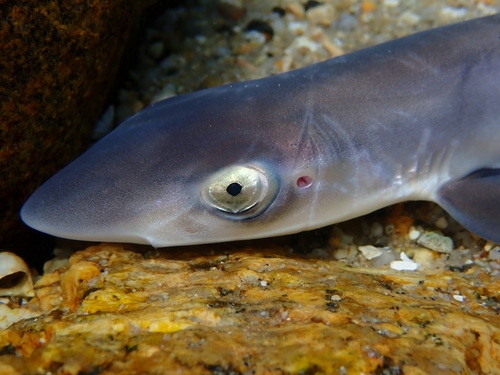
Eastern school shark (Galeorhinus galeus) — Triakidae — 2
iNaturalist ((c) tarnh, some rights reserved (CC BY-NC))
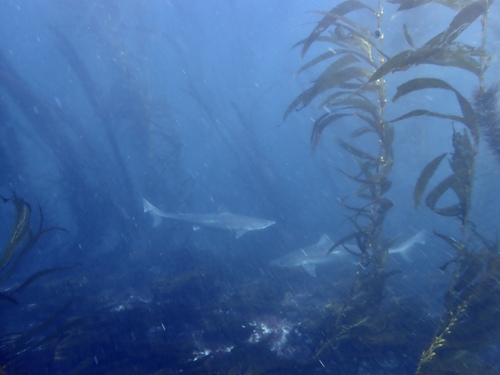
Eastern school shark (Galeorhinus galeus) — Triakidae — 3
iNaturalist ((c) tarnh, some rights reserved (CC BY-NC))
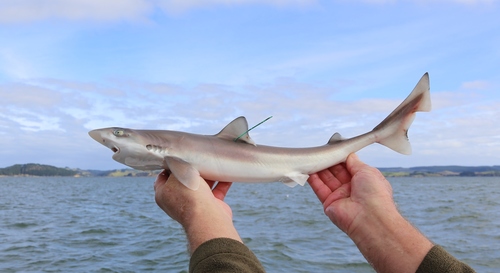
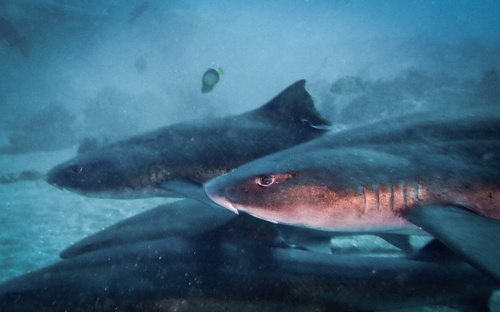
Eastern school shark (Galeorhinus galeus) — Triakidae — 4
Siobhan O'Neill (http://creativecommons.org/licenses/by-nc/4.0/) via GBIF
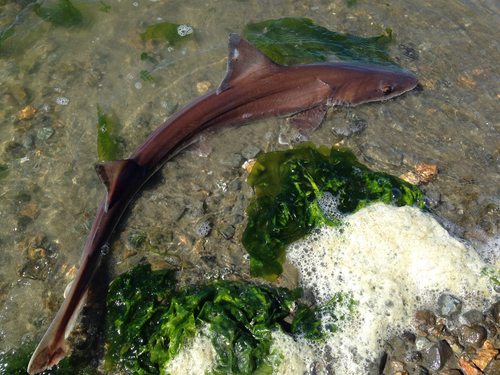
Eastern school shark (Galeorhinus galeus) — Triakidae — 5
iNaturalist ((c) Clinton Duffy, some rights reserved (CC BY-NC))

Easily confused with

These species look like the Eastern school shark and live in the same waters.
Fin

Want the complete picture on the Eastern school shark?

Point your camera at the fish and Fin names the species in seconds. Free, and the Eastern school shark is one of 12,519 species in the app.

Get the app →

All data

Identification

English name
Eastern school shark verified
Scientific name
Galeorhinus galeus
Family
Triakidae
Other names
Greyboy; Greyshark; Hundshai; Penny's dog; Tope shark; School shark; Soupfin shark; Tope; Vitamin shark; Schnapper shark; Sharpie shark; Snapper shark verified

Appearance

Size class
Extra large verified
Max length (cm)
193.0 verified
Average length (cm)
160.0 verified
Body shape
Elongated (eel-like) sourced
Dominant colour
Silver / grey sourced
Pattern
Plain sourced
Tail shape
Crescent (lunate) sourced
Mouth position
Inferior (downward) inferred
Lips
Thin inferred
Barbels
No verified
Dorsal fins
Two separate sourced
Dorsal spines
No verified

Habitat & distribution

Water type
Saltwater sourced
Substrate
Mixed bottom sourced
Min depth (m)
0.0 verified
Max depth (m)
1100.0 verified
Natural range
Worldwide in cool to warm-temperate waters (70°N-58°S), including the eastern Atlantic and the Mediterranean Sea. verified
Origin
Native verified

Behaviour & biology

Diet
Carnivore verified
Diet (detail)
Worms, crustaceans, molluscs and benthic invertebrates inferred
Social behaviour
Small groups verified
Territorial
No verified
Activity
Diurnal sourced
Reproduction
Separate sexes verified
Sexual dimorphism
Yes sourced
levensduur_max_jaar
55 verified
Seasonality
Highly migratory; forms small shoals that in some areas are segregated by size and sex. Gestation approximately 12 months. sourced
Special features
Slender, highly migratory shark with a large mouth and small, blade-shaped teeth; the lower lobe of the tail is almost as long as the rest of the caudal fin. sourced

For anglers

Edibility
Commonly eaten verified
Fishing method
Bottom fishing with natural bait (worm, shrimp or fish) on or just above the seabed. inferred
Regulations source
FishBase ↗ inferred

Safety

Danger to humans
Harmless sourced
First aid
None required: this species is harmless to humans. sourced

Status & sources

Sources
FishBase via GBIF (DwC-A), CC-BY-NC 4.0

More from the family Triakidae

Fin

Want the complete picture on the Eastern school shark?

Point your camera at the fish and Fin names the species in seconds. Free, and the Eastern school shark is one of 12,519 species in the app.

Get the app →
Is this the Eastern school shark? Get the app