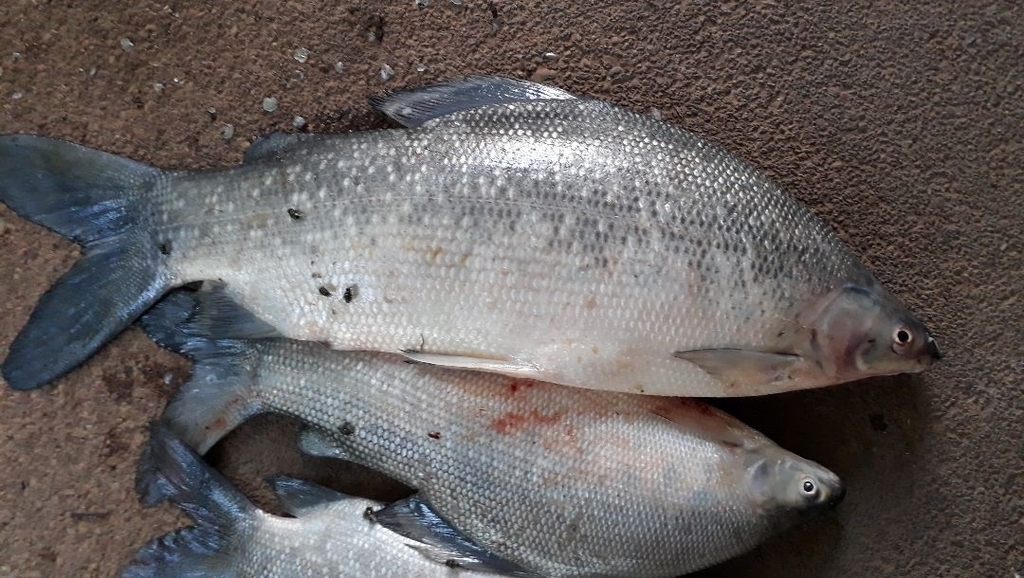
The Grass-eater (Distichodus rostratus) is a freshwater fish of the family Distichodontidae that grows up to 76 cm.
Description
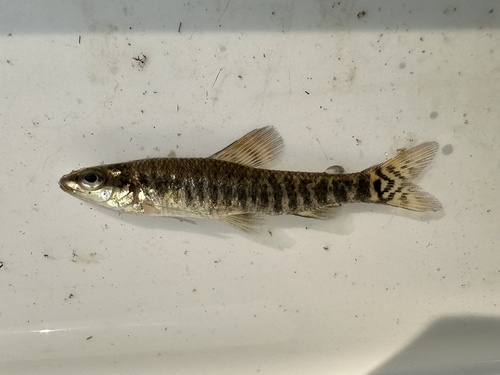
Distichodus rostratus is a large African fish of the family Distichodontidae from the Sahel region and West Africa. The species has a deep, laterally compressed, silvery to yellowish body with a pointed snout and fleshy lips, and can reach about 76 cm. It lives in rivers and is a markedly plant-eating species (macroherbivore): it grazes submerged water plants, the roots of water hyacinth and periphyton. Owing to its size and occurrence in large numbers the species is important for fisheries and a valued food fish. Juveniles are sometimes found in the aquarium trade for their handsome shape.
Frequently asked questions
How do you recognise the Grass-eater?
The Grass-eater has a torpedo-shaped body, is mainly silver-grey and shows a plain pattern.
Where does the Grass-eater live?
The Grass-eater lives in fresh water and is mostly found around sand or mud bottom.
How big does the Grass-eater get?
The Grass-eater grows to a maximum of about 76 cm.
Is the Grass-eater dangerous to humans?
No, the Grass-eater is harmless to humans.
Is the Grass-eater edible?
Yes, the Grass-eater is commonly eaten.
Download Fin's Fish Guide
Identify fish in seconds, log your catches and dives. Join the TestFlight beta.
All data
Identification
Appearance
Habitat & distribution
Behaviour & biology
For anglers
Safety
Status & sources
Same genus Distichodus


More from the family Distichodontidae


Download Fin's Fish Guide
Identify fish in seconds, log your catches and dives. Join the TestFlight beta.