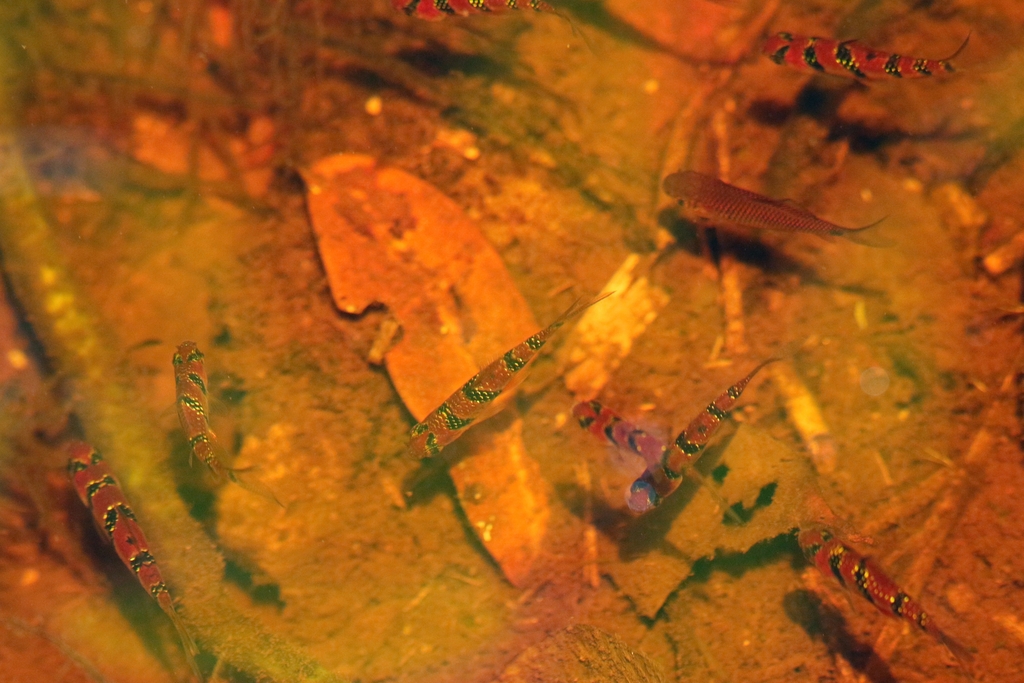
The Fiveband barb (Desmopuntius pentazona) is a freshwater fish of the family Cyprinidae that grows up to 9 cm.
Description
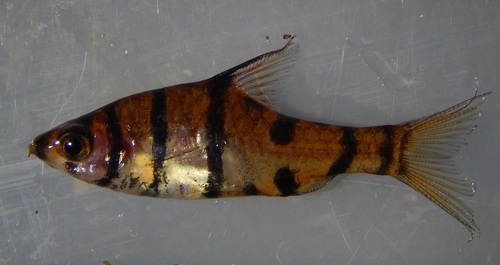
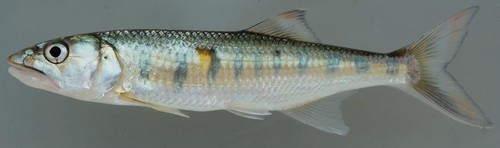
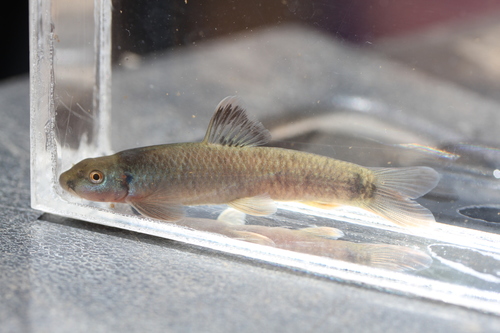
The fiveband barb is a small cyprinid (Cyprinidae) from blackwater forest streams of Borneo, Sumatra and the Malay Peninsula in Southeast Asia. The species grows to about 5 cm and has a yellow-brown body with five conspicuous black vertical bands. It lives in schools in soft, clear, tea-coloured water among water plants and roots and eats small insects, larvae, algae and detritus. The fish is harmless to humans and is loved in the aquarium trade.
Frequently asked questions
How do you recognise the Fiveband barb?
The Fiveband barb has a torpedo-shaped body, is mainly yellow-gold and shows a vertical stripes pattern.
Where does the Fiveband barb live?
The Fiveband barb lives in fresh water and is mostly found around mixed bottom.
How big does the Fiveband barb get?
The Fiveband barb grows to a maximum of about 9 cm.
Is the Fiveband barb dangerous to humans?
No, the Fiveband barb is harmless to humans.
Is the Fiveband barb edible?
Yes, the Fiveband barb is commonly eaten.
Download Fin's Fish Guide
Identify fish in seconds, log your catches and dives. Join the TestFlight beta.
All data
Identification
Appearance
Habitat & distribution
Behaviour & biology
For anglers
Safety
Status & sources
Same genus Desmopuntius
More from the family Cyprinidae


Download Fin's Fish Guide
Identify fish in seconds, log your catches and dives. Join the TestFlight beta.