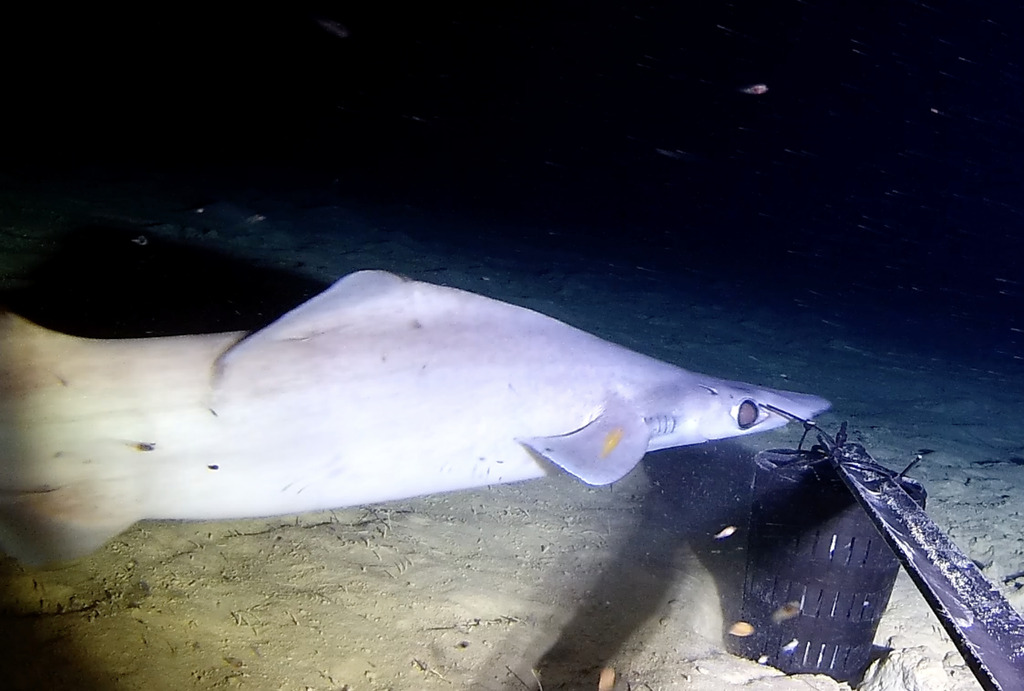
The Birdbeak dogfish (Deania calcea) is a fish of the family Centrophoridae that grows up to 122 cm.
Description
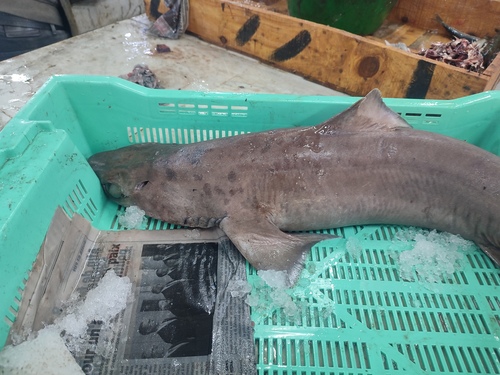
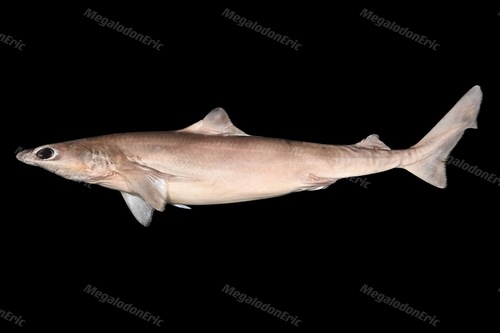
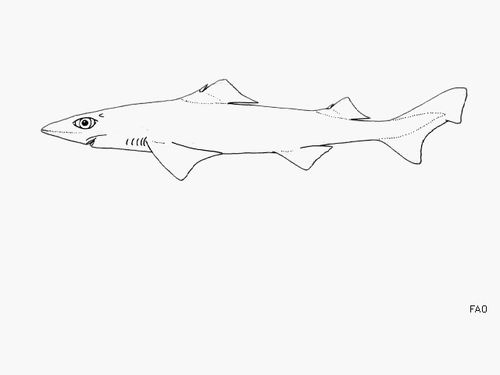
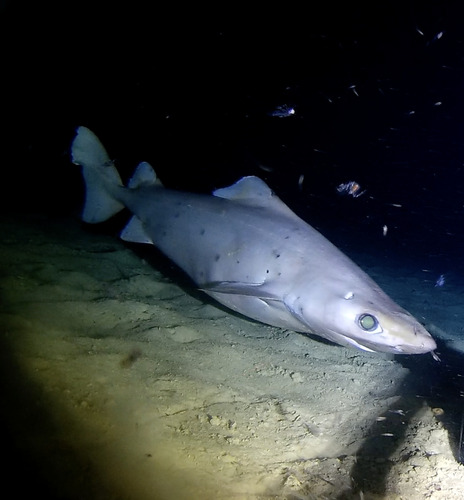
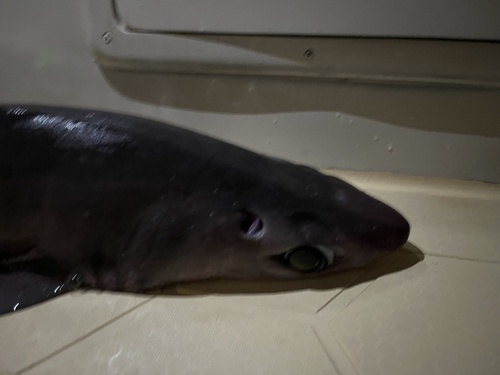
The birdbeak dogfish is a slender deep-sea shark of the family Centrophoridae reaching about 120 cm. The brown, dark body is notable for a strikingly long, flat, beak-like snout, from which the species takes its name; a spine stands in front of each of the two dorsal fins. The skin feels rough due to peculiar, fork-shaped denticles. The species lives along continental slopes in deep waters worldwide, including the eastern Atlantic, usually between about 400 and 1500 metres. Close to the bottom it hunts deep-sea fish, squid and crustaceans. Reproduction is ovoviviparous and slow. Due to fishing for its oil-rich liver and as bycatch the species is assessed as Near Threatened (NT).
Frequently asked questions
How do you recognise the Birdbeak dogfish?
The Birdbeak dogfish is mainly brown and shows a plain pattern.
Where does the Birdbeak dogfish live?
The Birdbeak dogfish is mostly found around sand or mud bottom.
How big does the Birdbeak dogfish get?
The Birdbeak dogfish grows to a maximum of about 122 cm.
Is the Birdbeak dogfish dangerous to humans?
No, the Birdbeak dogfish is harmless to humans.
Is the Birdbeak dogfish edible?
The Birdbeak dogfish is rarely eaten.
Download Fin's Fish Guide
Identify fish in seconds, log your catches and dives. Join the TestFlight beta.
All data
Identification
Appearance
Habitat & distribution
Behaviour & biology
Safety
Status & sources
More from the family Centrophoridae
Download Fin's Fish Guide
Identify fish in seconds, log your catches and dives. Join the TestFlight beta.