 Fin's Fish Guide
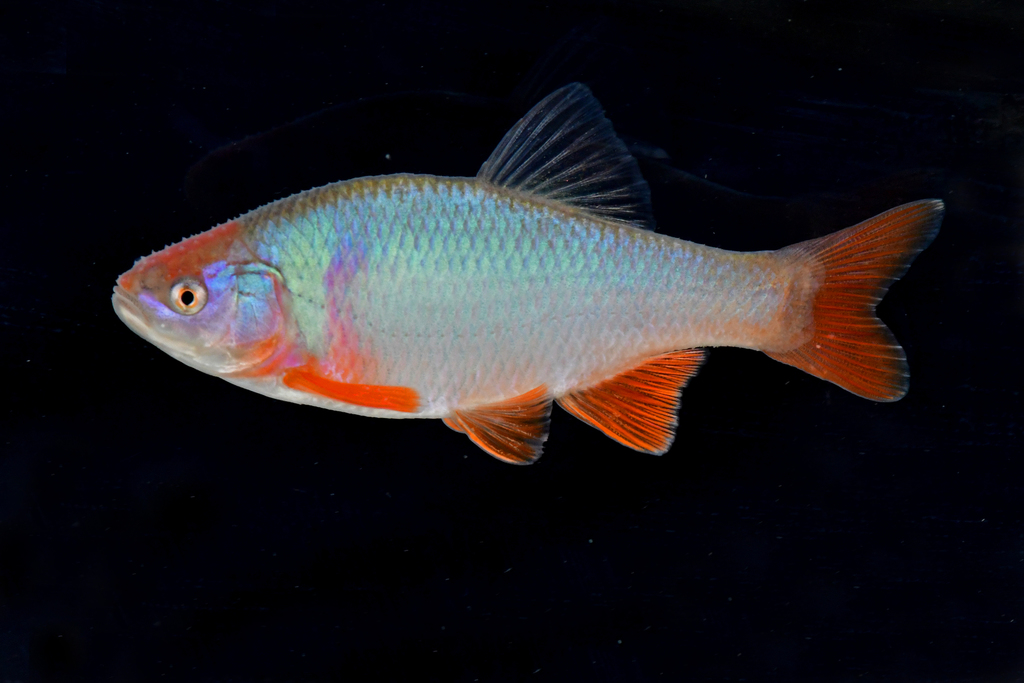
The Common dace (Leuciscus leuciscus) is a freshwater fish of the family Cyprinidae that grows up to 40 cm.
Widespread in fresh water of Europe and North Asia, mainly in clear, flowing water of rivers and streams.
Description
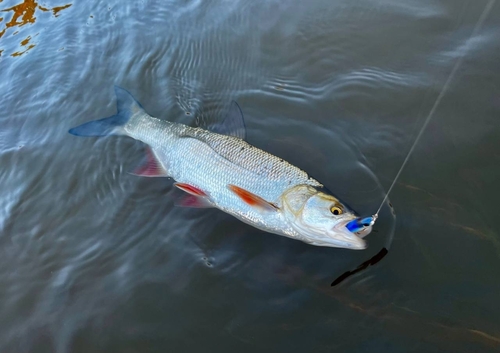
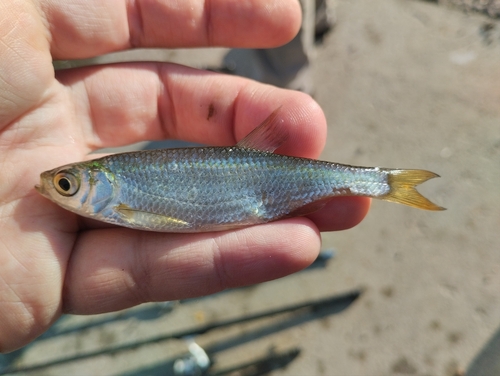
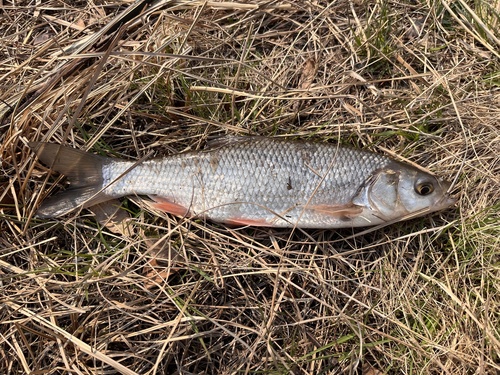
The common dace is a slender, silvery, current-loving fish of the family Cyprinidae reaching about 40 cm but usually smaller. The streamlined body has a small, terminal mouth and dorsal and anal fins with a slightly concave rear edge; this makes it resemble a small ide, but it stays more slender. The dace lives in schools in clear, oxygen-rich, flowing water of rivers and streams in Europe and northern Asia and is regarded as an indicator of clean water. As an omnivore it eats insects and their larvae, small crustaceans and plant matter, often taking food from the surface. It spawns early in spring in shallow, flowing water. The dace is a fast, playful fish and popular with fly and coarse anglers.
Frequently asked questions
How do you recognise the Common dace?
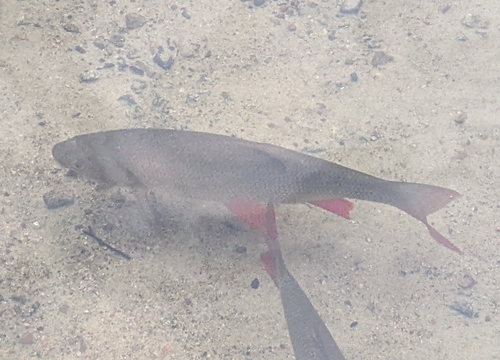
The Common dace has a torpedo-shaped body, is mainly silver-grey and shows a plain pattern. Slender, silvery small current-loving fish with a small mouth and a somewhat concave rear edge to the dorsal and anal fins; resembles a small ide.
Where does the Common dace live?
The Common dace lives in fresh water and is mostly found around mixed bottom. Widespread in fresh water of Europe and North Asia, mainly in clear, flowing water of rivers and streams.
How big does the Common dace get?
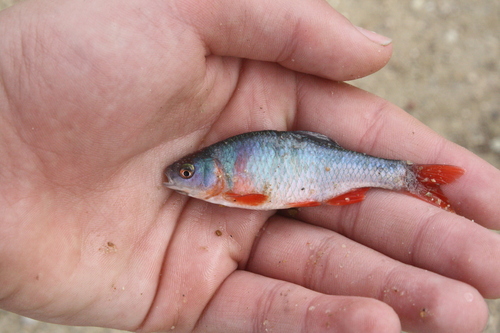
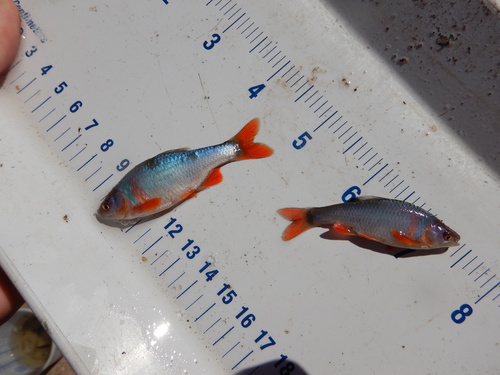
The Common dace grows to a maximum of about 40 cm. On average the species is around 15 cm.
Is the Common dace dangerous to humans?
No, the Common dace is harmless to humans. None required: this species is harmless to humans.
Is the Common dace edible?
The Common dace is rarely eaten.
More photos
Easily confused with
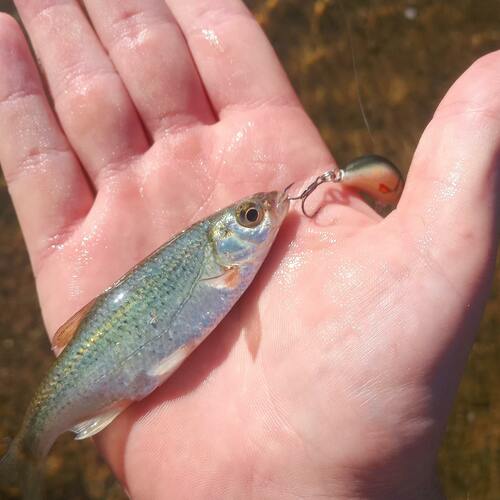
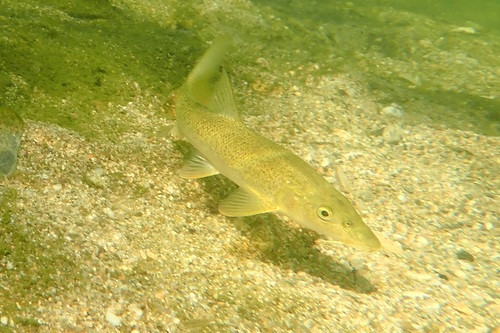
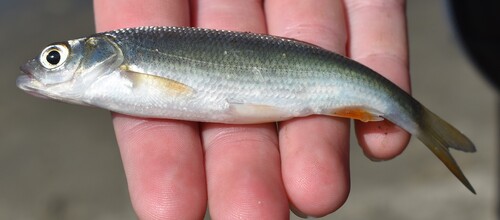
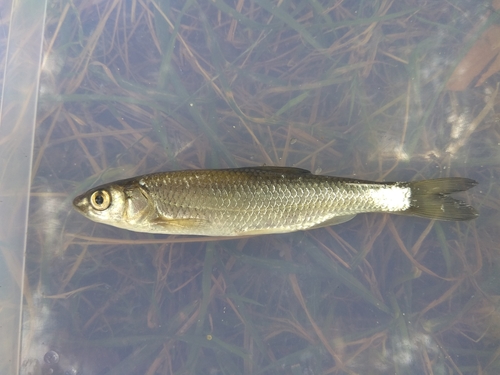
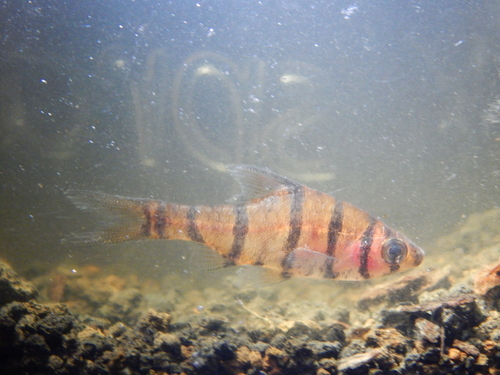
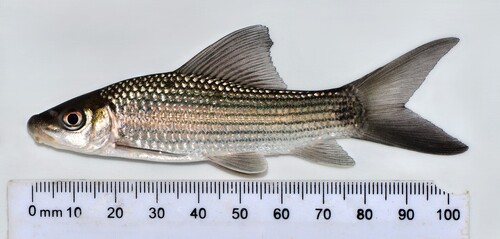
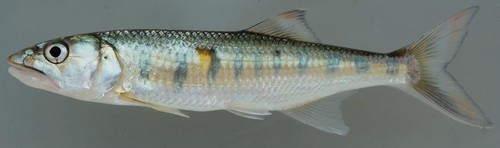
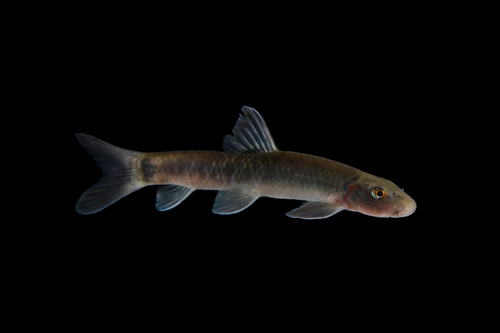
These species look like the Common dace and live in the same waters.

Want the complete picture on the Common dace?
Point your camera at the fish and Fin names the species in seconds. Free, and the Common dace is one of 12,519 species in the app.
All data
Identification
Appearance
Habitat & distribution
Behaviour & biology
For anglers
Safety
Status & sources
Same genus Leuciscus

More from the family Cyprinidae



Want the complete picture on the Common dace?
Point your camera at the fish and Fin names the species in seconds. Free, and the Common dace is one of 12,519 species in the app.