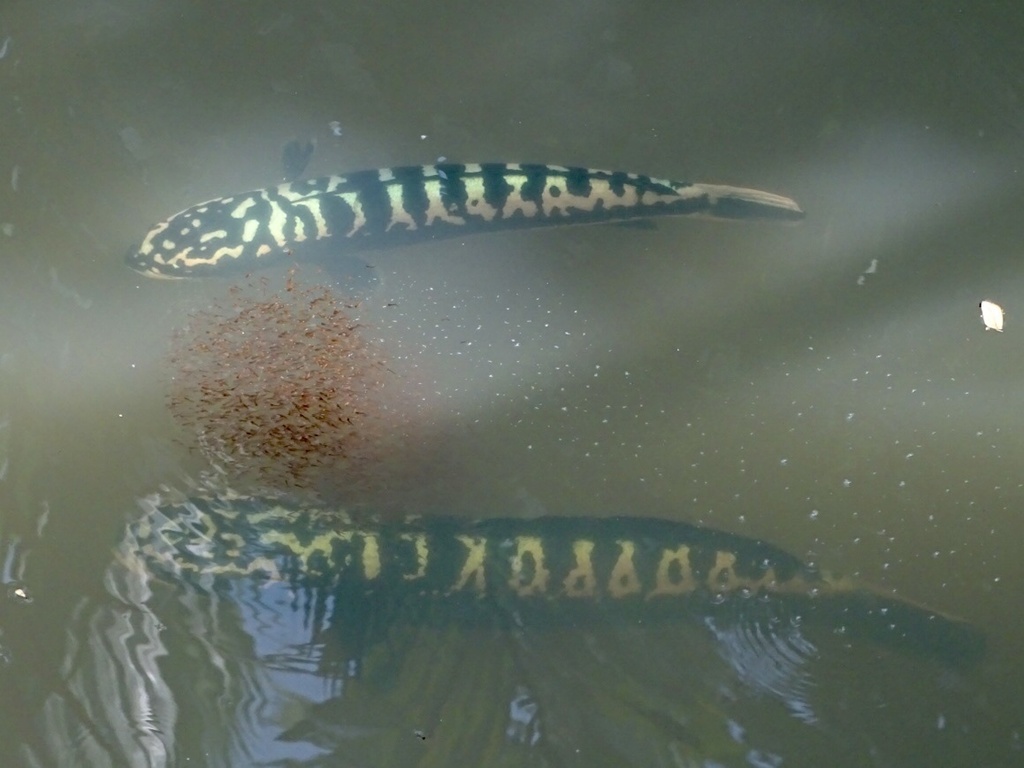
The Giant snakehead (Channa micropeltes) is a freshwater fish of the family Channidae that grows up to 130 cm.
Description
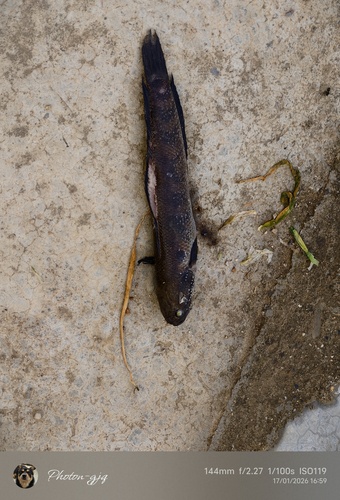
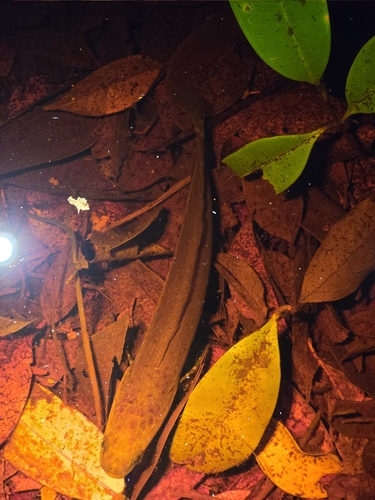
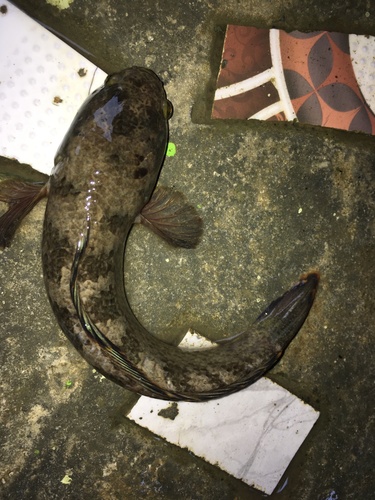
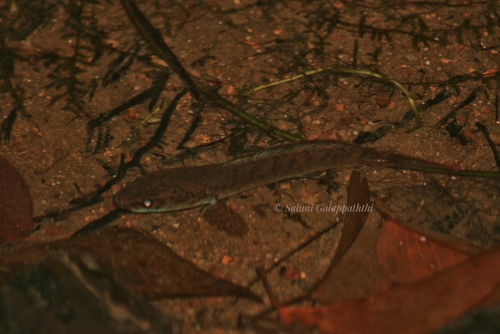
The giant snakehead is the largest snakehead and occurs in fresh water of Southeast Asia. The species grows to about 130 cm and has an elongate, powerful body; juveniles are bright red-orange with black stripes, adults blue-black with a paler belly. With an air-breathing organ it can gulp air and survive oxygen-poor water. As a top predator it hunts fish and crustaceans. While guarding its brood it is highly aggressive and can bite people. The IUCN assesses the species as Least Concern (LC).
Frequently asked questions
How do you recognise the Giant snakehead?
The Giant snakehead has an elongate, eel-like body, is mainly black and shows a plain pattern.
Where does the Giant snakehead live?
The Giant snakehead lives in fresh water and is mostly found around mixed bottom.
How big does the Giant snakehead get?
The Giant snakehead grows to a maximum of about 130 cm. On average the species is around 50 cm.
Is the Giant snakehead dangerous to humans?
The Giant snakehead can bite, but is otherwise not dangerous to humans.
Is the Giant snakehead edible?
Yes, the Giant snakehead is commonly eaten.
Download Fin's Fish Guide
Identify fish in seconds, log your catches and dives. Join the TestFlight beta.
All data
Identification
Appearance
Habitat & distribution
Behaviour & biology
For anglers
Safety
Status & sources
Same genus Channa
More from the family Channidae

Download Fin's Fish Guide
Identify fish in seconds, log your catches and dives. Join the TestFlight beta.