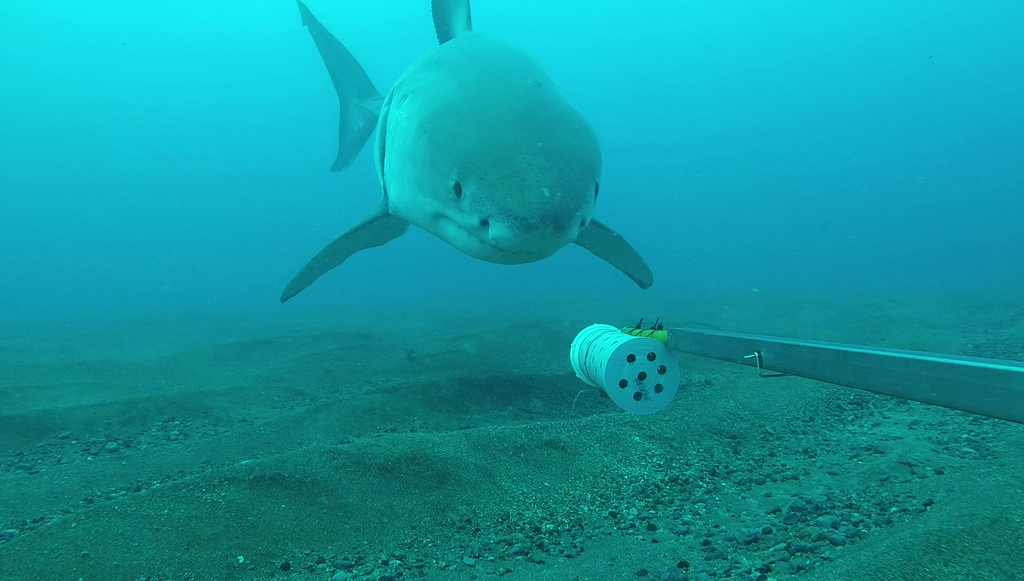
The Great white shark (Carcharodon carcharias) is a brackish-water fish of the family Lamnidae that grows up to 640 cm.
Description
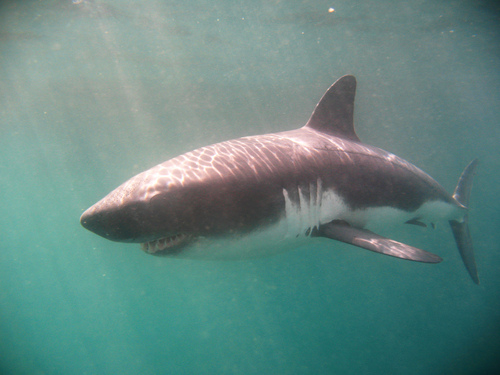
The great white shark is a large mackerel shark (Lamnidae) occurring worldwide in cool and temperate coastal waters and the open sea. The species can grow to about 6 metres and has a powerful, torpedo-shaped body with a grey back and white belly and a mouth with large, serrated, triangular teeth. Thanks to a partly warm-blooded system it can hunt swiftly and powerfully in cold water. As an apex predator it hunts marine mammals, fishes and other sharks. It is viviparous and, owing to fishing, vulnerable. It is a potentially dangerous shark that can inflict serious to fatal bite wounds.
Frequently asked questions
How do you recognise the Great white shark?
The Great white shark has a torpedo-shaped body, is mainly silver-grey and shows a plain pattern.
Where does the Great white shark live?
The Great white shark lives in brackish water and is mostly found around open water.
How big does the Great white shark get?
The Great white shark grows to a maximum of about 640 cm.
Is the Great white shark dangerous to humans?
The Great white shark can cause injury; handle it with care.
Is the Great white shark edible?
The Great white shark is not usually eaten.
Download Fin's Fish Guide
Identify fish in seconds, log your catches and dives. Join the TestFlight beta.
All data
Identification
Appearance
Habitat & distribution
Behaviour & biology
For anglers
Safety
Status & sources
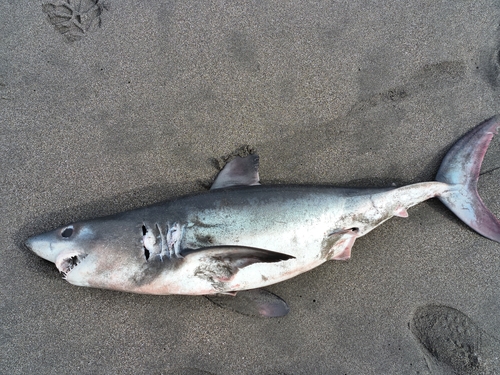
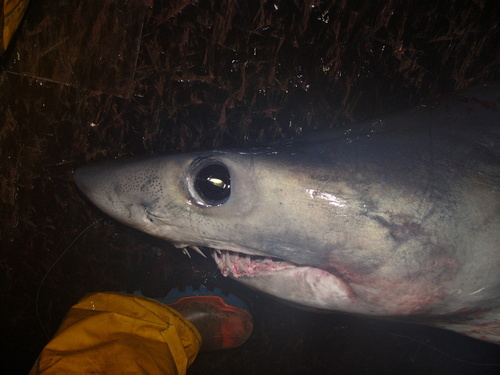
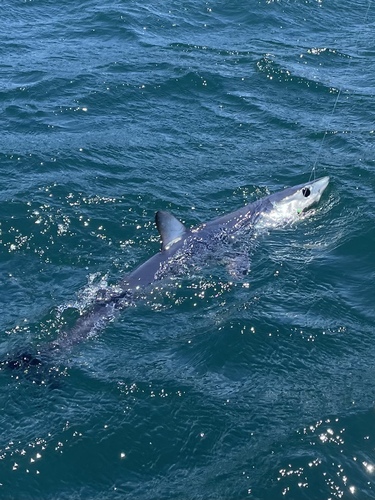
More from the family Lamnidae
Download Fin's Fish Guide
Identify fish in seconds, log your catches and dives. Join the TestFlight beta.