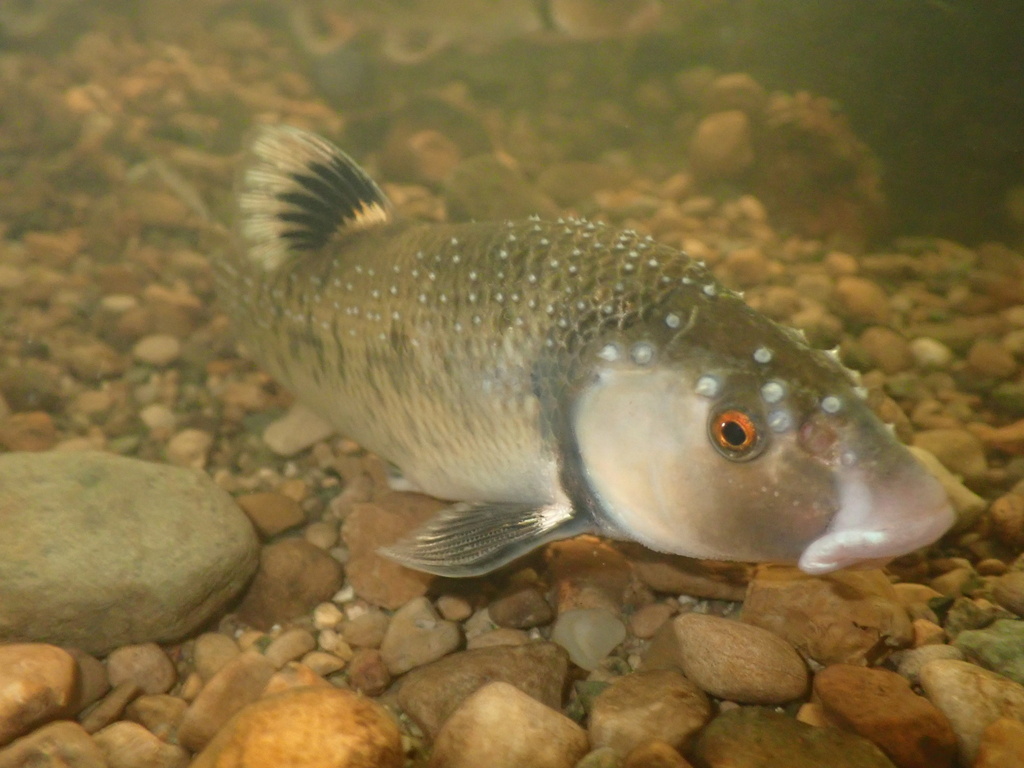
The Central stoneroller (Campostoma anomalum) is a freshwater fish of the family Cyprinidae that grows up to 22 cm.
Description
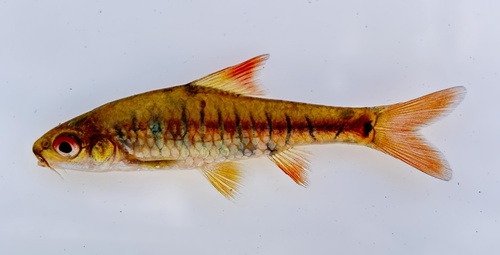
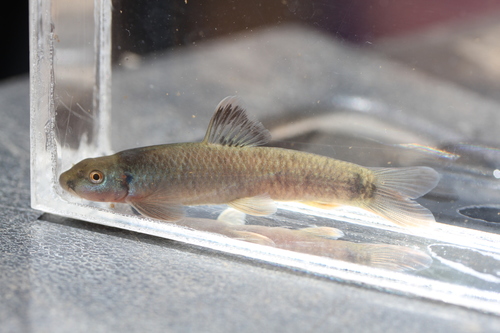
The central stoneroller is a cyprinid of the family Cyprinidae (Leuciscidae) reaching about 22 cm. The brownish body has an inferior mouth with a hard, cartilage-like ridge on the lower lip, with which the fish scrapes algae and growth off stones; the very long gut, coiled around the swim bladder, helps digest this plant diet. The species is native to the fresh water of eastern and central North America and lives in clear, flowing streams and rivers with stony bottoms. In spring the male digs a gravel nest with its head and develops large breeding tubercles. Through its grazing on stones it plays an important role in the stream ecosystem.
Frequently asked questions
How do you recognise the Central stoneroller?
The Central stoneroller has a torpedo-shaped body, is mainly brown and shows a plain pattern.
Where does the Central stoneroller live?
The Central stoneroller lives in fresh water and is mostly found around stony or rocky ground.
How big does the Central stoneroller get?
The Central stoneroller grows to a maximum of about 22 cm. On average the species is around 19 cm.
Is the Central stoneroller dangerous to humans?
No, the Central stoneroller is harmless to humans.
Is the Central stoneroller edible?
The Central stoneroller is not usually eaten.
Download Fin's Fish Guide
Identify fish in seconds, log your catches and dives. Join the TestFlight beta.
All data
Identification
Appearance
Habitat & distribution
Behaviour & biology
For anglers
Safety
Status & sources
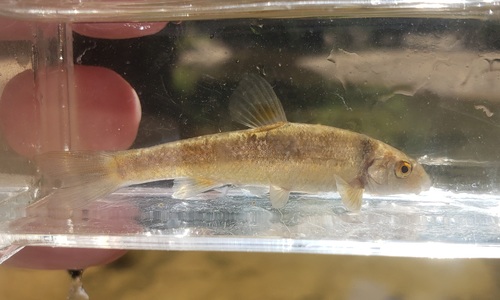
Same genus Campostoma
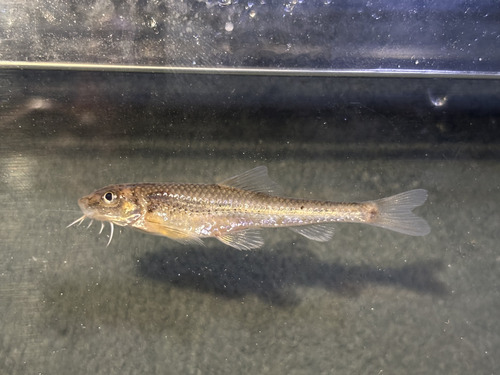
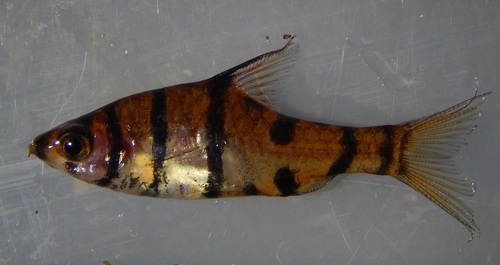
More from the family Cyprinidae


Download Fin's Fish Guide
Identify fish in seconds, log your catches and dives. Join the TestFlight beta.