Home · Scyliorhinidae · Bull huss
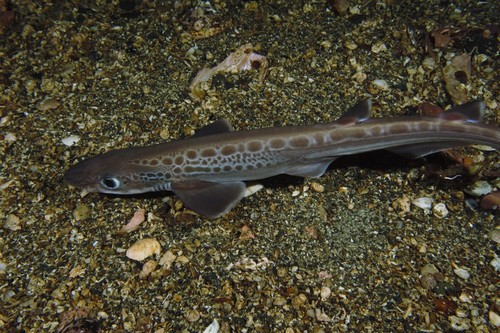
Bull huss (Scyliorhinus stellaris) — Scyliorhinidae

Bull huss

Scyliorhinus stellaris
VU · Vulnerable

The Bull huss (Scyliorhinus stellaris) is a saltwater fish of the family Scyliorhinidae that grows up to 170 cm.

Length
170 cm
Water
Saltwater
Depth
1.0–400.0 m
Diet
Carnivore
Behaviour
Solitary
Activity
Nocturnal
Body shape
Elongated (eel-like)
Substrate
Stone or rock
Danger
Harmless
Range
Northeast Atlantic from southern Scandinavia through the Mediterranean Sea to Morocco and Senegal.
Edibility
Rarely eaten

Want the complete picture on the Bull huss?

Get the app

Description

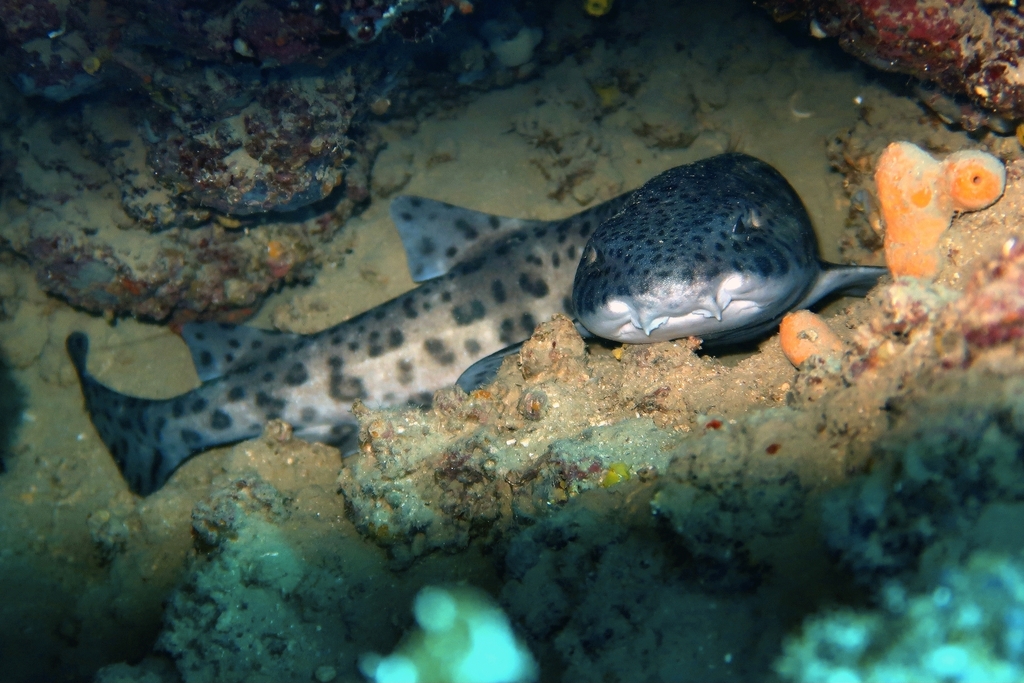
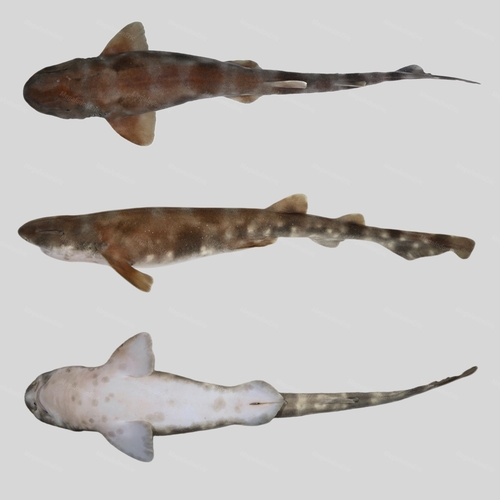
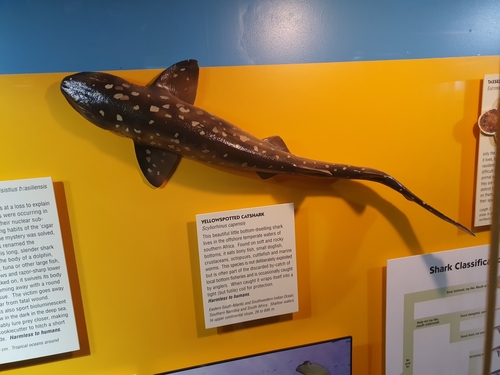
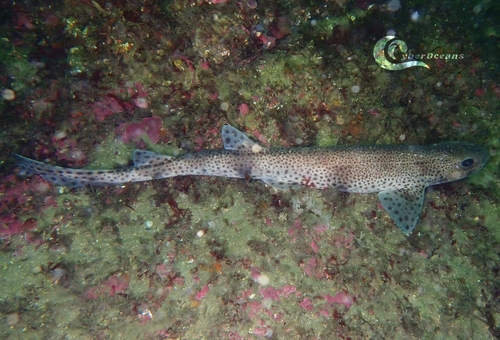
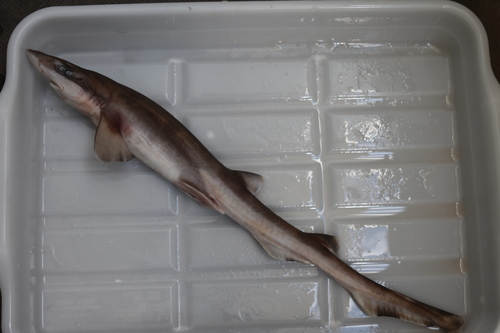
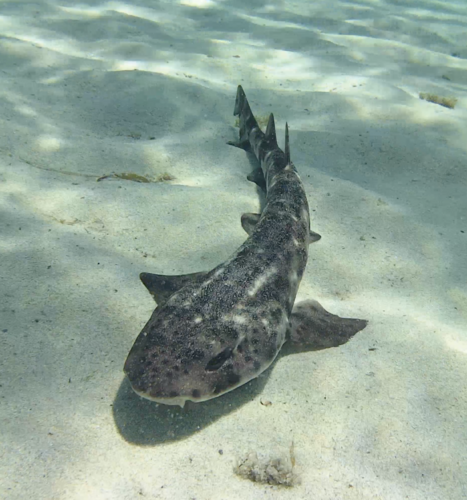
The nursehound is a bottom-dwelling catshark of the family Scyliorhinidae reaching about 170 cm. The elongate body is covered with large and small black spots, sometimes with white flecks as well. There are two dorsal fins set far back, and the skin feels rough. The nursehound lives solitarily on rocky and rough bottoms of the north-eastern Atlantic and Mediterranean, usually between 20 and 60 m, hunting benthic invertebrates and fish at night. It is oviparous, laying leathery egg cases ('mermaid's purses'). Fishing pressure has left the species assessed as Vulnerable across much of its range.

Frequently asked questions

How do you recognise the Bull huss?

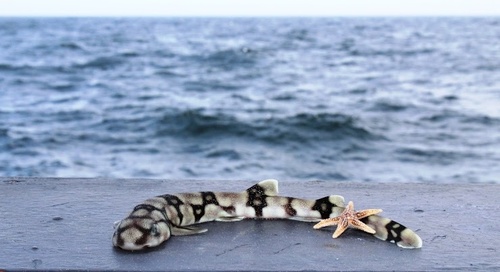
The Bull huss has an elongate, eel-like body, is mainly brown and shows a spots pattern. Bottom-dwelling catshark covered with large and small black blotches, sometimes white ones too; lays leathery egg cases ('mermaid's purses').

Where does the Bull huss live?

The Bull huss lives in the sea (marine waters) and is mostly found around stony or rocky ground. Northeast Atlantic from southern Scandinavia through the Mediterranean Sea to Morocco and Senegal.

How big does the Bull huss get?

The Bull huss grows to a maximum of about 170 cm. On average the species is around 125 cm.

Is the Bull huss dangerous to humans?

No, the Bull huss is harmless to humans. None required: this species is harmless to humans.

Is the Bull huss edible?

The Bull huss is rarely eaten.

More photos
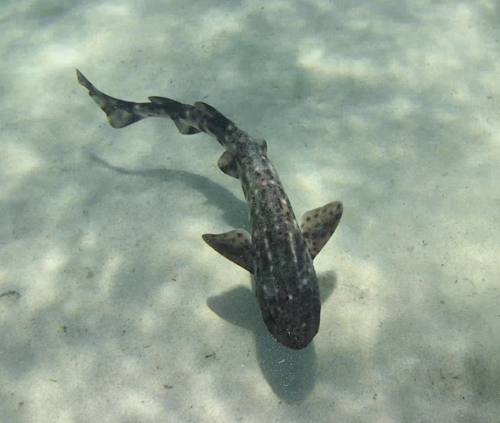
Bull huss (Scyliorhinus stellaris) — Scyliorhinidae — 2
iNaturalist ((c) zachaframa, some rights reserved (CC BY-NC))
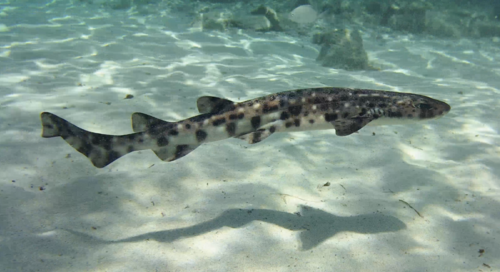
Bull huss (Scyliorhinus stellaris) — Scyliorhinidae — 3
iNaturalist ((c) zachaframa, some rights reserved (CC BY-NC))
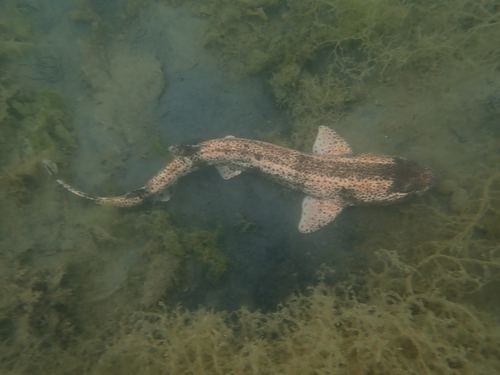
Bull huss (Scyliorhinus stellaris) — Scyliorhinidae — 4
iNaturalist ((c) zachaframa, some rights reserved (CC BY-NC))
Bull huss (Scyliorhinus stellaris) — Scyliorhinidae — 5
iNaturalist ((c) Anna Kellagher, some rights reserved (CC BY-NC))

Easily confused with

These species look like the Bull huss and live in the same waters.
Fin

Want the complete picture on the Bull huss?

Point your camera at the fish and Fin names the species in seconds. Free, and the Bull huss is one of 12,519 species in the app.

Get the app →

All data

Identification

English name
Bull huss verified
Scientific name
Scyliorhinus stellaris
Family
Scyliorhinidae
Other names
Dogfish; Greater spotted dogfish; Greate-spotted dogfish; Nursehound; Hound; Larger spotted dogfish; Large-spotted dogfish; Nurse; Nurse-hound; Rigg verified

Appearance

Size class
Extra large verified
Max length (cm)
170.0 verified
Average length (cm)
125.0 verified
Body shape
Elongated (eel-like) sourced
Dominant colour
Brown sourced
Pattern
Spots sourced
Tail shape
Straight sourced
Mouth position
Inferior (downward) inferred
Lips
Thin inferred
Barbels
No verified
Dorsal fins
Two separate sourced
Dorsal spines
No verified

Habitat & distribution

Water type
Saltwater sourced
Substrate
Stone or rock sourced
Min depth (m)
1.0 verified
Max depth (m)
400.0 verified
Natural range
Northeast Atlantic from southern Scandinavia through the Mediterranean Sea to Morocco and Senegal. verified
Origin
Native verified

Behaviour & biology

Diet
Carnivore verified
Diet (detail)
Small fishes, crustaceans and invertebrates inferred
Social behaviour
Solitary verified
Territorial
No verified
Activity
Nocturnal sourced
Reproduction
Separate sexes verified
Sexual dimorphism
No verified
levensduur_max_jaar
19.0 verified
Seasonality
Oviparous; lays leathery egg capsules on rocky bottoms, young about 16 cm at hatching. sourced
Special features
Bottom-dwelling catshark covered with large and small black blotches, sometimes white ones too; lays leathery egg cases ('mermaid's purses'). sourced

For anglers

Edibility
Rarely eaten verified
Fishing method
Fishing with natural bait (fish, shrimp, worm) or lures close to reef and rock structures. inferred
Regulations source
FishBase ↗ inferred

Safety

Danger to humans
Harmless sourced
First aid
None required: this species is harmless to humans. sourced

Status & sources

Sources
FishBase via GBIF (DwC-A), CC-BY-NC 4.0

Same genus Scyliorhinus

More from the family Scyliorhinidae

Fin

Want the complete picture on the Bull huss?

Point your camera at the fish and Fin names the species in seconds. Free, and the Bull huss is one of 12,519 species in the app.

Get the app →
Is this the Bull huss? Get the app