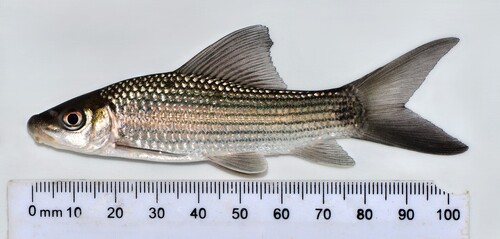
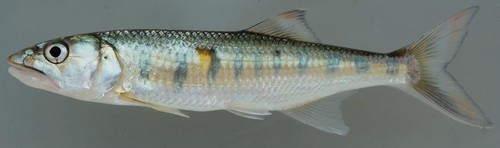
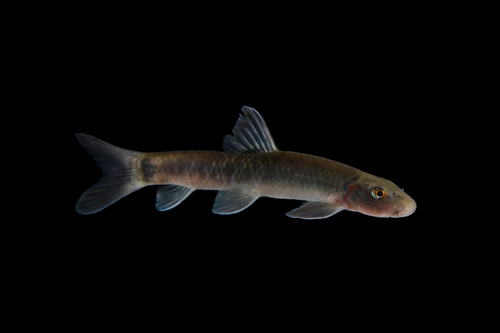
Home · Cyprinidae · Bluntnose minnow
Bluntnose minnow (Pimephales notatus) — Cyprinidae

Bluntnose minnow

Pimephales notatus
Family: Cyprinidae
LC · Least Concern

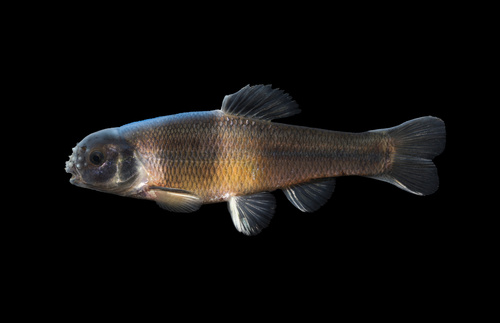
The Bluntnose minnow (Pimephales notatus) is a freshwater fish of the family Cyprinidae that grows up to 11 cm.

Length
11 cm
Water
Freshwater
Diet
Omnivore
Behaviour
Schooling
Activity
Diurnal
Body shape
Elongated (eel-like)
Substrate
Sand / mud bottom
Danger
Harmless
Range
The species lives in rivers, streams and lakes of eastern and central North America.
Edibility
Rarely eaten

Want the complete picture on the Bluntnose minnow?

Get the app

Description

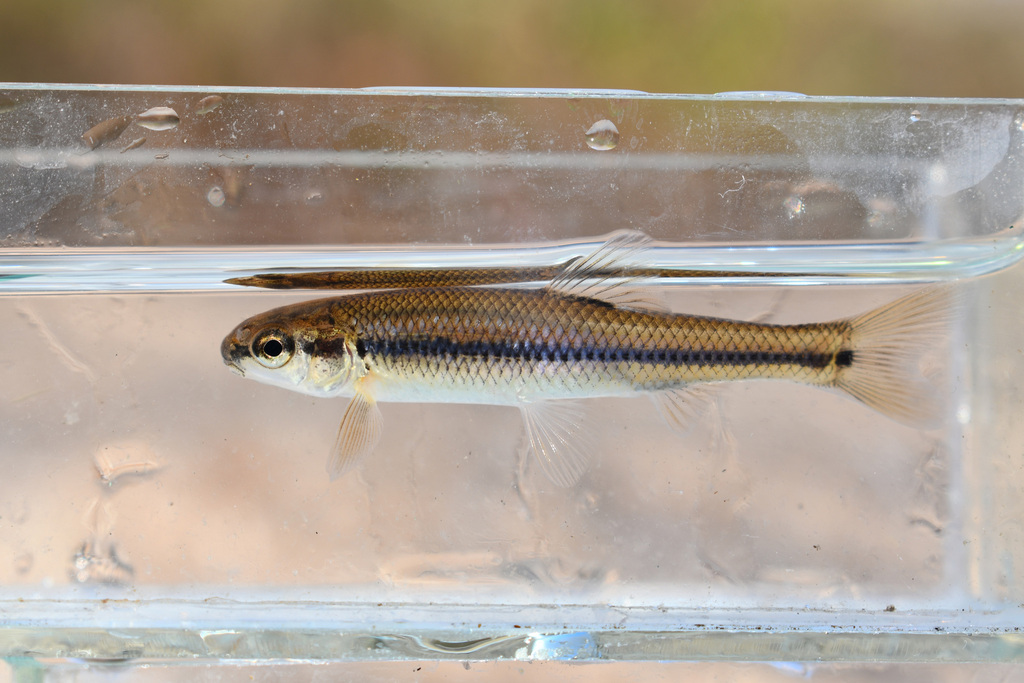
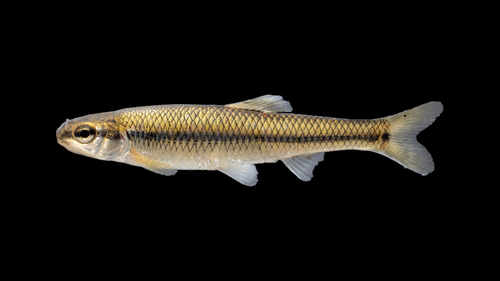
The bluntnose minnow is a small cyprinid of the family Cyprinidae reaching about 11 cm. It has a blunt, rounded snout, a dark lengthwise stripe and a spot at the tail base; the male guards the eggs under a stone. The species is native to the fresh water of North America. The species lives in rivers, streams and lakes of eastern and central North America. It feeds on algae, detritus, insect larvae and small zooplankton. In spring and summer it spawns in shallow water, where the eggs attach to plants, stones or sand. It is a common species, locally used as a bait fish and an important prey for larger predatory fish and waterbirds.

Frequently asked questions

How do you recognise the Bluntnose minnow?

The Bluntnose minnow has an elongate, eel-like body, is mainly silver-grey and shows a horizontal stripes pattern. It has a blunt, rounded snout, a dark longitudinal stripe and a blotch at the base of the tail; the male guards the eggs under a stone.

Where does the Bluntnose minnow live?

The Bluntnose minnow lives in fresh water and is mostly found around sand or mud bottom. The species lives in rivers, streams and lakes of eastern and central North America.

How big does the Bluntnose minnow get?

The Bluntnose minnow grows to a maximum of about 11 cm. On average the species is around 7 cm.

Is the Bluntnose minnow dangerous to humans?

No, the Bluntnose minnow is harmless to humans. None required: this species is harmless to humans.

Is the Bluntnose minnow edible?

The Bluntnose minnow is rarely eaten.

More photos
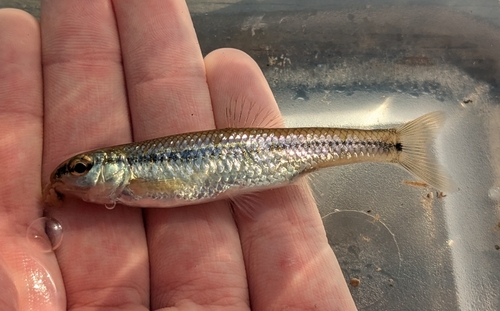
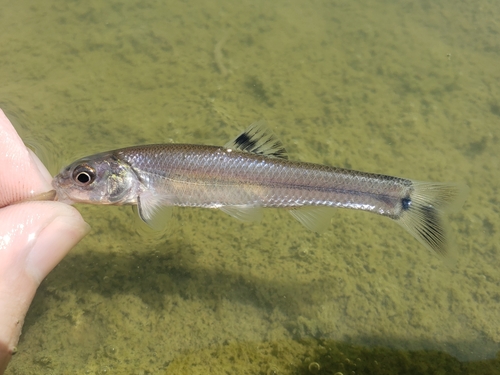
Bluntnose minnow (Pimephales notatus) — Cyprinidae — 2
iNaturalist ((c) Quinn, some rights reserved (CC BY))
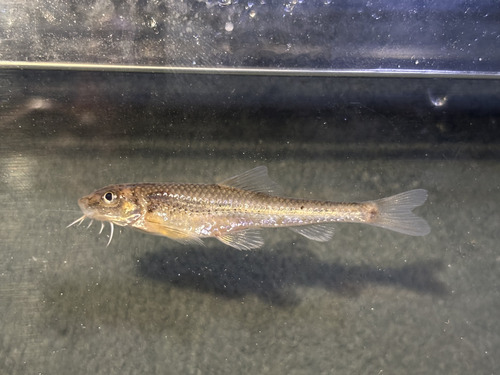
Bluntnose minnow (Pimephales notatus) — Cyprinidae — 3
iNaturalist ((c) beautifulbait, some rights reserved (CC BY-NC))
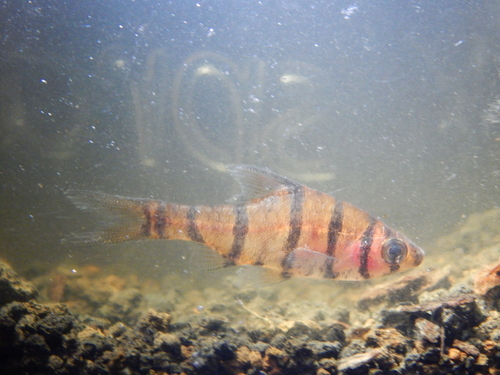
Bluntnose minnow (Pimephales notatus) — Cyprinidae — 4
Dakota Parish (CC BY 4.0) via GBIF — iNaturalist
Bluntnose minnow (Pimephales notatus) — Cyprinidae — 5
padfoot exotics (CC BY-NC 4.0) via GBIF — iNaturalist
Fin

Want the complete picture on the Bluntnose minnow?

Point your camera at the fish and Fin names the species in seconds. Free, and the Bluntnose minnow is one of 12,519 species in the app.

Get the app →

All data

Identification

English name
Bluntnose minnow verified
Scientific name
Pimephales notatus
Family
Cyprinidae
Other names
Bluntnose minnow verified

Appearance

Size class
Small verified
Max length (cm)
11 verified
Average length (cm)
6.5 verified
Body shape
Elongated (eel-like) sourced
Dominant colour
Silver / grey sourced
Pattern
Horizontal stripes sourced
Tail shape
Forked inferred
Mouth position
Inferior (downward) inferred
Lips
Thin inferred
Barbels
No verified
Dorsal fins
One continuous sourced
Dorsal spines
No verified

Habitat & distribution

Water type
Freshwater verified
Substrate
Sand / mud bottom verified
Natural range
The species lives in rivers, streams and lakes of eastern and central North America. verified
Origin
Native verified

Behaviour & biology

Diet
Omnivore verified
Diet (detail)
Algae, organic debris, insect larvae and small zooplankton sourced
Social behaviour
Schooling verified
Territorial
No verified
Activity
Diurnal inferred
Reproduction
Separate sexes verified
Sexual dimorphism
No verified
levensduur_max_jaar
5.0 verified
Seasonality
Spawns in spring and summer in shallow water; the eggs attach to plants, stones or sand. sourced
Special features
It has a blunt, rounded snout, a dark longitudinal stripe and a blotch at the base of the tail; the male guards the eggs under a stone. sourced

For anglers

Edibility
Rarely eaten verified
Fishing method
Small in size and barely an angling target; mostly caught incidentally or as baitfish. inferred
Regulations source
FishBase ↗ inferred

Safety

Danger to humans
Harmless verified
First aid
None required: this species is harmless to humans. sourced

Status & sources

Sources
FishBase via GBIF (DwC-A), CC-BY-NC 4.0

Same genus Pimephales

More from the family Cyprinidae

Fin

Want the complete picture on the Bluntnose minnow?

Point your camera at the fish and Fin names the species in seconds. Free, and the Bluntnose minnow is one of 12,519 species in the app.

Get the app →
Is this the Bluntnose minnow? Get the app