Home · Scaridae · Blue barred parrotfish
Blue barred parrotfish (Scarus ghobban) — Scaridae

Blue barred parrotfish

Scarus ghobban
Family: Scaridae
LC · Least Concern
NativeIntroduced

The Blue barred parrotfish (Scarus ghobban) is a brackish-water fish of the family Scaridae that grows up to 75 cm.

Length
75 cm
Water
Brackish
Depth
1.0–90.0 m
Diet
Herbivore
Behaviour
Solitary
Activity
Diurnal
Body shape
Torpedo-shaped
Substrate
Stone or rock
Danger
Harmless
Range
Indian and Pacific Ocean, from the Red Sea and East Africa to the eastern Pacific.
Edibility
Commonly eaten

Want the complete picture on the Blue barred parrotfish?

Get the app

Description

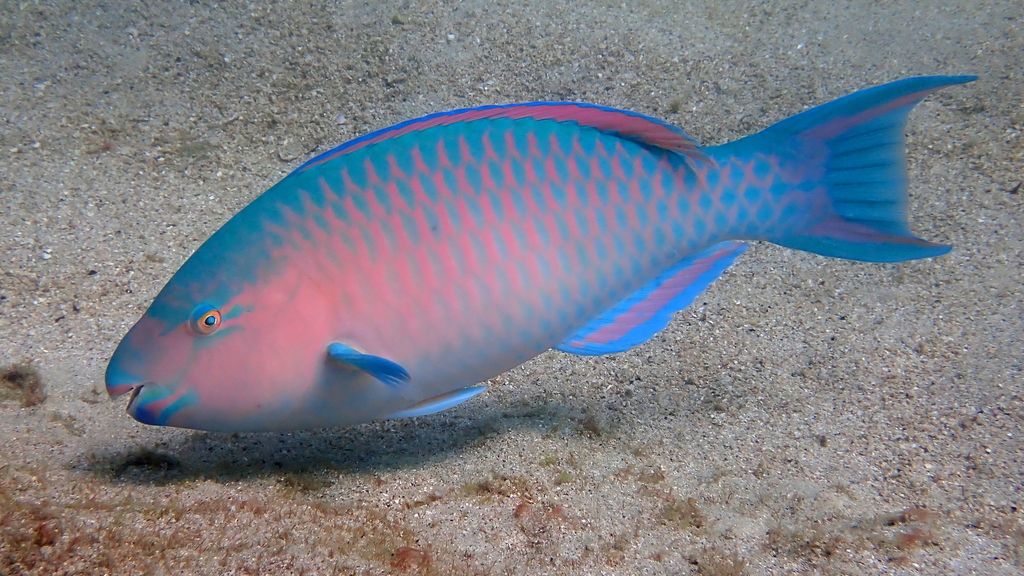
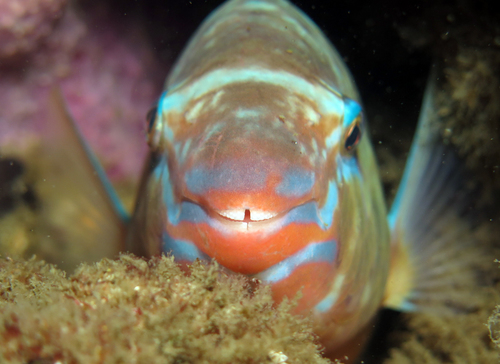
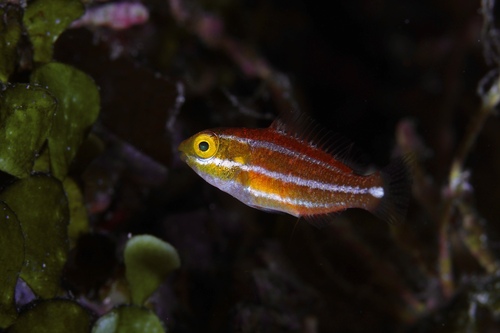
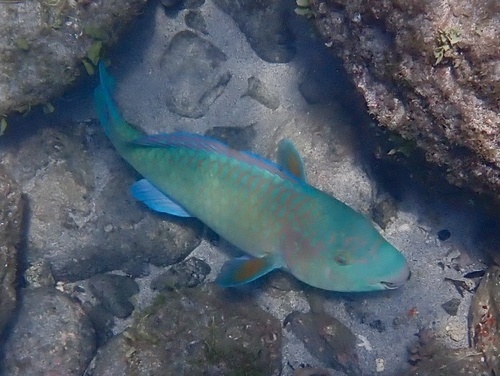
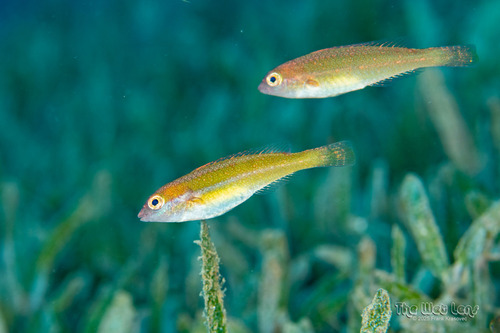
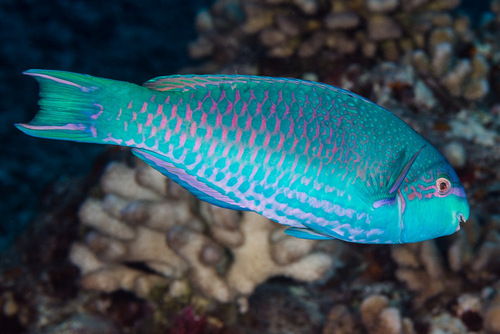
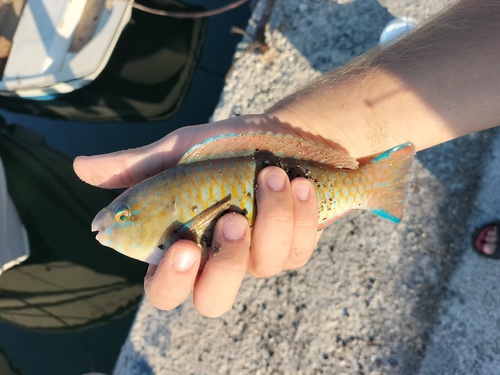
The blue-barred parrotfish is a large parrotfish (family Scaridae) of the Indian and Pacific Oceans. The species grows to about 75 cm and takes its name from the parrot-like fused jaw teeth with which it scrapes algae from rock and coral. Colour differs greatly with life stage: younger fish are yellowish, while large males are blue-green with blue margins on the scales. Like many parrotfishes the species begins life as a female and can later change into a male. It lives on lagoon and seaward reefs and is fished commercially. It is harmless to humans.

Frequently asked questions

How do you recognise the Blue barred parrotfish?

The Blue barred parrotfish has a torpedo-shaped body, is mainly multicoloured and shows a plain pattern. Parrot-beak-shaped jaw teeth; changes from female into male with a strong colour change.

Where does the Blue barred parrotfish live?

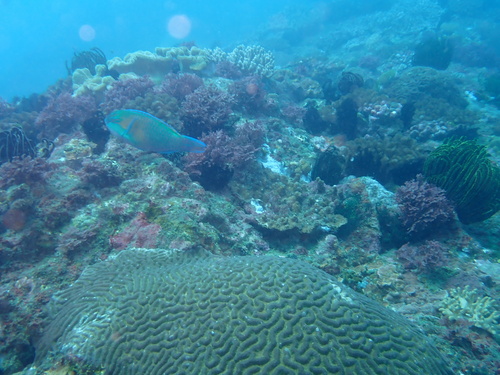
The Blue barred parrotfish lives in brackish water and is mostly found around stony or rocky ground. Indian and Pacific Ocean, from the Red Sea and East Africa to the eastern Pacific.

How big does the Blue barred parrotfish get?

The Blue barred parrotfish grows to a maximum of about 75 cm. On average the species is around 30 cm.

Is the Blue barred parrotfish dangerous to humans?

No, the Blue barred parrotfish is harmless to humans. This species is harmless to humans. No specific first aid is needed. Still handle the fish with care: mind the fin rays and the sharp edges of the gill cover, and rinse any scratch with clean water and cover it. For a dirty or deep wound check tetanus status.

Is the Blue barred parrotfish edible?

Yes, the Blue barred parrotfish is commonly eaten.

More photos
Blue barred parrotfish (Scarus ghobban) — Scaridae — 2
iNaturalist ((c) icpet, some rights reserved (CC BY-NC))
Blue barred parrotfish (Scarus ghobban) — Scaridae — 3
iNaturalist ((c) Gina, some rights reserved (CC BY-NC))
Blue barred parrotfish (Scarus ghobban) — Scaridae — 4
Wikimedia Commons — Amada44 (CC BY-SA 3.0)
Blue barred parrotfish (Scarus ghobban) — Scaridae — 5
Wikimedia Commons — Izuzuki (CC BY-SA 3.0)

Easily confused with

These species look like the Blue barred parrotfish and live in the same waters.
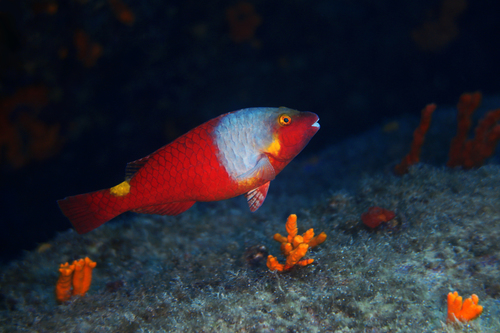
Fin

Want the complete picture on the Blue barred parrotfish?

Point your camera at the fish and Fin names the species in seconds. Free, and the Blue barred parrotfish is one of 12,519 species in the app.

Get the app →

All data

Identification

English name
Blue barred parrotfish verified
Scientific name
Scarus ghobban
Family
Scaridae
Other names
Blue trim parrotfish; Blue-barred orange parrotfish; Bluebarred parrotfish; Blue-barred parrotfish; Yellowscale parrotfish; Parrotfish; Bluechin parrotfish; Cream parrotfish; Flame-breasted parrot-fish; Globe-headed parrotfish; Green blotched parrotfish; Parrot fish verified

Appearance

Size class
Large verified
Max length (cm)
75.0 verified
Average length (cm)
30.0 verified
Body shape
Torpedo-shaped sourced
Dominant colour
Multicoloured inferred
Pattern
Plain inferred
Tail shape
Crescent (lunate) inferred
Mouth position
Beak-shaped inferred
Lips
Thin inferred
Barbels
No sourced
Dorsal fins
One continuous inferred
Dorsal spines
Yes sourced

Habitat & distribution

Water type
Brackish sourced
Substrate
Stone or rock sourced
Min depth (m)
1.0 verified
Max depth (m)
90.0 verified
Natural range
Indian and Pacific Ocean, from the Red Sea and East Africa to the eastern Pacific. inferred
Origin
Native sourced

Behaviour & biology

Diet
Herbivore sourced
Diet (detail)
Algae scraped from rock and coral sourced
Social behaviour
Solitary inferred
Territorial
No inferred
Activity
Diurnal inferred
Reproduction
Protogynous (female first) sourced
Sexual dimorphism
Yes inferred
levensduur_max_jaar
13.0 verified
Seasonality
Spawns year-round in warm waters with pelagic eggs. inferred
Special features
Parrot-beak-shaped jaw teeth; changes from female into male with a strong colour change. sourced

For anglers

Edibility
Commonly eaten sourced
Fishing method
Fishing with natural bait (fish, shrimp, worm) or lures close to reef and rock structures. inferred
Regulations source
FishBase ↗ inferred

Safety

Danger to humans
Harmless sourced
First aid
This species is harmless to humans. No specific first aid is needed. Still handle the fish with care: mind the fin rays and the sharp edges of the gill cover, and rinse any scratch with clean water and cover it. For a dirty or deep wound check tetanus status. verified

Status & sources

Sources
FishBase via GBIF (DwC-A), CC-BY-NC 4.0

Same genus Scarus

More from the family Scaridae
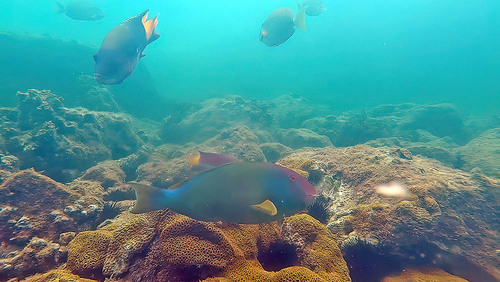
Fin

Want the complete picture on the Blue barred parrotfish?

Point your camera at the fish and Fin names the species in seconds. Free, and the Blue barred parrotfish is one of 12,519 species in the app.

Get the app →
Is this the Blue barred parrotfish? Get the app