 Fin's Fish Guide
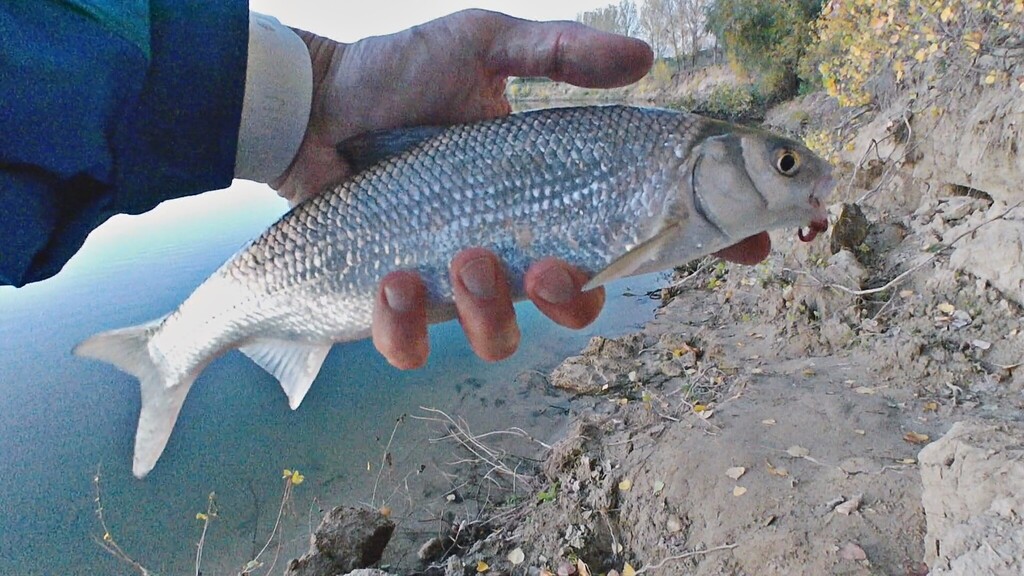
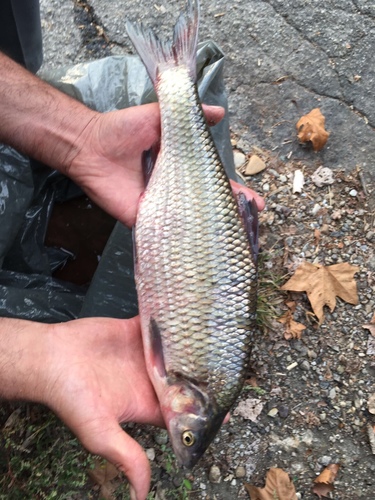
The Black Sea roach (Rutilus frisii) is a brackish-water fish of the family Cyprinidae that grows up to 70 cm.
Basins of the Black Sea, the Sea of Azov and the Caspian Sea; a semi-anadromous fish that lives in brackish coastal water and ascends the large rivers to spawn.
Description
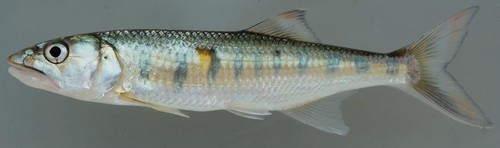
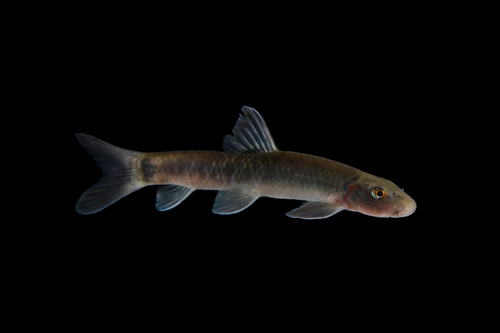
The Black Sea roach, known in the Caspian region as kutum, is a large, robust cyprinid of the family Cyprinidae reaching about 70 cm. It resembles a stout roach, with a deep, silvery-grey body and a forked tail. It is a semi-anadromous fish: it lives in brackish coastal water of the Black, Azov and Caspian Sea basins and ascends the great rivers in spring to spawn on gravel and water plants. As an omnivore it eats molluscs, crustaceans, insect larvae and some plant material. In the Caspian region the kutum is a valued commercial and sport fish. Globally the species is assessed as Least Concern (LC), though its spawning grounds have declined sharply in places.
Frequently asked questions
How do you recognise the Black Sea roach?
The Black Sea roach has a torpedo-shaped body, is mainly silver-grey and shows a plain pattern. Large, robust cyprinid that resembles a stout roach; a semi-migratory fish that runs up the rivers from brackish water to spawn.
Where does the Black Sea roach live?
The Black Sea roach lives in brackish water and is mostly found around open water. Basins of the Black Sea, the Sea of Azov and the Caspian Sea; a semi-anadromous fish that lives in brackish coastal water and ascends the large rivers to spawn.
How big does the Black Sea roach get?
The Black Sea roach grows to a maximum of about 70 cm. On average the species is around 60 cm.
Is the Black Sea roach dangerous to humans?
No, the Black Sea roach is harmless to humans. None required: this species is harmless to humans.
Is the Black Sea roach edible?
Yes, the Black Sea roach is commonly eaten.

Want the complete picture on the Black Sea roach?
Point your camera at the fish and Fin names the species in seconds. Free, and the Black Sea roach is one of 12,519 species in the app.
All data
Identification
Appearance
Habitat & distribution
Behaviour & biology
For anglers
Safety
Status & sources
Same genus Rutilus
More from the family Cyprinidae



Want the complete picture on the Black Sea roach?
Point your camera at the fish and Fin names the species in seconds. Free, and the Black Sea roach is one of 12,519 species in the app.