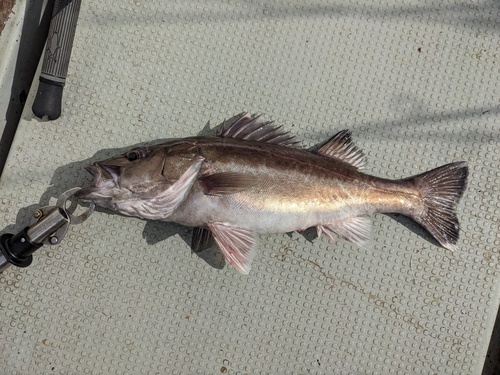
Home · Serranidae · Bar-breasted rock-cod
Bar-breasted rock-cod (Epinephelus quoyanus) — Serranidae

Bar-breasted rock-cod

Epinephelus quoyanus
Family: Serranidae
LC · Least Concern

The Bar-breasted rock-cod (Epinephelus quoyanus) is a saltwater fish of the family Serranidae that grows up to 40 cm.

Length
40 cm
Water
Saltwater
Depth
0–50.0 m
Diet
Carnivore
Behaviour
Solitary
Body shape
Torpedo-shaped
Substrate
Stone or rock
Danger
Venomous / poisonous
Range
Western Pacific; inshore silty reefs to approximately 50 m.
Edibility
Commonly eaten

Want the complete picture on the Bar-breasted rock-cod?

Get the app

Description

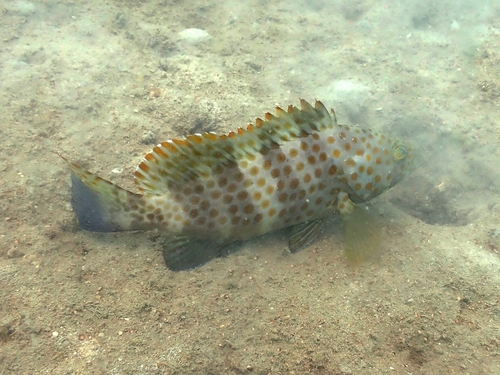
The longfin grouper is a grouper of the family Serranidae from the western Pacific. The species grows to about 40 cm and has a pale body densely covered with brown, honeycomb-like spots, with a dark blotch at the pectoral-fin base. It inhabits inshore, silty reefs and is not found deeper than about 50 metres. As an ambush predator it feeds on shrimps, small fishes and other crustaceans. Groupers are often protogynous hermaphrodites, starting as females and later able to become males. The longfin grouper is a valued food fish and harmless to humans.

Frequently asked questions

How do you recognise the Bar-breasted rock-cod?

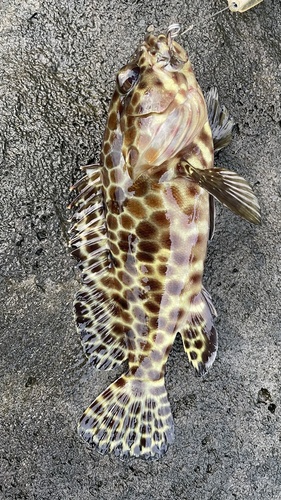
The Bar-breasted rock-cod has a torpedo-shaped body, is mainly brown and shows a spots pattern. Honeycomb-like brown blotch pattern; protogynous hermaphrodite (first female). Note: in tropical areas this species can cause ciguatera poisoning when eaten; large specimens of coral reef predators can accumulate the toxin. Eat with care or avoid in risk areas.

Where does the Bar-breasted rock-cod live?

The Bar-breasted rock-cod lives in the sea (marine waters) and is mostly found around stony or rocky ground. Western Pacific; inshore silty reefs to approximately 50 m.

How big does the Bar-breasted rock-cod get?

The Bar-breasted rock-cod grows to a maximum of about 40 cm.

Is the Bar-breasted rock-cod dangerous to humans?

The Bar-breasted rock-cod is venomous — handle spines with care and seek medical help after a sting if needed. None required: this species is harmless to humans.

Is the Bar-breasted rock-cod edible?

Yes, the Bar-breasted rock-cod is commonly eaten.

More photos
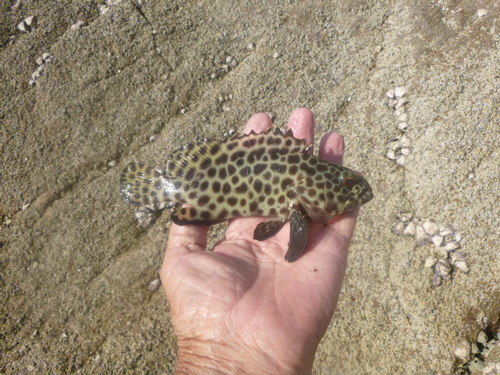
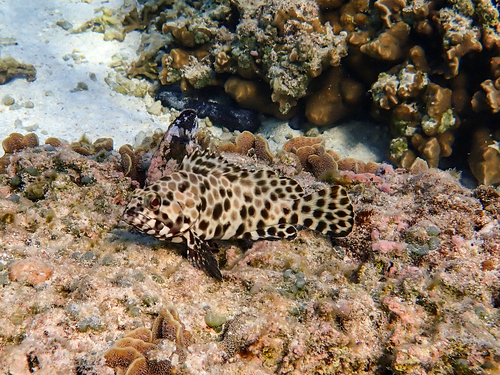
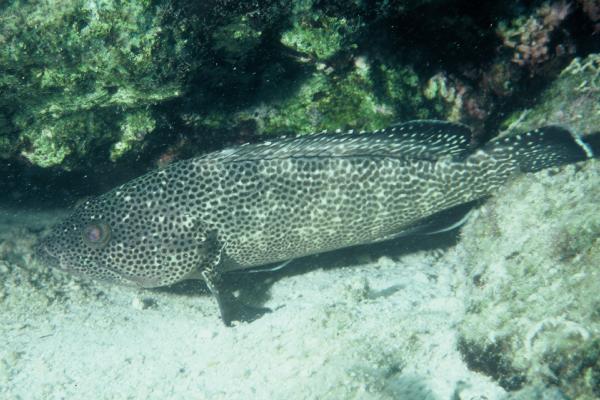
Bar-breasted rock-cod (Epinephelus quoyanus) — Serranidae — 2
iNaturalist ((c) Bob Joynes, some rights reserved (CC BY-NC))
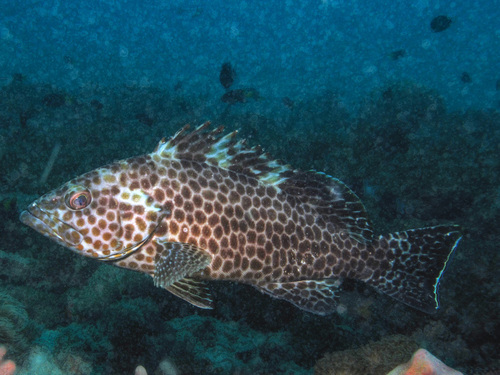
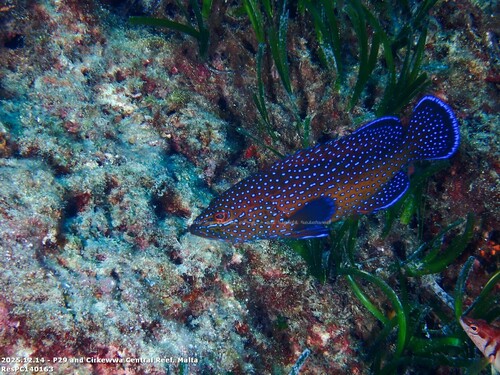
Bar-breasted rock-cod (Epinephelus quoyanus) — Serranidae — 3
iNaturalist ((c) Allan Lugg, some rights reserved (CC BY-NC))
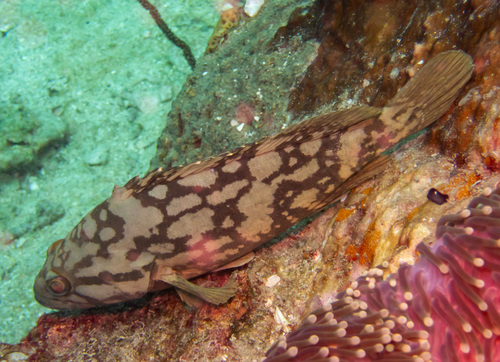
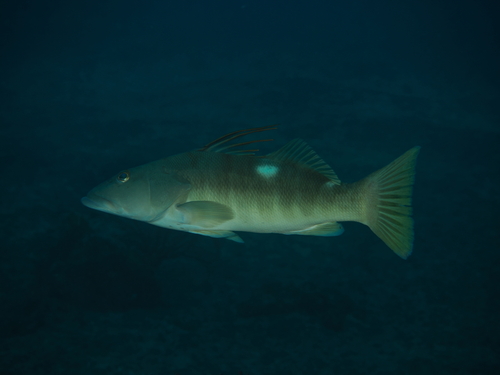
Bar-breasted rock-cod (Epinephelus quoyanus) — Serranidae — 4
Wikimedia Commons — "Vincent C. Chen is a Taiwanese recreational diver and free diver who dedicate to underwater photography and the marine lives protection. He is also one of the contributors to EZDive magazine since 2008." (CC BY-SA 3.0)
Bar-breasted rock-cod (Epinephelus quoyanus) — Serranidae — 5
iNaturalist ((c) Bruce Deagle, some rights reserved (CC BY))
Fin

Want the complete picture on the Bar-breasted rock-cod?

Point your camera at the fish and Fin names the species in seconds. Free, and the Bar-breasted rock-cod is one of 12,519 species in the app.

Get the app →

All data

Identification

English name
Bar-breasted rock-cod verified
Scientific name
Epinephelus quoyanus
Family
Serranidae
Other names
Barred-chest rock-cod; Barrel-chest grouper; Coral cod; Gilbert's rock-cod; Grouper; Longfin grouper; Longfin rockcod; Long-finned rock cod; Honeycomb cod; Honeycomb grouper; Honeycomb rockcod; Longfin cod verified

Appearance

Size class
Medium verified
Max length (cm)
40.0 verified
Body shape
Torpedo-shaped sourced
Dominant colour
Brown inferred
Pattern
Spots inferred
Tail shape
Rounded inferred
Mouth position
Terminal inferred
Lips
Thick / fleshy inferred
Barbels
No sourced
Dorsal fins
One continuous inferred
Dorsal spines
Yes sourced

Habitat & distribution

Water type
Saltwater sourced
Substrate
Stone or rock sourced
Max depth (m)
50.0 verified
Natural range
Western Pacific; inshore silty reefs to approximately 50 m. inferred
Origin
Native sourced

Behaviour & biology

Diet
Carnivore sourced
Diet (detail)
Shrimps, small fishes and other crustaceans sourced
Social behaviour
Solitary inferred
Territorial
No inferred
Reproduction
Protogynous (female first) sourced
Sexual dimorphism
No inferred
Seasonality
Present year-round in its habitat; no pronounced seasonality known. inferred
Special features
Honeycomb-like brown blotch pattern; protogynous hermaphrodite (first female). Note: in tropical areas this species can cause ciguatera poisoning when eaten; large specimens of coral reef predators can accumulate the toxin. Eat with care or avoid in risk areas. verified

For anglers

Edibility
Commonly eaten sourced
Fishing method
Fishing with natural bait (fish, shrimp, worm) or lures close to reef and rock structures. inferred
Regulations source
FishBase ↗ inferred

Safety

Danger to humans
Venomous / poisonous sourced
First aid
None required: this species is harmless to humans. sourced

Status & sources

Sources
FishBase via GBIF (DwC-A), CC-BY-NC 4.0

Same genus Epinephelus

More from the family Serranidae

Fin

Want the complete picture on the Bar-breasted rock-cod?

Point your camera at the fish and Fin names the species in seconds. Free, and the Bar-breasted rock-cod is one of 12,519 species in the app.

Get the app →
Is this the Bar-breasted rock-cod? Get the app