 Fin's Fish Guide

The Banded rockcod (Epinephelus lanceolatus) is a brackish-water fish of the family Serranidae that grows up to 270 cm.
Description
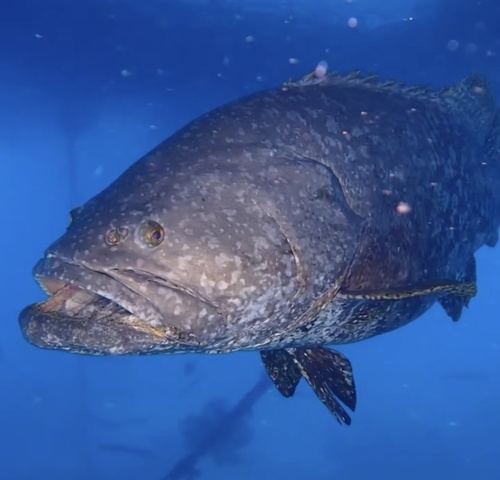
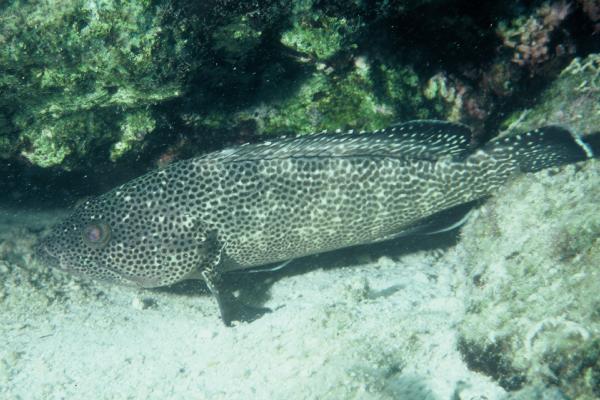
The giant grouper is the largest bony fish on coral reefs and can grow well over two metres long and weigh hundreds of kilos. The species (Serranidae) has a robust, dark-blotched body and an enormous mouth. It lives in caves and wrecks of reefs and lagoons and as an ambush hunter takes crustaceans, fishes and even small sharks and sea turtles. It is protogynous. Very large individuals can lunge with the huge mouth or threaten a diver when provoked.
Frequently asked questions
How do you recognise the Banded rockcod?
The Banded rockcod has a torpedo-shaped body, is mainly brown and shows a spots pattern. Largest bony fish on coral reefs (well over 2 m); protogynous ambush predator that even eats small sharks.
Where does the Banded rockcod live?
The Banded rockcod lives in brackish water and is mostly found around stony or rocky ground. Indo-Pacific; caves and wrecks of reefs and lagoons.
How big does the Banded rockcod get?
The Banded rockcod grows to a maximum of about 270 cm. On average the species is around 190 cm.
Is the Banded rockcod dangerous to humans?
The Banded rockcod can cause injury; handle it with care. Very large individuals can lunge with the huge mouth or threaten a diver when provoked or fed. Keep your distance from large animals; clean and disinfect a bite and seek medical care for a deep wound.
Is the Banded rockcod edible?
Yes, the Banded rockcod is commonly eaten.
More photos




Want the complete picture on the Banded rockcod?
Point your camera at the fish and Fin names the species in seconds. Free, and the Banded rockcod is one of 12,519 species in the app.
All data
Identification
Appearance
Habitat & distribution
Behaviour & biology
For anglers
Safety
Status & sources
Same genus Epinephelus


More from the family Serranidae



Want the complete picture on the Banded rockcod?
Point your camera at the fish and Fin names the species in seconds. Free, and the Banded rockcod is one of 12,519 species in the app.