 Fin's Fish Guide
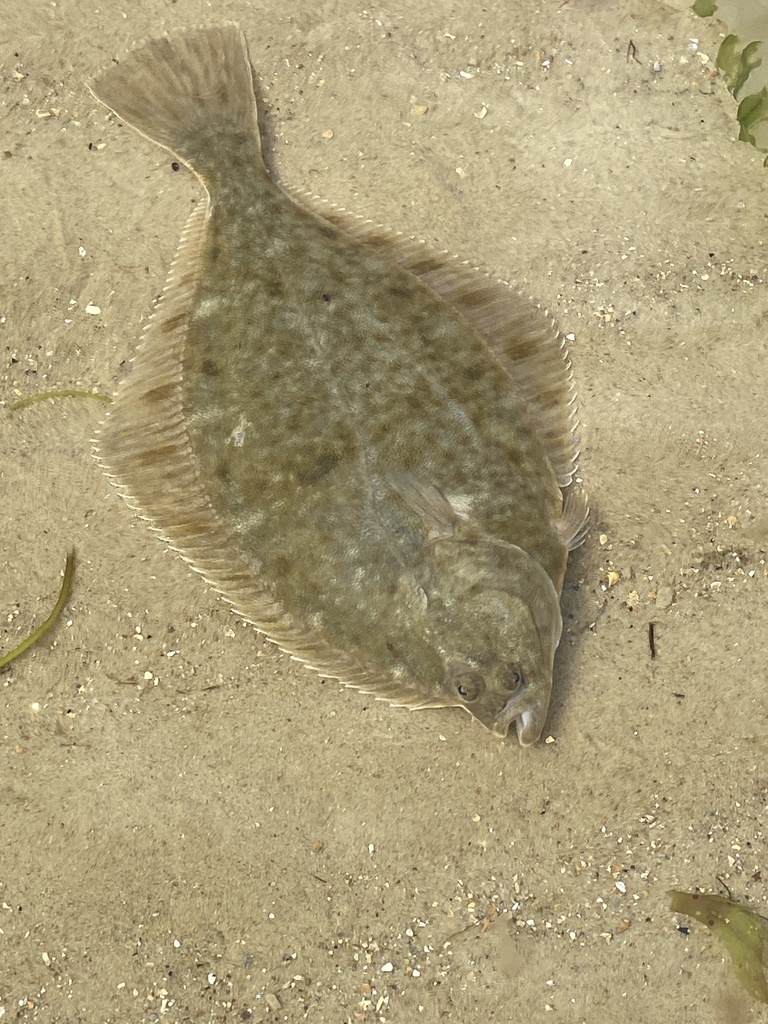
The Baltic flounder (Platichthys flesus) is a fish that lives in both fresh and salt water of the family Pleuronectidae that grows up to 60 cm.
Northeast Atlantic, the North Sea, the Baltic Sea and the Mediterranean Sea, and far upstream in rivers.
Description
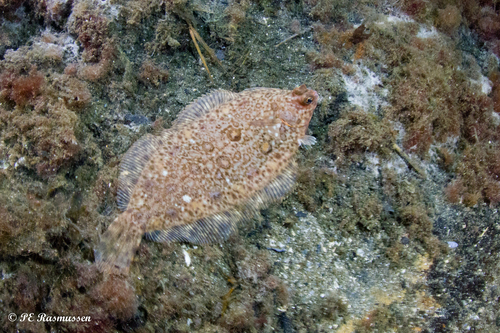
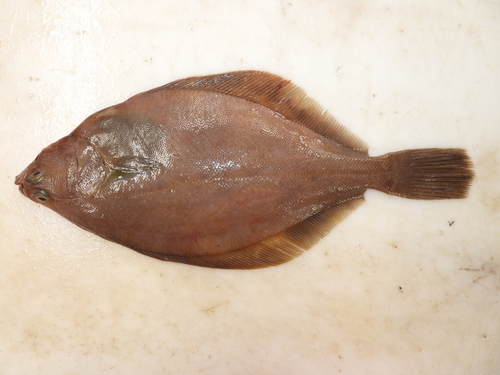
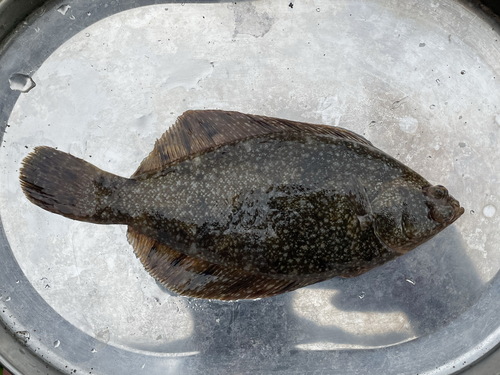
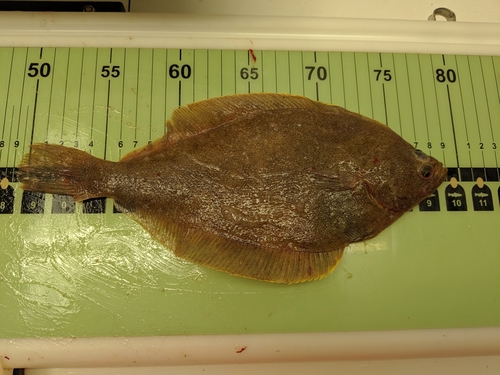
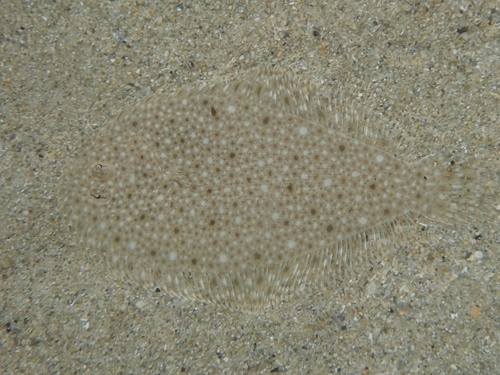
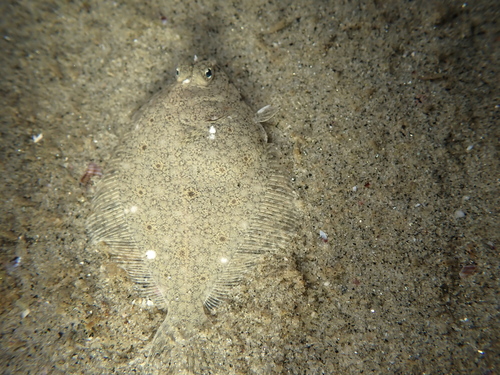
The European flounder is a right-eyed flatfish of the family Pleuronectidae reaching about 60 cm. The eyed side is brown to greenish-brown with faint blotches, the blind underside white; rows of rough bony tubercles run along the base of the dorsal and anal fins and the lateral line, giving the fish a rough feel. The flounder is remarkable for tolerating fresh, brackish and salt water and can occur far up rivers. It lives on sand and mud bottoms of the North Sea, Baltic and Atlantic coast and eats shellfish, worms and small crustaceans. In winter it migrates to sea to spawn. It is a valued food fish.
Frequently asked questions
How do you recognise the Baltic flounder?
The Baltic flounder has a flattened, disc-shaped body, is mainly brown and shows a spots pattern. Flatfish with rows of rough, bony tubercles along the base of the dorsal and anal fin and near the lateral line; tolerates fresh, brackish and salt water.
Where does the Baltic flounder live?
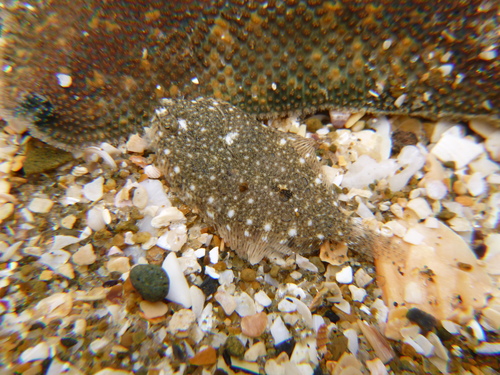
The Baltic flounder lives in both fresh and salt water and is mostly found around sand or mud bottom. Northeast Atlantic, the North Sea, the Baltic Sea and the Mediterranean Sea, and far upstream in rivers.
How big does the Baltic flounder get?
The Baltic flounder grows to a maximum of about 60 cm. On average the species is around 50 cm.
Is the Baltic flounder dangerous to humans?
No, the Baltic flounder is harmless to humans. None required: this species is harmless to humans.
Is the Baltic flounder edible?
Yes, the Baltic flounder is commonly eaten.
Easily confused with
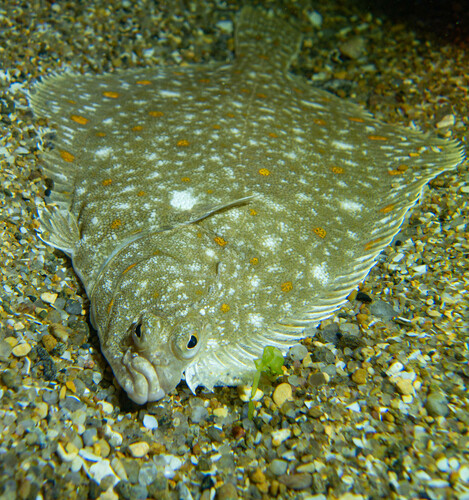
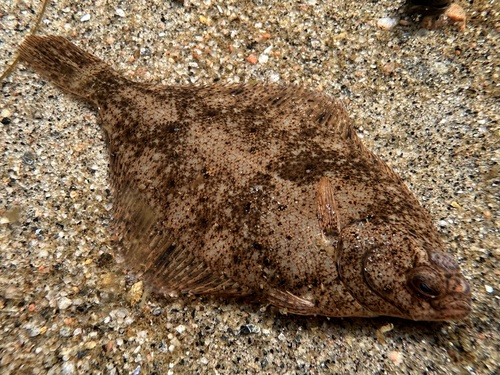
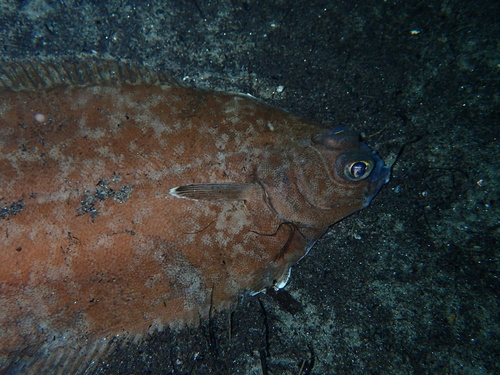
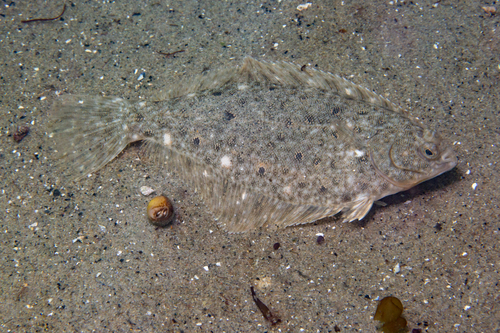
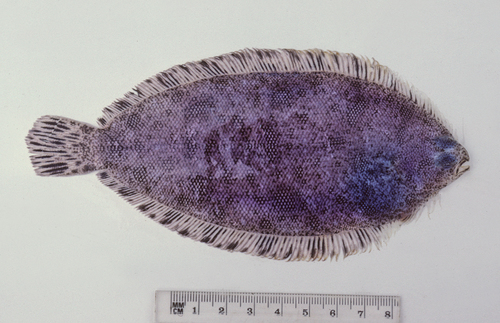
These species look like the Baltic flounder and live in the same waters.

Want the complete picture on the Baltic flounder?
Point your camera at the fish and Fin names the species in seconds. Free, and the Baltic flounder is one of 12,519 species in the app.
All data
Identification
Appearance
Habitat & distribution
Behaviour & biology
For anglers
Safety
Status & sources
Same genus Platichthys
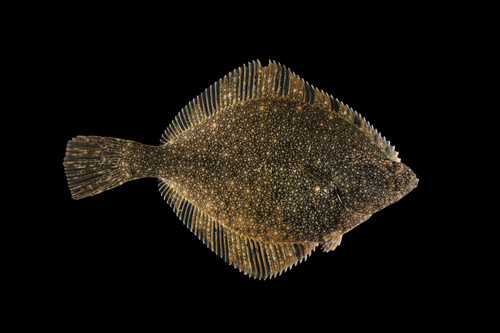
More from the family Pleuronectidae

Want the complete picture on the Baltic flounder?
Point your camera at the fish and Fin names the species in seconds. Free, and the Baltic flounder is one of 12,519 species in the app.