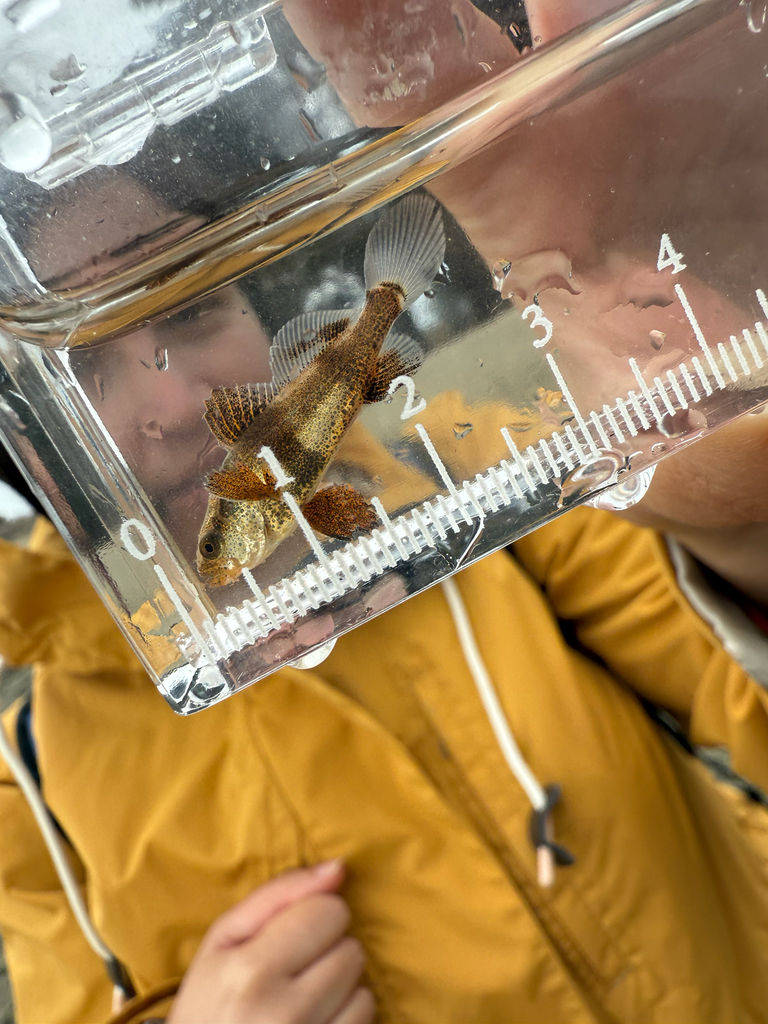
The Seatrout (Atractoscion nobilis) is a saltwater fish of the family Sciaenidae that grows up to 166 cm.
Description
The white seabass is a large croaker (Sciaenidae) from the eastern Pacific off the west coast of North America. The species has an elongate, silvery body and grows to over a metre. It forms schools over rocky bottoms, in kelp forests and in the surf zone; juveniles grow up in bays. Like other croakers it makes drumming sounds with its swim bladder. As a predator it hunts fishes such as anchovy and sardine, and squid. It is an important sport and food fish. The species is harmless to humans.
Frequently asked questions
How do you recognise the Seatrout?
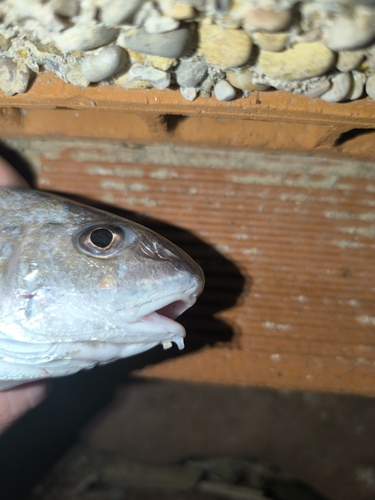
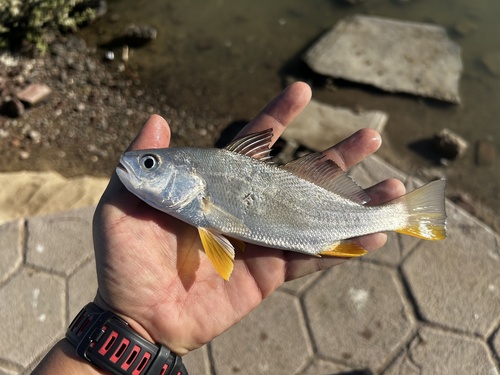
The Seatrout has a torpedo-shaped body, is mainly silver-grey and shows a plain pattern.
Where does the Seatrout live?
The Seatrout lives in the sea (marine waters) and is mostly found around sand or mud bottom.
How big does the Seatrout get?
The Seatrout grows to a maximum of about 166 cm. On average the species is around 100 cm.
Is the Seatrout dangerous to humans?
No, the Seatrout is harmless to humans.
Is the Seatrout edible?
Yes, the Seatrout is commonly eaten.
Download Fin's Fish Guide
Identify fish in seconds, log your catches and dives. Join the TestFlight beta.
All data
Identification
Appearance
Habitat & distribution
Behaviour & biology
For anglers
Safety
Status & sources
Same genus Atractoscion

More from the family Sciaenidae

Download Fin's Fish Guide
Identify fish in seconds, log your catches and dives. Join the TestFlight beta.