Home · Serranidae · Atlantic goliath grouper
Atlantic goliath grouper (Epinephelus itajara) — Serranidae

Atlantic goliath grouper

Epinephelus itajara
Family: Serranidae
VU · Vulnerable

The Atlantic goliath grouper (Epinephelus itajara) is a saltwater fish of the family Serranidae that grows up to 250 cm.

Length
250 cm
Water
Saltwater
Depth
0.0–100.0 m
Diet
Carnivore
Behaviour
Solitary
Activity
Diurnal
Body shape
Torpedo-shaped
Substrate
Stone or rock
Danger
Harmless
Range
Atlantic Ocean on both sides, along the western Atlantic coast and the coast of West Africa, near reefs, wrecks and in mangroves; young fish grow up among mangrove roots.
Edibility
Rarely eaten

Want the complete picture on the Atlantic goliath grouper?

Get the app

Description

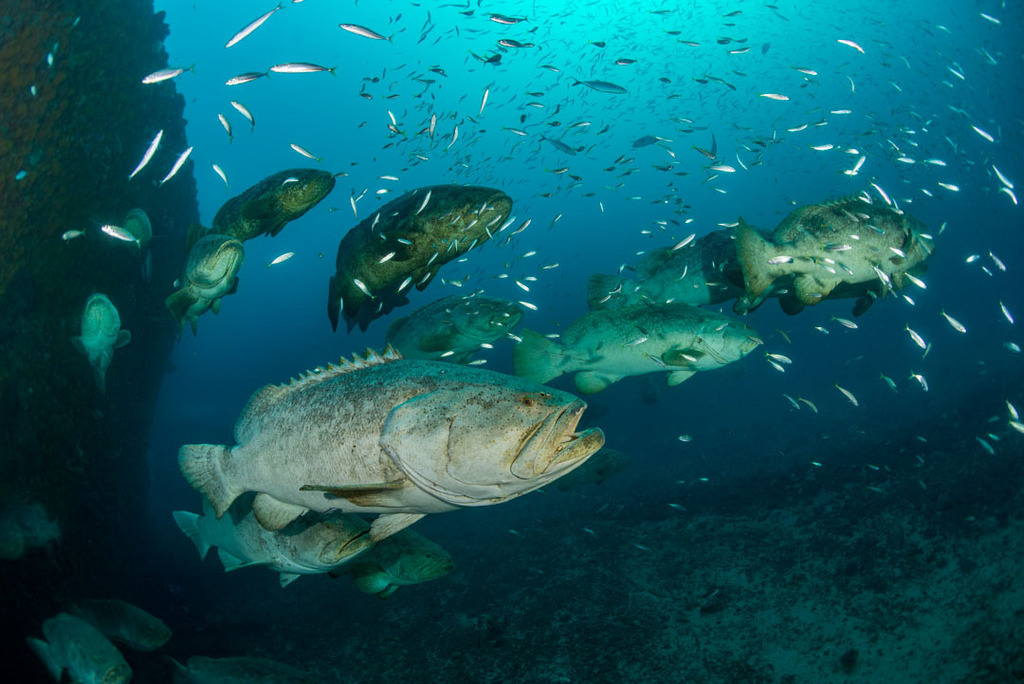
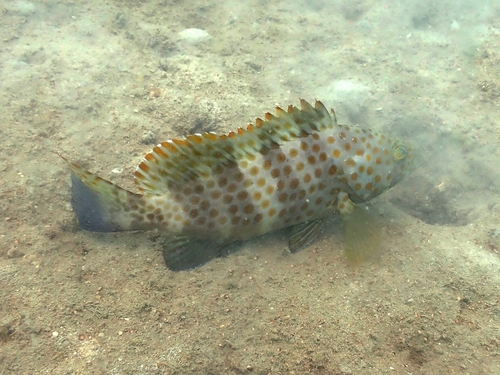
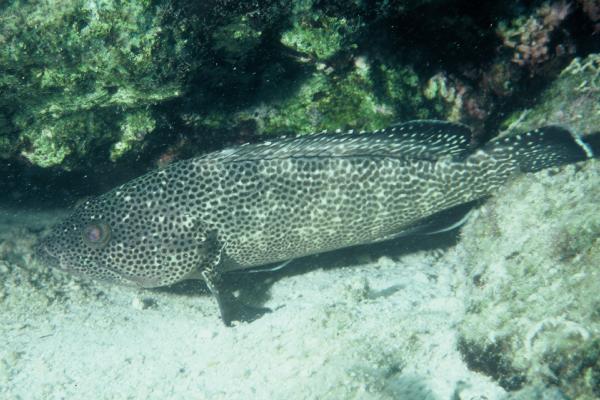
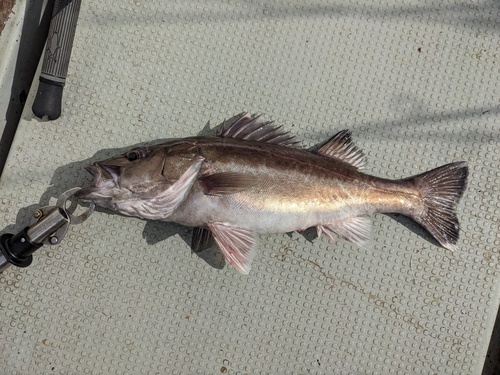
The Atlantic goliath grouper is a giant grouper of the family Serranidae reaching about 2.5 metres and over 300 kg, one of the largest reef fish of the Atlantic. The brown-yellow body is dotted with small dark spots and has a broad head with small eyes. The species lives near reefs, wrecks and in mangroves of the Atlantic on both sides, along the western Atlantic coast and the West African coast; young fish grow up among mangrove roots. As an ambush predator it engulfs mainly crabs and crustaceans, but also fish and young sea turtles. It gathers in large spawning aggregations, which made it highly vulnerable to overfishing; it is assessed as Vulnerable (VU) and is strictly protected.

Frequently asked questions

How do you recognise the Atlantic goliath grouper?

The Atlantic goliath grouper has a torpedo-shaped body, is mainly brown and shows a spots pattern. Giant grouper that can weigh more than 300 kg; brownish-yellow with small dark blotches, a broad head and small eyes.

Where does the Atlantic goliath grouper live?

The Atlantic goliath grouper lives in the sea (marine waters) and is mostly found around stony or rocky ground. Atlantic Ocean on both sides, along the western Atlantic coast and the coast of West Africa, near reefs, wrecks and in mangroves; young fish grow up among mangrove roots.

How big does the Atlantic goliath grouper get?

The Atlantic goliath grouper grows to a maximum of about 250 cm. On average the species is around 150 cm.

Is the Atlantic goliath grouper dangerous to humans?

No, the Atlantic goliath grouper is harmless to humans. None required: this species is harmless to humans.

Is the Atlantic goliath grouper edible?

The Atlantic goliath grouper is rarely eaten.

More photos

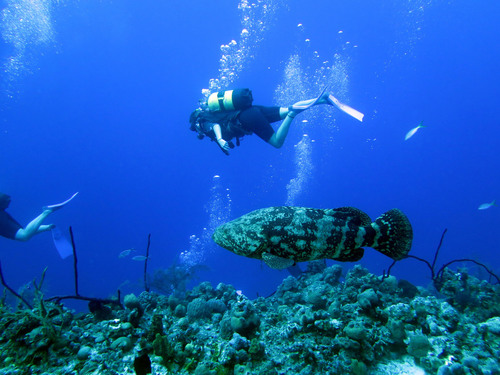
Atlantic goliath grouper (Epinephelus itajara) — Serranidae — 2
Wikimedia Commons — Albert kok (CC BY-SA 3.0)
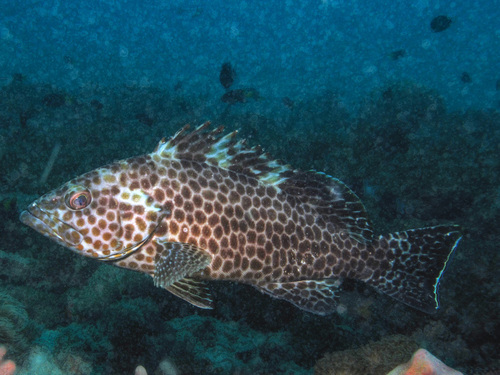
Atlantic goliath grouper (Epinephelus itajara) — Serranidae — 3
Wikimedia Commons — Clinton & Charles Robertson from Del Rio, Texas & College Station, TX, USA (CC BY 2.0)
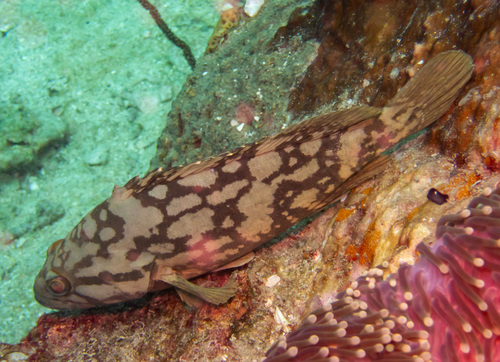
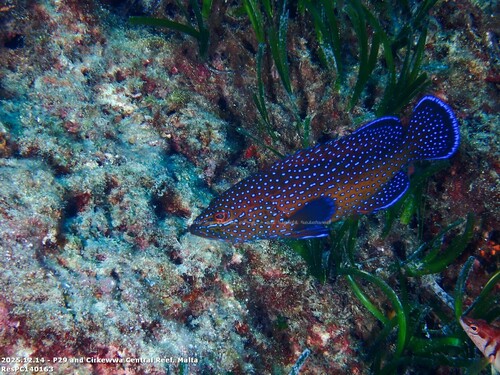
Atlantic goliath grouper (Epinephelus itajara) — Serranidae — 4
Wikimedia Commons — Joe Contillo, NOAA fishery biologist (Public domain)
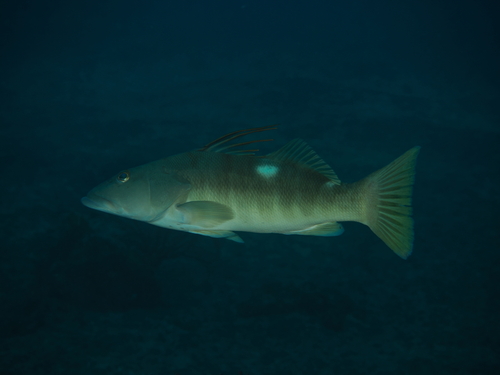
Atlantic goliath grouper (Epinephelus itajara) — Serranidae — 5
iNaturalist ((c) bronyaur, some rights reserved (CC BY-NC))
Fin

Want the complete picture on the Atlantic goliath grouper?

Point your camera at the fish and Fin names the species in seconds. Free, and the Atlantic goliath grouper is one of 12,519 species in the app.

Get the app →

All data

Identification

English name
Atlantic goliath grouper verified
Scientific name
Epinephelus itajara
Family
Serranidae
Other names
Atlantic goliath grouper; Black bass; Coral cod; Esonue grouper; Giant grouper; Jewfish; Spotted jewfish; Goliath grouper; Grouper; Itajara; Giant seabass; Guasa verified

Appearance

Size class
Extra large verified
Max length (cm)
250.0 verified
Average length (cm)
150.0 verified
Body shape
Torpedo-shaped sourced
Dominant colour
Brown sourced
Pattern
Spots sourced
Tail shape
Rounded inferred
Mouth position
Terminal inferred
Lips
Thick / fleshy inferred
Barbels
No verified
Dorsal fins
One continuous sourced
Dorsal spines
Yes verified

Habitat & distribution

Water type
Saltwater verified
Substrate
Stone or rock verified
Min depth (m)
0.0 verified
Max depth (m)
100.0 verified
Natural range
Atlantic Ocean on both sides, along the western Atlantic coast and the coast of West Africa, near reefs, wrecks and in mangroves; young fish grow up among mangrove roots. verified
Origin
Native verified

Behaviour & biology

Diet
Carnivore verified
Diet (detail)
Mainly crabs and crustaceans, and also fishes and young sea turtles sourced
Social behaviour
Solitary verified
Territorial
Yes verified
Activity
Diurnal inferred
Reproduction
Separate sexes verified
Sexual dimorphism
No verified
levensduur_max_jaar
37.0 verified
Seasonality
Gathers in large groups at wrecks and reefs during spawning, which makes it very vulnerable to fishing; grows slowly and matures late. sourced
Special features
Giant grouper that can weigh more than 300 kg; brownish-yellow with small dark blotches, a broad head and small eyes. sourced

For anglers

Edibility
Rarely eaten verified
Fishing method
Formerly fished with heavy bottom tackle at wrecks and reefs; today strictly protected and closed to fishing almost everywhere sourced
Regulations source
FishBase ↗ inferred

Safety

Danger to humans
Harmless verified
First aid
None required: this species is harmless to humans. sourced

Status & sources

Sources
FishBase via GBIF (DwC-A), CC-BY-NC 4.0

Same genus Epinephelus

More from the family Serranidae

Fin

Want the complete picture on the Atlantic goliath grouper?

Point your camera at the fish and Fin names the species in seconds. Free, and the Atlantic goliath grouper is one of 12,519 species in the app.

Get the app →
Is this the Atlantic goliath grouper? Get the app