 Fin's Fish Guide
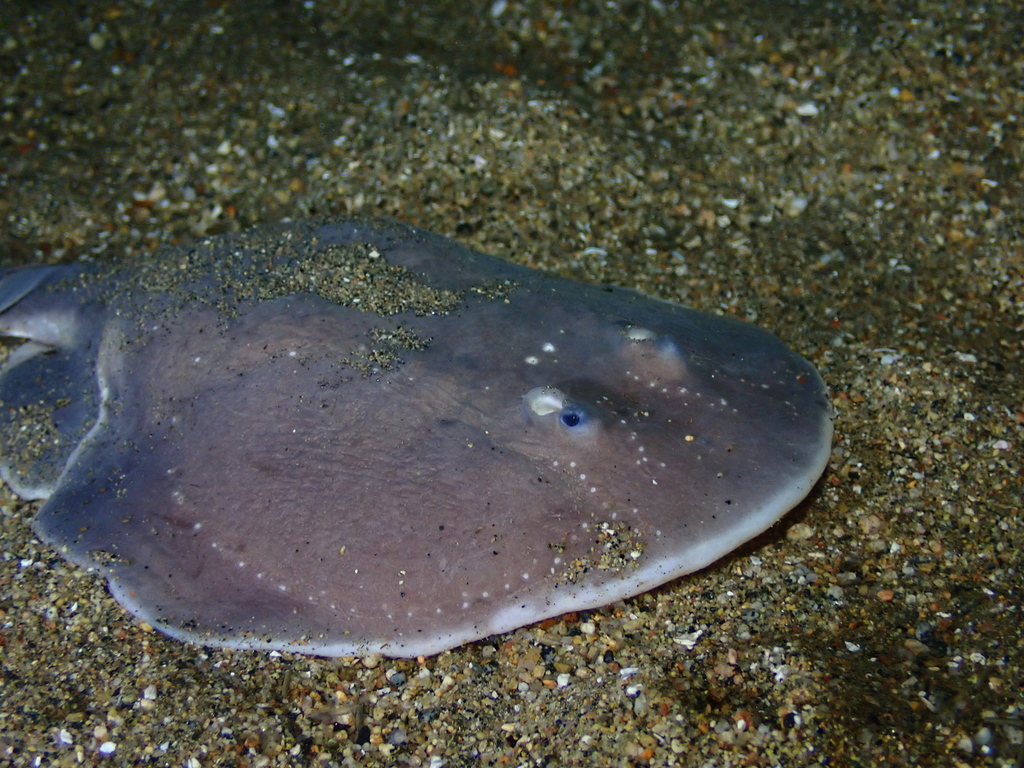
The Apron ray (Discopyge tschudii) is a saltwater fish of the family Narcinidae that grows up to 54 cm.
Description
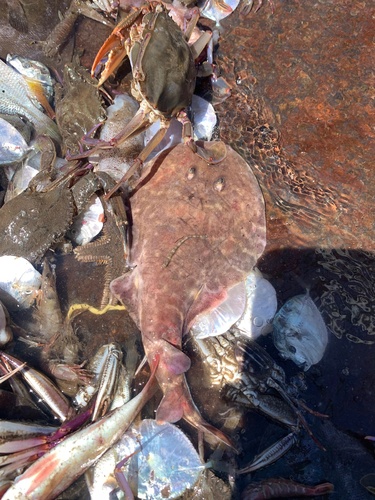
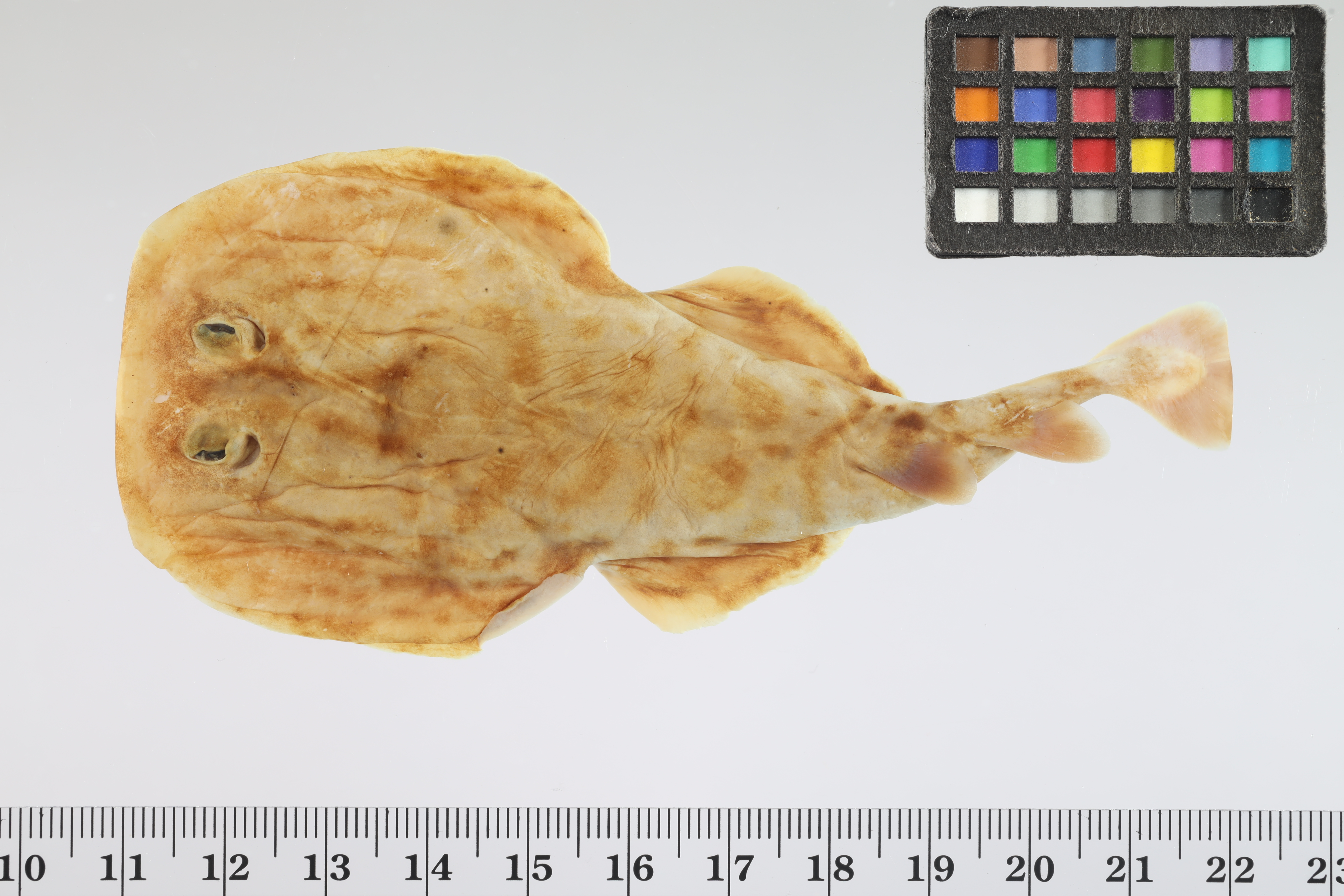
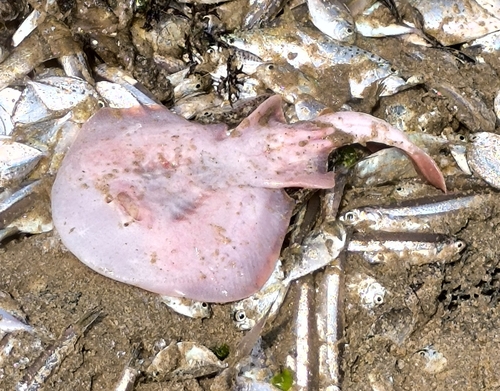
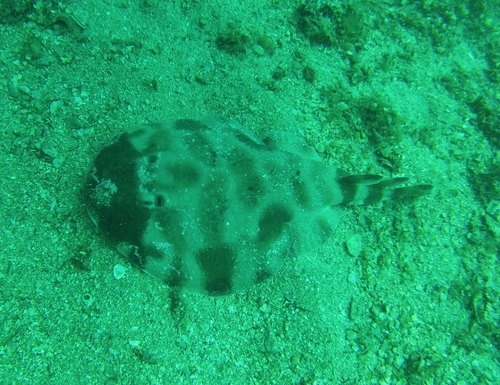
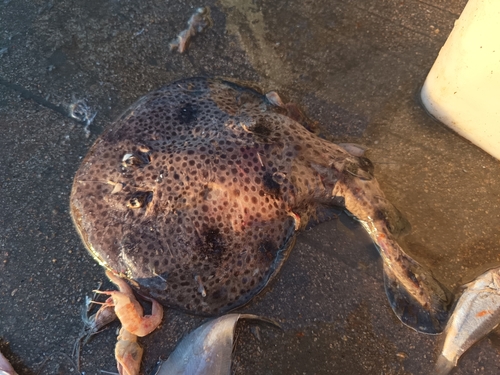
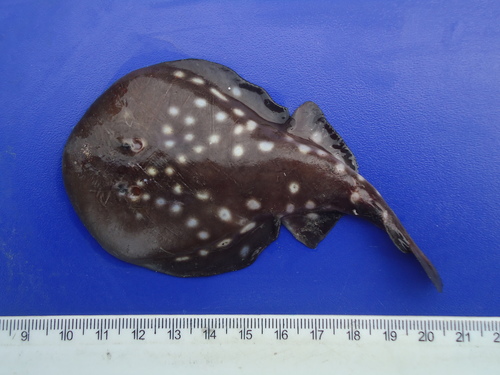
The apron ray is an electric ray (Narcinidae) from the coastal waters around southern South America. The species has a round, flattened, disc-shaped body and a short tail. Like other electric rays it bears an electric organ in the pectoral disc with which it can deliver a shock to stun prey and defend itself. It lives bottom-bound on the continental shelf and feeds on worms and crustaceans. It is ovoviviparous. When touched it can deliver an electric shock.
Frequently asked questions
How do you recognise the Apron ray?
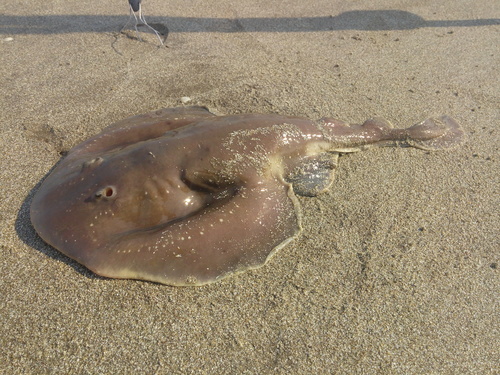
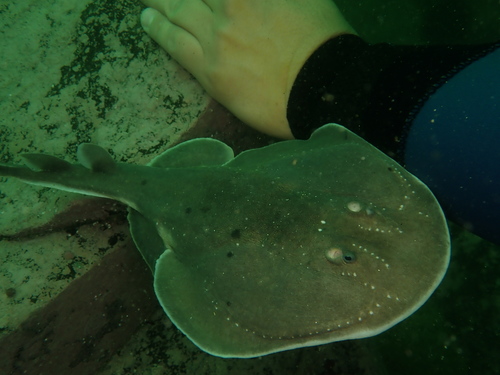
The Apron ray has an irregular in shape body, is mainly brown and shows a plain pattern. Electric organ in the pectoral disc to stun prey and to defend itself; gives a shock on contact.
Where does the Apron ray live?
The Apron ray lives in the sea (marine waters) and is mostly found around sand or mud bottom. Around southern South America; continental shelf.
How big does the Apron ray get?
The Apron ray grows to a maximum of about 54 cm. On average the species is around 42 cm.
Is the Apron ray dangerous to humans?
The Apron ray can cause injury; handle it with care. Not venomous, but this ray can deliver a shock with an electric organ when touched; do not touch or step on it. Seek medical care for symptoms.
Is the Apron ray edible?
The Apron ray is rarely eaten.
More photos



Want the complete picture on the Apron ray?
Point your camera at the fish and Fin names the species in seconds. Free, and the Apron ray is one of 12,519 species in the app.
All data
Identification
Appearance
Habitat & distribution
Behaviour & biology
For anglers
Safety
Status & sources
More from the family Narcinidae

Want the complete picture on the Apron ray?
Point your camera at the fish and Fin names the species in seconds. Free, and the Apron ray is one of 12,519 species in the app.