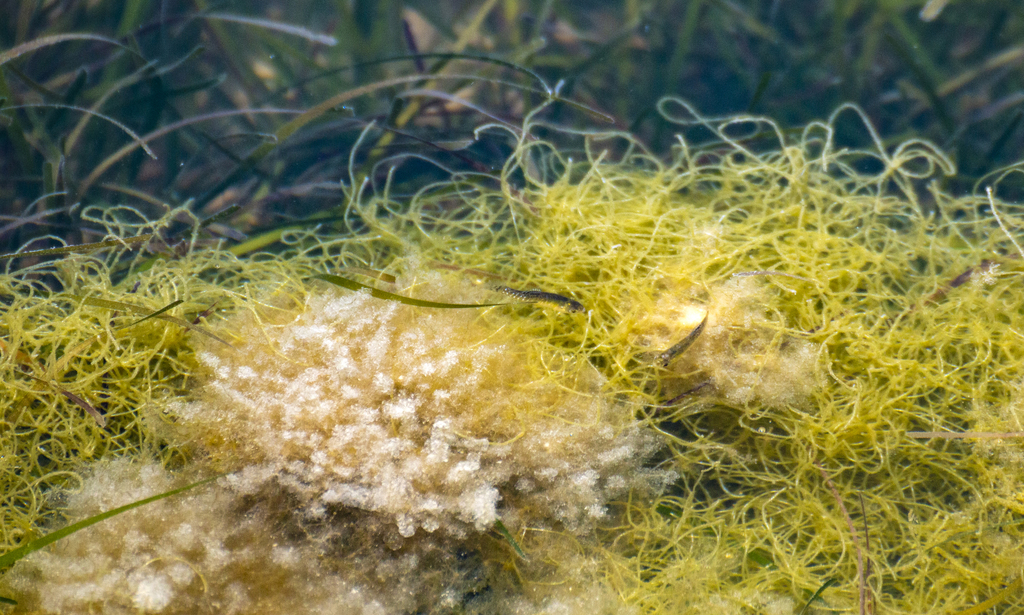
The Spanish toothcarp (Aphanius iberus) is a brackish-water fish of the family Cyprinodontidae that grows up to 5 cm.
Description
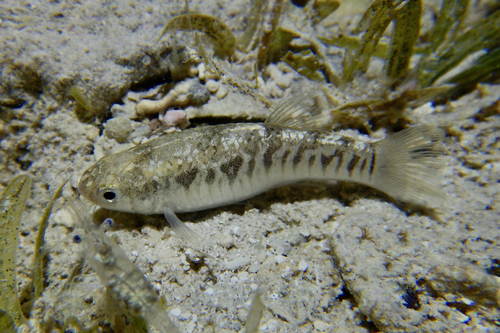
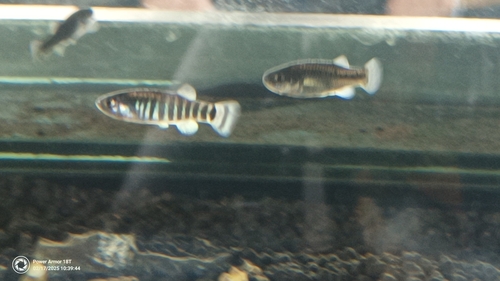
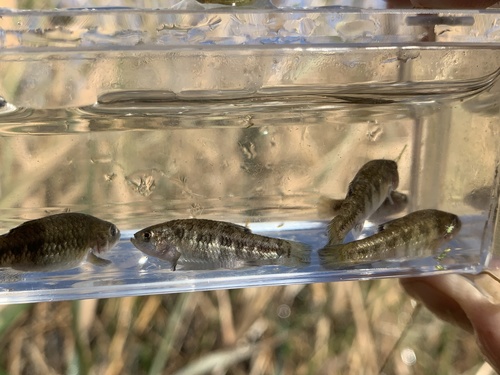
The Spanish toothcarp, called fartet in Spain, is a very small fish of the family Cyprinodontidae reaching about 5 cm. The sexes differ strongly: the male bears silvery-blue vertical bars over the flank and tail, while the female is larger and inconspicuously grey-brown and spotted. The species is endemic along the Mediterranean coast of Spain and lives in brackish coastal lagoons, salt marshes and slow-flowing, often saline streams, where it tolerates strongly varying salinity and oxygen levels. As an omnivore it eats small zooplankton, insect larvae, algae and detritus. Through loss of its habitat and competition with introduced exotics (such as the mosquitofish) it has declined sharply and is assessed as Endangered (EN); it is the subject of targeted conservation.
Frequently asked questions
How do you recognise the Spanish toothcarp?
The Spanish toothcarp is mainly silver-grey and shows a vertical stripes pattern.
Where does the Spanish toothcarp live?
The Spanish toothcarp lives in brackish water and is mostly found around algae or seagrass beds.
How big does the Spanish toothcarp get?
The Spanish toothcarp grows to a maximum of about 5 cm.
Is the Spanish toothcarp dangerous to humans?
No, the Spanish toothcarp is harmless to humans.
Is the Spanish toothcarp edible?
The Spanish toothcarp is not usually eaten.
Download Fin's Fish Guide
Identify fish in seconds, log your catches and dives. Join the TestFlight beta.
All data
Identification
Appearance
Habitat & distribution
Behaviour & biology
For anglers
Safety
Status & sources
Same genus Aphanius



More from the family Cyprinodontidae

Download Fin's Fish Guide
Identify fish in seconds, log your catches and dives. Join the TestFlight beta.