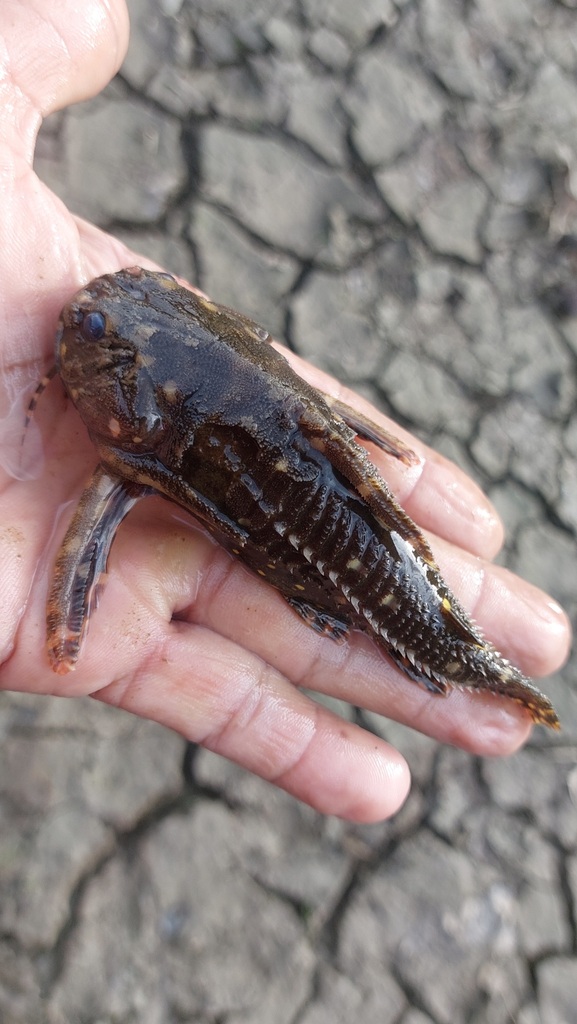
The White-spotted talking catfish (Agamyxis albomaculatus) is a freshwater fish of the family Doradidae that grows up to 15 cm.
Description
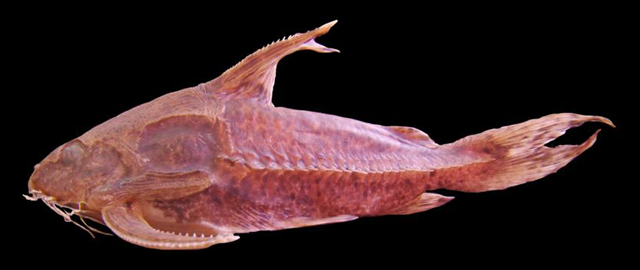
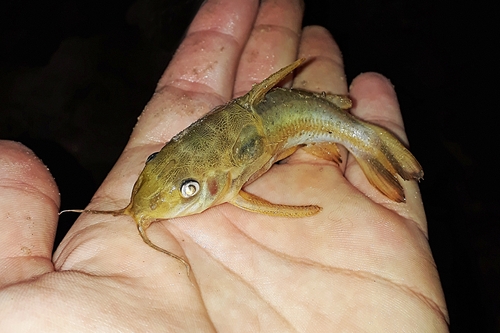
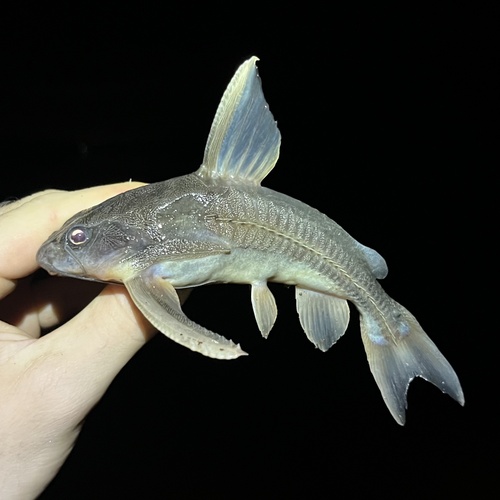
The white-spotted talking catfish is a thorny or talking catfish (Doradidae) from fresh water of the Orinoco and Amazon basins in South America. The species grows to about 15 cm and has a stocky, dark body dotted with white spots, a row of stout, thorny bony plates along the flank and powerful, serrated pectoral spines; by moving these it can make a grunting sound. As a nocturnal bottom-dweller it searches for molluscs, insect larvae and detritus. The sharp spines and thorny plates can inflict a wound when handled.
Frequently asked questions
How do you recognise the White-spotted talking catfish?
The White-spotted talking catfish has a torpedo-shaped body, is mainly black and shows a spots pattern.
Where does the White-spotted talking catfish live?
The White-spotted talking catfish lives in fresh water and is mostly found around sand or mud bottom.
How big does the White-spotted talking catfish get?
The White-spotted talking catfish grows to a maximum of about 15 cm.
Is the White-spotted talking catfish dangerous to humans?
The White-spotted talking catfish can cause injury; handle it with care.
Is the White-spotted talking catfish edible?
Yes, the White-spotted talking catfish is commonly eaten.
Download Fin's Fish Guide
Identify fish in seconds, log your catches and dives. Join the TestFlight beta.
All data
Identification
Appearance
Habitat & distribution
Behaviour & biology
For anglers
Safety
Status & sources
Same genus Agamyxis

More from the family Doradidae


Download Fin's Fish Guide
Identify fish in seconds, log your catches and dives. Join the TestFlight beta.