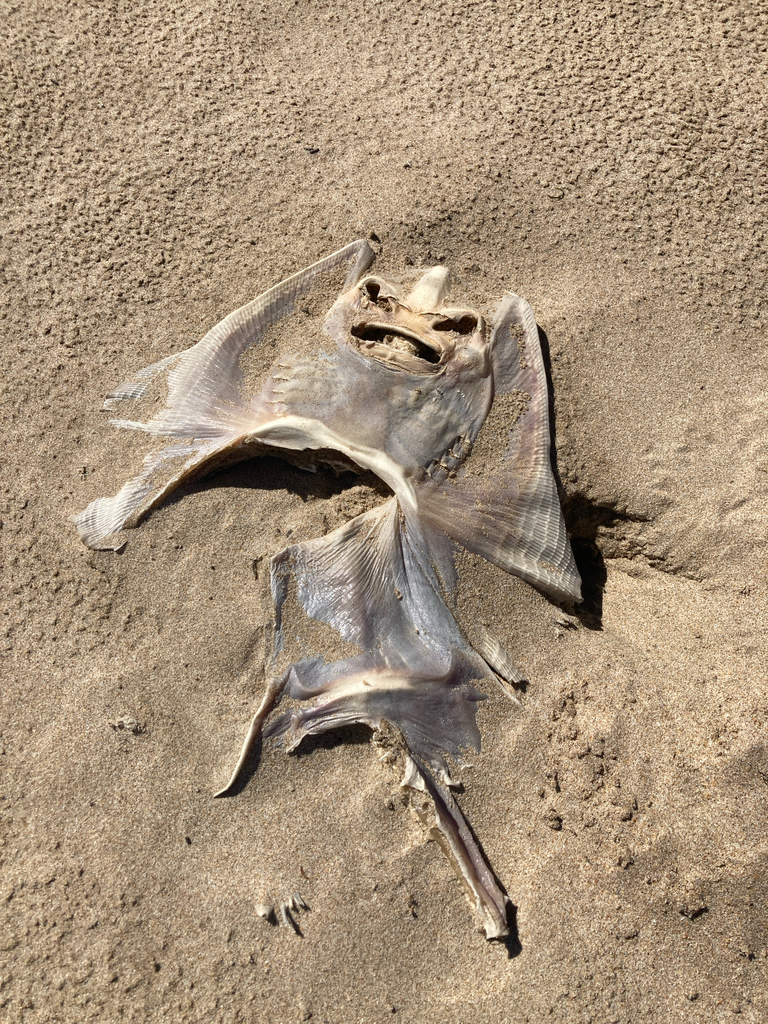
The Guitarfish (Acroteriobatus annulatus) is a brackish-water fish of the family Rhinobatidae that grows up to 140 cm.
Description
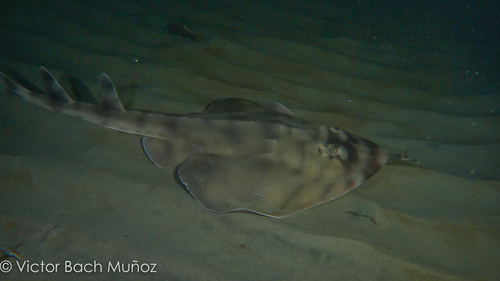
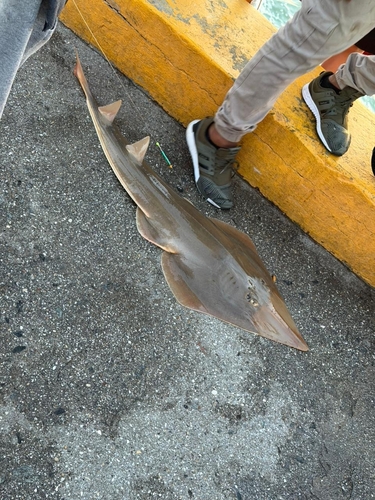
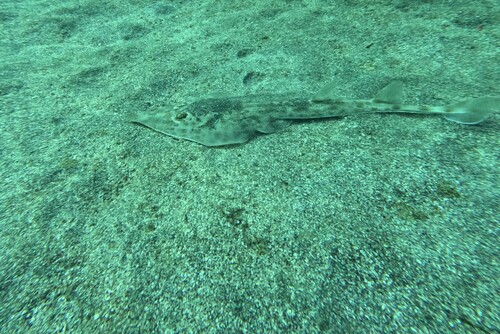
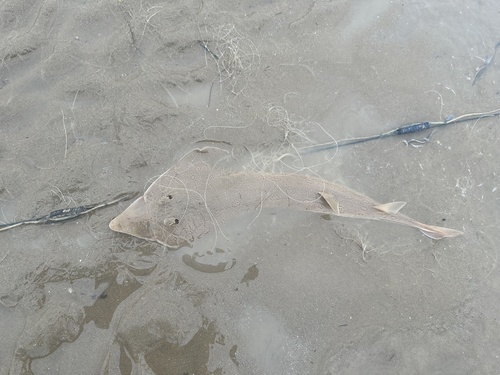
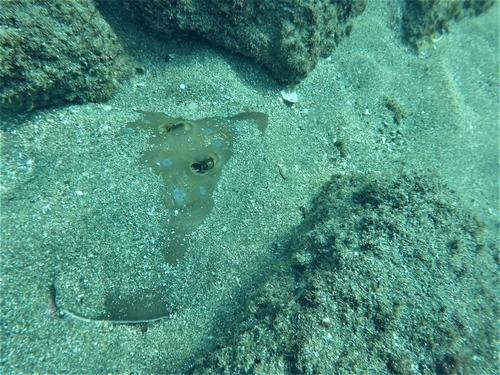
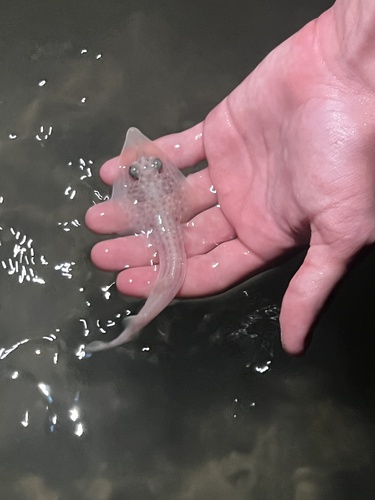
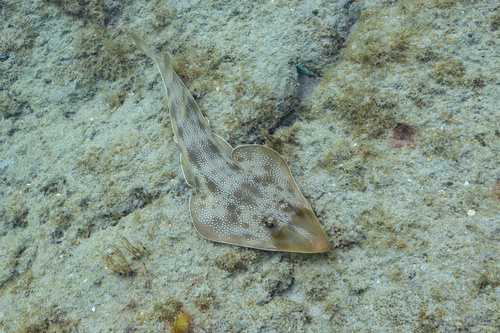
The lesser sandshark is a guitarfish from southern African waters, ranging from Angola along South Africa to southern Mozambique. It has a flattened, shark-like body with a violin-shaped head disc and two dorsal fins on the tail. A bottom-dweller, the fish lives on sandy coastal bottoms down to about 75 metres and feeds on crustaceans, bivalves, polychaete worms and small fishes. The species is ovoviviparous: 2 to 10 pups are born in summer. Its flesh is esteemed and the fish is taken by surf anglers. Owing to fishing pressure the species is listed as Vulnerable (VU) on the IUCN Red List.
Frequently asked questions
How do you recognise the Guitarfish?
The Guitarfish has an elongate, eel-like body, is mainly brown and shows a spots pattern.
Where does the Guitarfish live?
The Guitarfish lives in brackish water and is mostly found around sand or mud bottom.
How big does the Guitarfish get?
The Guitarfish grows to a maximum of about 140 cm.
Is the Guitarfish dangerous to humans?
No, the Guitarfish is harmless to humans.
Is the Guitarfish edible?
Yes, the Guitarfish is commonly eaten.
Download Fin's Fish Guide
Identify fish in seconds, log your catches and dives. Join the TestFlight beta.
All data
Identification
Appearance
Habitat & distribution
Behaviour & biology
For anglers
Safety
Status & sources
Same genus Acroteriobatus
More from the family Rhinobatidae
Download Fin's Fish Guide
Identify fish in seconds, log your catches and dives. Join the TestFlight beta.