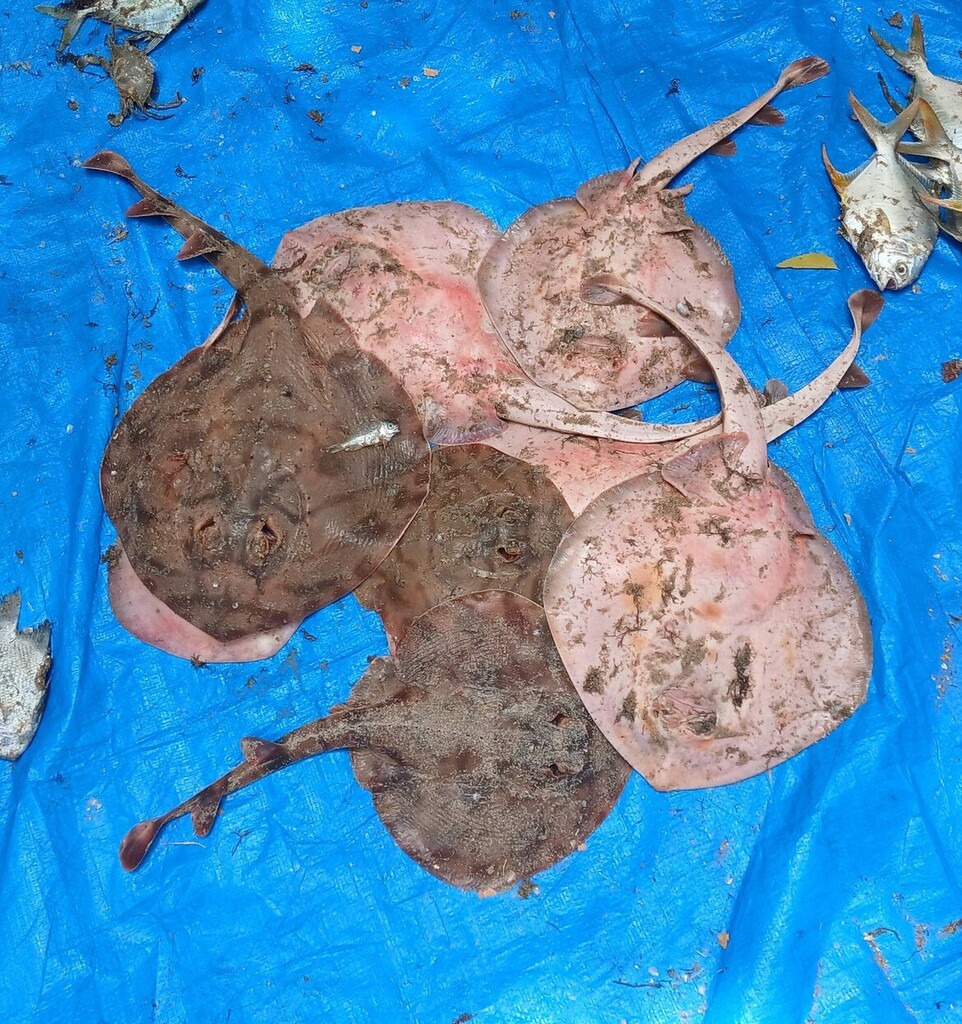
The Striped panray (Zanobatus schoenleinii) is a saltwater fish of the family Rhinobatidae that grows up to 100 cm.
Description
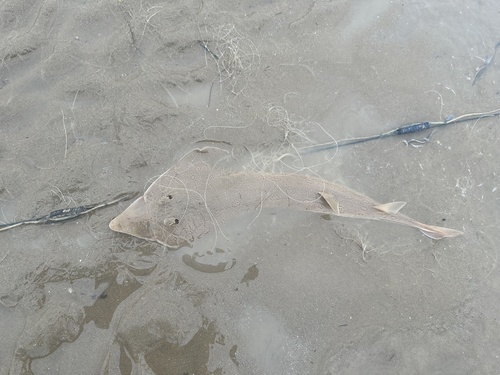
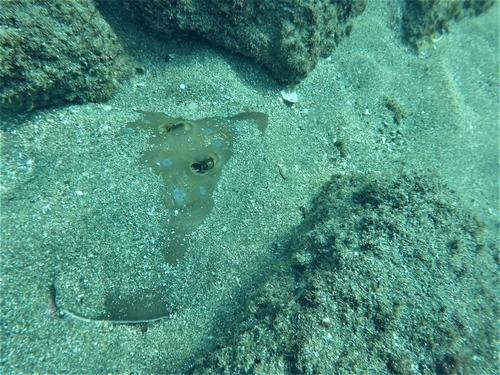
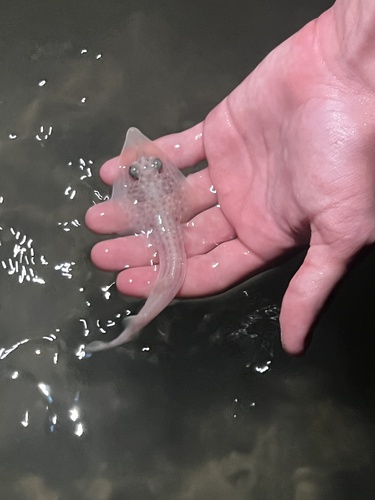
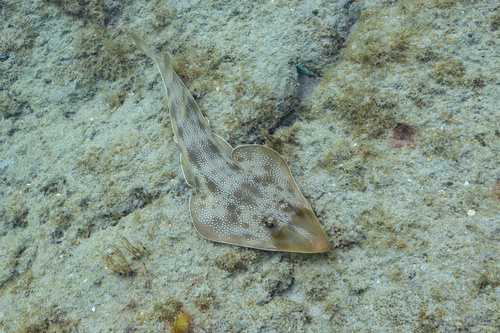
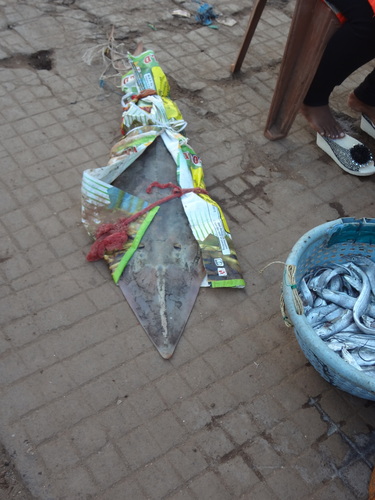
The striped panray is an almost round, disc-shaped ray of the family Zanobatidae (panrays) reaching about 1 metre. The nearly circular pectoral disc bears a handsome pattern of dark bands and marbling on a brown ground. The rear body is sturdier and more shark-like than in stingrays, with two dorsal fins on the tail, but without a venomous spine. The species lives on sand and mud bottoms of shallow coastal water along the West African coast, where it often lies half-buried. On the bottom it hunts crabs, shrimps, worms and small fish. It is ovoviviparous. Through heavy fishing and bycatch it has declined and is assessed as Vulnerable (VU).
Frequently asked questions
How do you recognise the Striped panray?
The Striped panray has a flattened, disc-shaped body, is mainly brown and shows a marbled pattern.
Where does the Striped panray live?
The Striped panray lives in the sea (marine waters) and is mostly found around sand or mud bottom.
How big does the Striped panray get?
The Striped panray grows to a maximum of about 100 cm. On average the species is around 40 cm.
Is the Striped panray dangerous to humans?
No, the Striped panray is harmless to humans.
Is the Striped panray edible?
Yes, the Striped panray is commonly eaten.
Download Fin's Fish Guide
Identify fish in seconds, log your catches and dives. Join the TestFlight beta.
All data
Identification
Appearance
Habitat & distribution
Behaviour & biology
For anglers
Safety
Status & sources
More from the family Rhinobatidae
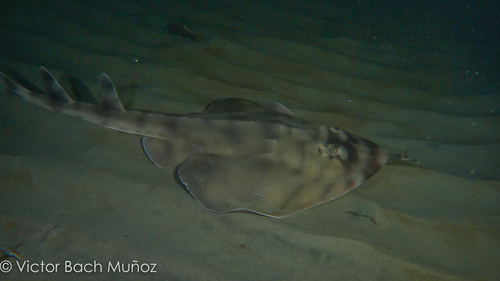
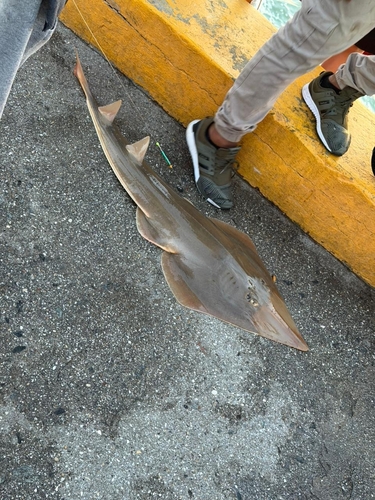
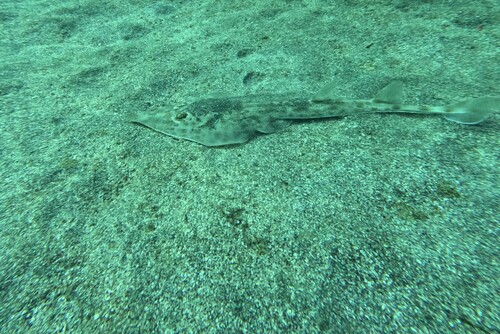
Download Fin's Fish Guide
Identify fish in seconds, log your catches and dives. Join the TestFlight beta.