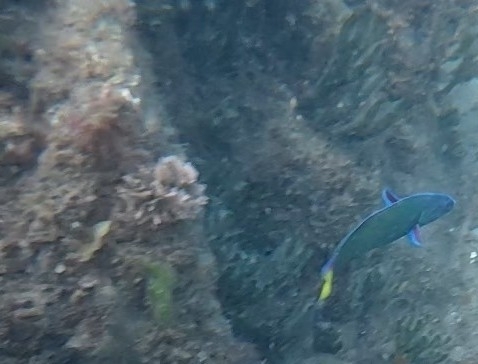
The Blue wrasse (Thalassoma lunare) is a saltwater fish of the family Labridae that grows up to 45 cm.
Description
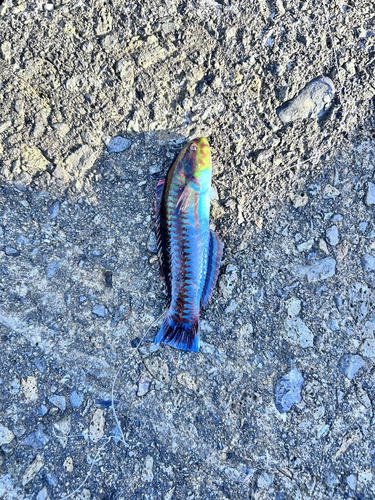
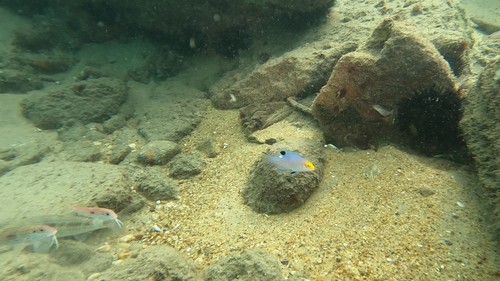
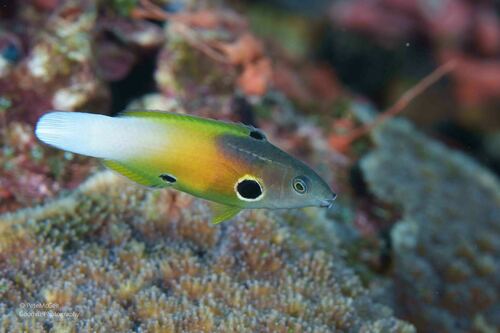
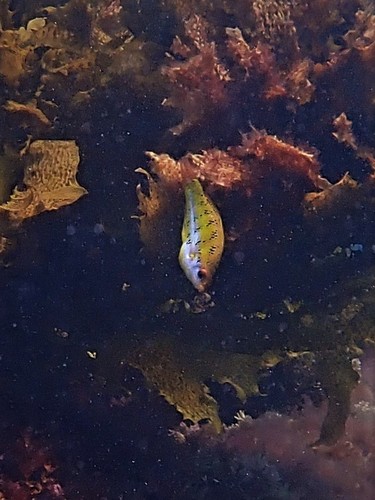
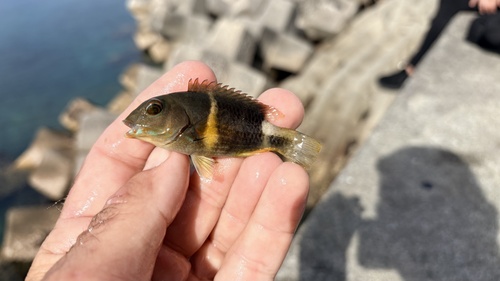
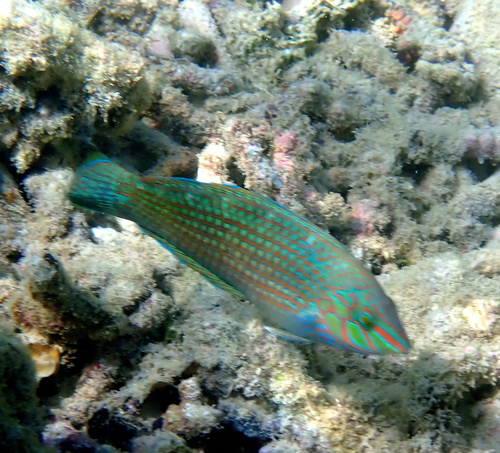
The moon wrasse is a colourful wrasse (family Labridae) of the Indo-Pacific. The species reaches about 45 cm and has a streamlined, blue-green body with pink to purple fin patterns and a yellow, crescent-shaped tail. It occurs solitary or in groups in the upper parts of lagoon and coastal reefs and on protected seaward reefs, and sometimes enters estuaries. Its diet consists of small crustaceans, molluscs and fish eggs. Like many wrasses the species is a protogynous hermaphrodite that begins as a female and may later change into a male. It is of modest commercial value and is harmless to humans.
Frequently asked questions
How do you recognise the Blue wrasse?
The Blue wrasse has a torpedo-shaped body, is mainly blue and shows a marbled pattern.
Where does the Blue wrasse live?
The Blue wrasse lives in the sea (marine waters) and is mostly found around stony or rocky ground.
How big does the Blue wrasse get?
The Blue wrasse grows to a maximum of about 45 cm.
Is the Blue wrasse dangerous to humans?
No, the Blue wrasse is harmless to humans.
Is the Blue wrasse edible?
The Blue wrasse is rarely eaten.
Download Fin's Fish Guide
Identify fish in seconds, log your catches and dives. Join the TestFlight beta.
All data
Identification
Appearance
Habitat & distribution
Behaviour & biology
For anglers
Safety
Status & sources
Same genus Thalassoma
More from the family Labridae
Download Fin's Fish Guide
Identify fish in seconds, log your catches and dives. Join the TestFlight beta.