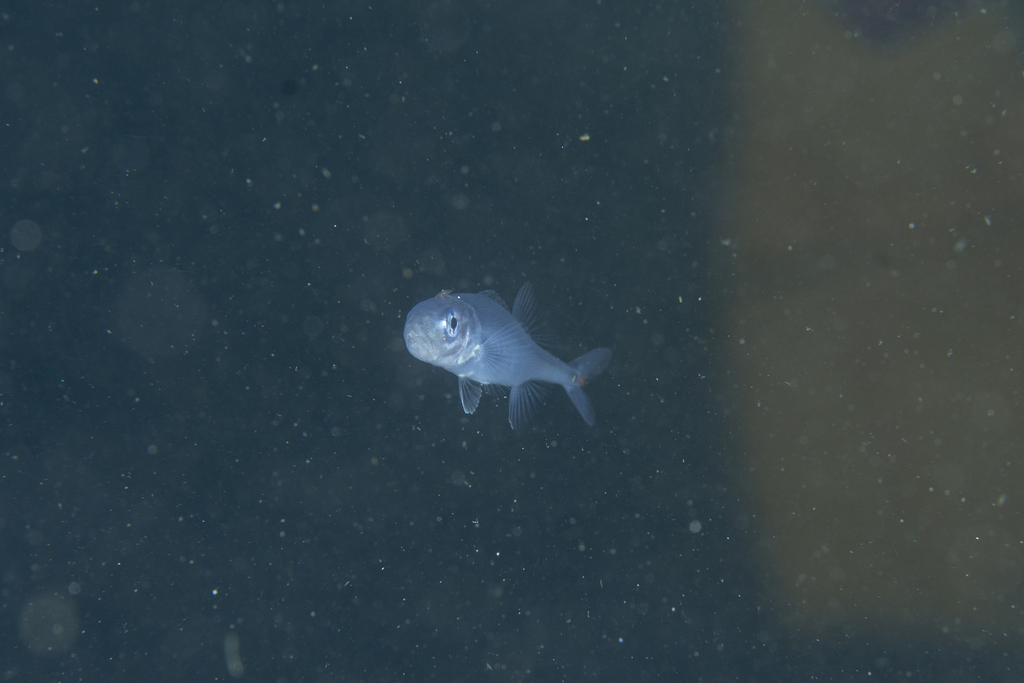
The Bigeye squaretail (Tetragonurus atlanticus) is a saltwater fish of the family Tetragonuridae that grows up to 50 cm.
Description
The bigeye squaretail is an oceanic fish of the squaretail family (Tetragonuridae). The species has an elongate, dark body with stout, keeled scales and two bony keels on either side of the tail base, to which the name refers. It lives oceanically, usually in the upper 90 m but adults probably deeper; juveniles often live as inquilines in free-swimming tunicates (salps). It feeds on gelatinous plankton such as jellyfishes and salps. The flesh can have a strong purgative, possibly toxic effect; do not eat this fish.
Frequently asked questions
How do you recognise the Bigeye squaretail?
The Bigeye squaretail has an elongate, eel-like body, is mainly brown and shows a plain pattern.
Where does the Bigeye squaretail live?
The Bigeye squaretail lives in the sea (marine waters) and is mostly found around open water.
How big does the Bigeye squaretail get?
The Bigeye squaretail grows to a maximum of about 50 cm.
Is the Bigeye squaretail dangerous to humans?
The Bigeye squaretail is venomous — handle spines with care and seek medical help after a sting if needed.
Is the Bigeye squaretail edible?
The Bigeye squaretail is not usually eaten.
Download Fin's Fish Guide
Identify fish in seconds, log your catches and dives. Join the TestFlight beta.
All data
Identification
Appearance
Habitat & distribution
Behaviour & biology
For anglers
Safety
Status & sources
Same genus Tetragonurus
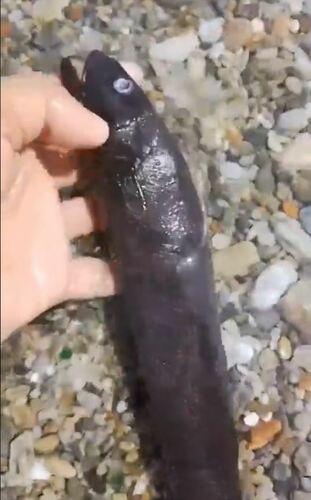
More from the family Tetragonuridae
Download Fin's Fish Guide
Identify fish in seconds, log your catches and dives. Join the TestFlight beta.