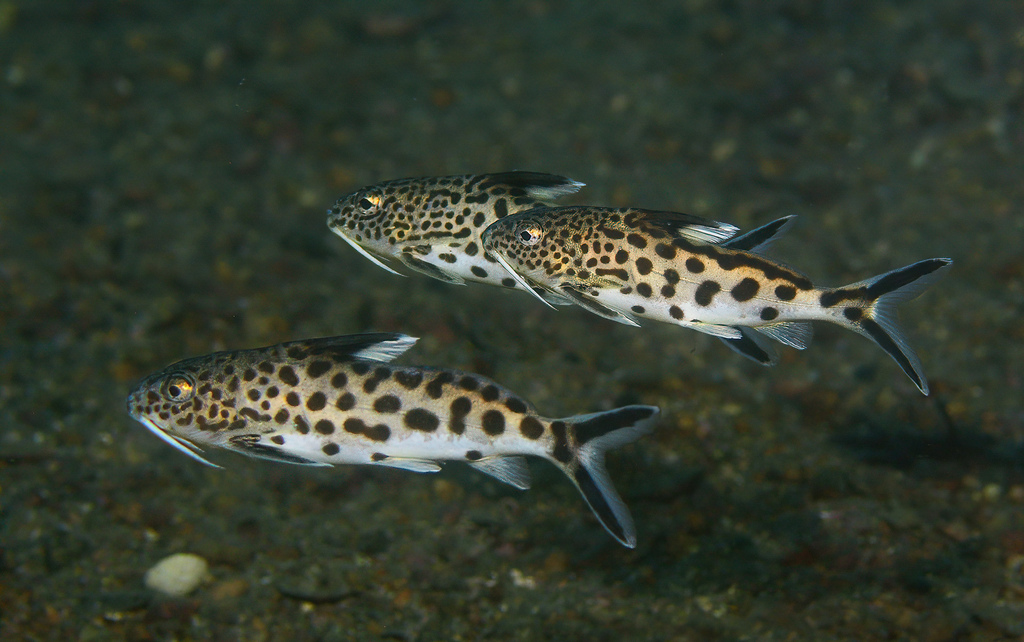
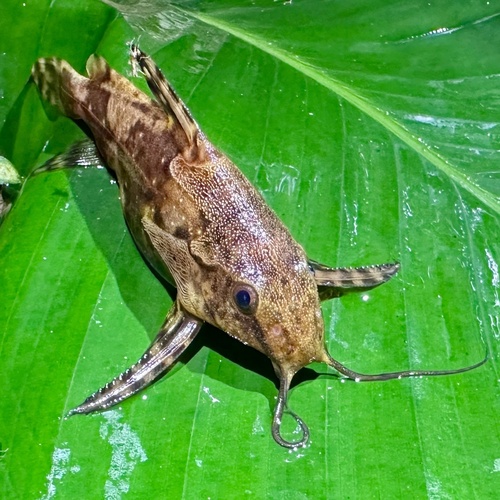
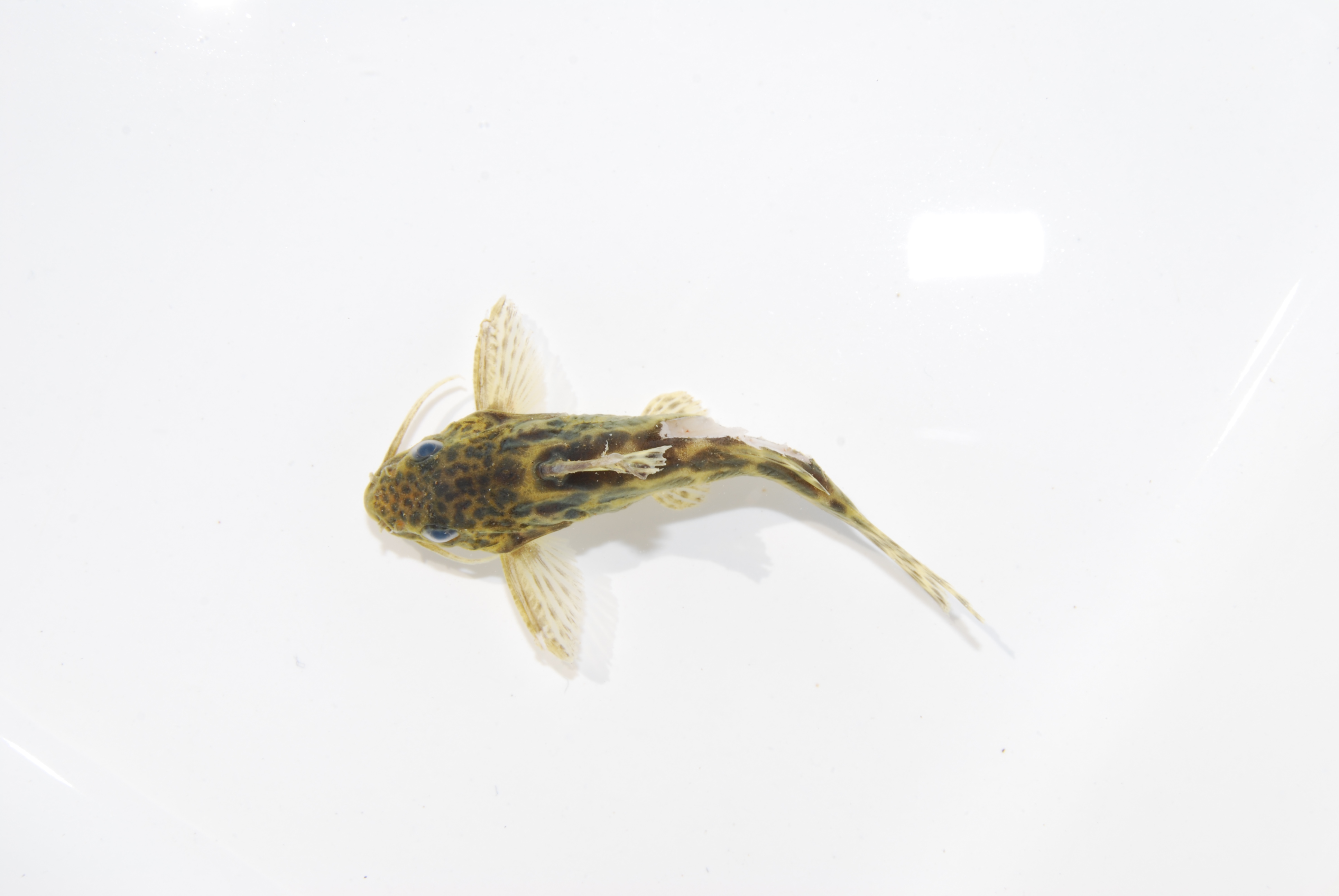
The Cuckoo catfish (Synodontis multipunctatus) is a freshwater fish of the family Mochokidae that grows up to 28 cm.
Description
The cuckoo catfish is a squeaker (family Mochokidae) endemic to Lake Tanganyika in East Africa. The species grows to about 27 cm and has a pale body densely covered with round black spots. It lives on muddy bottoms down to at least 100 metres and feeds on bottom animals, especially the snail Neothauma. The species is world-famous as the only known brood parasite among fishes: while mouthbrooding cichlids spawn, it mixes its eggs among the host's, which the host takes into its mouth; the young catfish hatch earlier and eat the host's brood. It is harmless to humans.
Frequently asked questions
How do you recognise the Cuckoo catfish?
The Cuckoo catfish has a torpedo-shaped body, is mainly white and shows a spots pattern.
Where does the Cuckoo catfish live?
The Cuckoo catfish lives in fresh water and is mostly found around mixed bottom.
How big does the Cuckoo catfish get?
The Cuckoo catfish grows to a maximum of about 28 cm.
Is the Cuckoo catfish dangerous to humans?
No, the Cuckoo catfish is harmless to humans.
Is the Cuckoo catfish edible?
The Cuckoo catfish is rarely eaten.
Download Fin's Fish Guide
Identify fish in seconds, log your catches and dives. Join the TestFlight beta.
All data
Identification
Appearance
Habitat & distribution
Behaviour & biology
For anglers
Safety
Status & sources
Same genus Synodontis

More from the family Mochokidae

Download Fin's Fish Guide
Identify fish in seconds, log your catches and dives. Join the TestFlight beta.