 Fin's Fish Guide
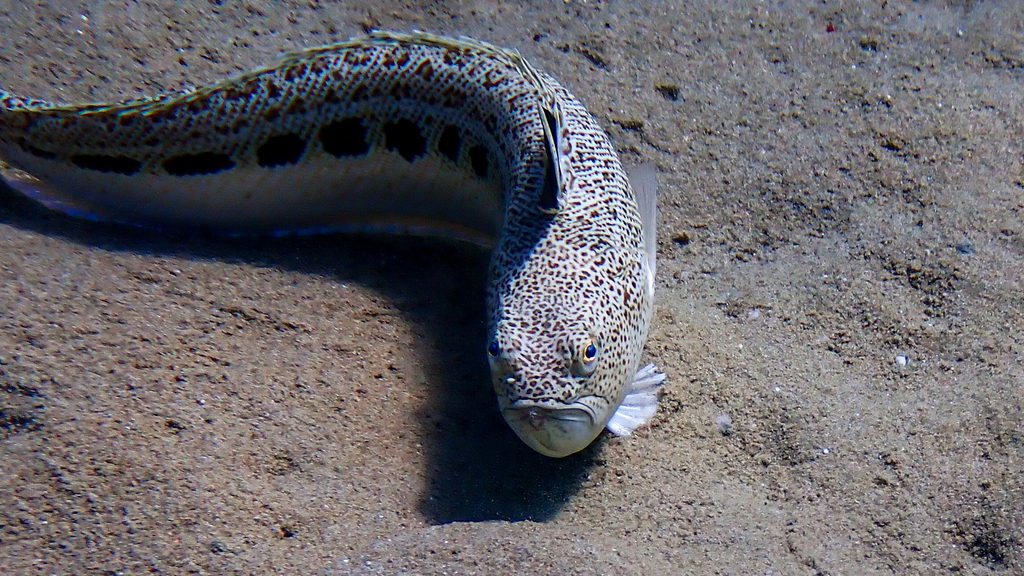
The Spotted weever (Trachinus araneus) is a saltwater fish of the family Trachinidae that grows up to 45 cm.
Mediterranean Sea and the adjacent eastern Atlantic, on sandy and silty bottoms of shallow to moderately deep coastal water.
Description
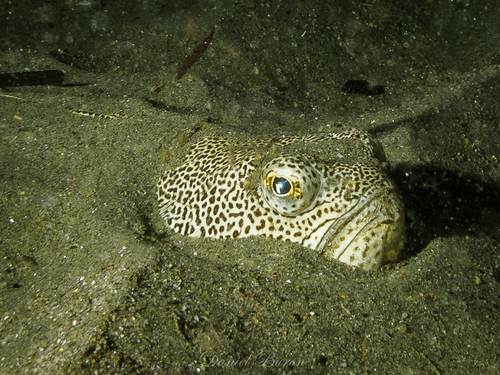
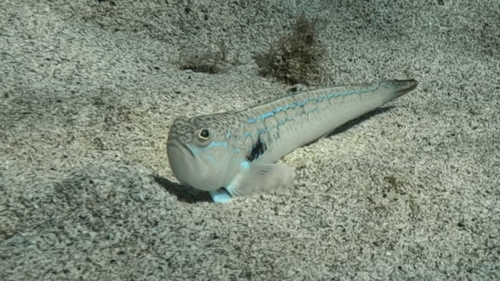
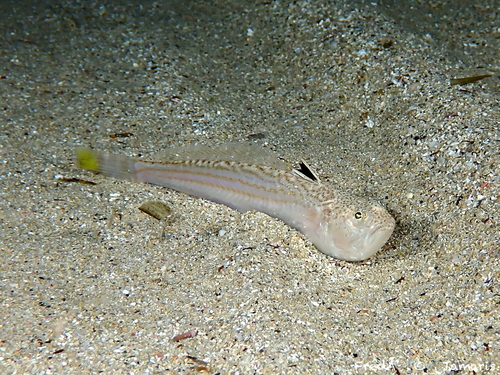
The spotted weever is a bottom fish of the family Trachinidae (weevers) reaching about 45 cm, the largest of the weevers. The eyes sit on top of the flattened head and the mouth is upturned, adaptations to a life half-buried in the sand. The brown body bears dark spots. The species lives on sand and mud bottoms of shallow to moderate coastal water of the Mediterranean and the adjacent eastern Atlantic. From the sand it seizes small fish and crustaceans. Weevers are notorious for their venom: the spines in the first dorsal fin and on the gill cover cause an extremely painful sting. Despite this the species is a valued food fish. Handle with care.
Frequently asked questions
How do you recognise the Spotted weever?
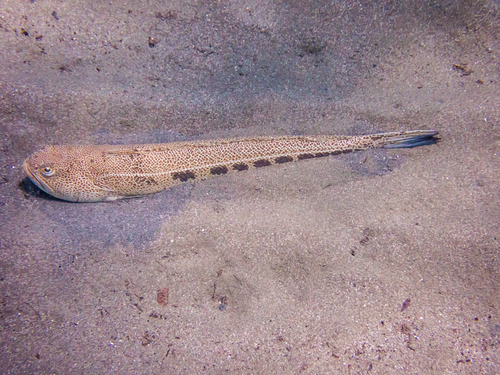
The Spotted weever has a torpedo-shaped body, is mainly brown and shows a spots pattern. Bottom fish with the eyes on top of the head and an upturned mouth; buries itself in the sand and stings with venomous spines in the first dorsal fin and on the operculum.
Where does the Spotted weever live?
The Spotted weever lives in the sea (marine waters) and is mostly found around sand or mud bottom. Mediterranean Sea and the adjacent eastern Atlantic, on sandy and silty bottoms of shallow to moderately deep coastal water.
How big does the Spotted weever get?
The Spotted weever grows to a maximum of about 45 cm. On average the species is around 30 cm.
Is the Spotted weever dangerous to humans?
The Spotted weever is venomous — handle spines with care and seek medical help after a sting if needed. A sting from the venomous spines is very painful: immerse the wound for 30-90 minutes in water as hot as can be tolerated (about 45 C), remove any spine fragments and seek medical help if the reaction is severe.
Is the Spotted weever edible?
Yes, the Spotted weever is commonly eaten.
More photos
Easily confused with
These species look like the Spotted weever and live in the same waters.


Want the complete picture on the Spotted weever?
Point your camera at the fish and Fin names the species in seconds. Free, and the Spotted weever is one of 12,519 species in the app.
All data
Identification
Appearance
Habitat & distribution
Behaviour & biology
For anglers
Safety
Status & sources
Same genus Trachinus
More from the family Trachinidae
Want the complete picture on the Spotted weever?
Point your camera at the fish and Fin names the species in seconds. Free, and the Spotted weever is one of 12,519 species in the app.