
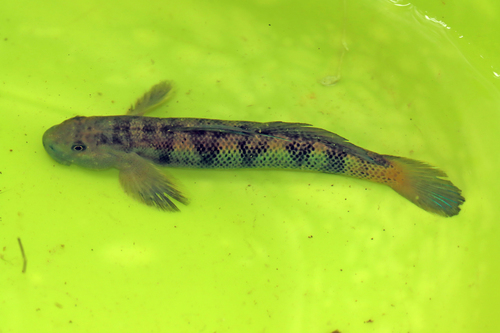
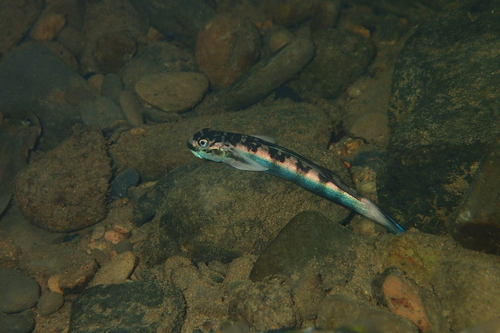
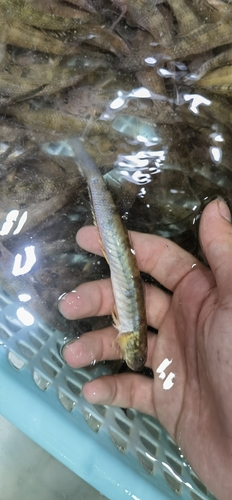
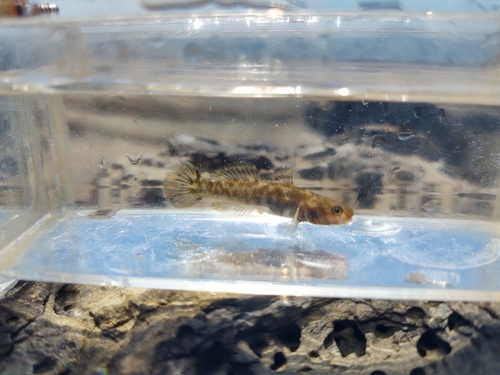
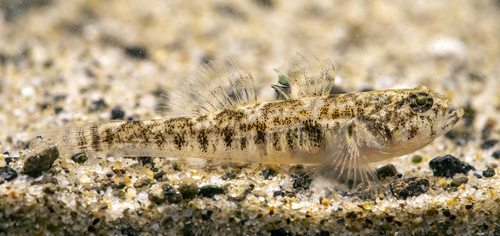
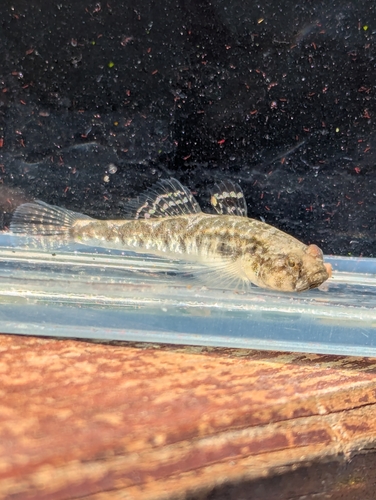
The Cleft-lip goby (Sicydium crenilabrum) is a freshwater fish of the family Gobiidae that grows up to 8 cm.
Description
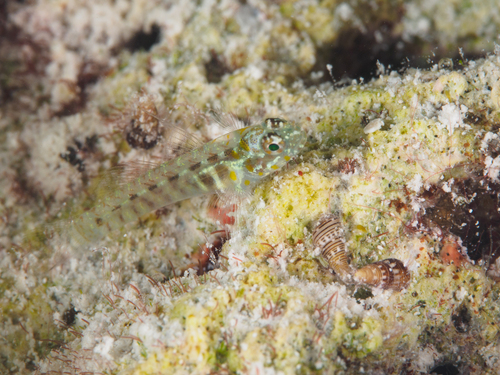
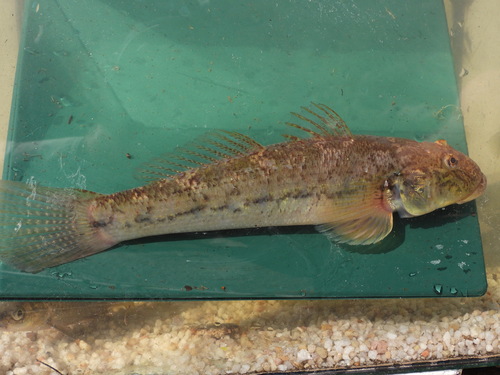
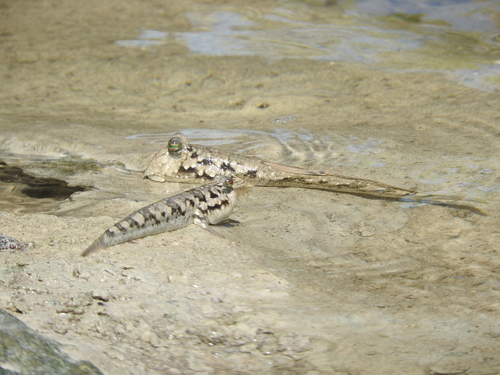
The cleft-lip goby is a goby (Gobiidae) from the fresh waters of West Africa. The species has a stocky body with an inferior, crenelated-lipped mouth and fused pelvic fins forming a sucking disc. It is amphidromous: the larvae wash out to sea and the young return to ascend the river, climbing rapids and even wet rock faces with their sucker. It inhabits fast-flowing, rocky river sections, where it scrapes algae and diatoms from stones with its lips. The species is harmless to humans.
Frequently asked questions
How do you recognise the Cleft-lip goby?
The Cleft-lip goby has an elongate, eel-like body, is mainly brown and shows a plain pattern.
Where does the Cleft-lip goby live?
The Cleft-lip goby lives in fresh water and is mostly found around sand or mud bottom.
How big does the Cleft-lip goby get?
The Cleft-lip goby grows to a maximum of about 8 cm.
Is the Cleft-lip goby dangerous to humans?
No, the Cleft-lip goby is harmless to humans.
Is the Cleft-lip goby edible?
The Cleft-lip goby is rarely eaten.
Download Fin's Fish Guide
Identify fish in seconds, log your catches and dives. Join the TestFlight beta.
All data
Identification
Appearance
Habitat & distribution
Behaviour & biology
For anglers
Safety
Status & sources
Same genus Sicydium

More from the family Gobiidae
Download Fin's Fish Guide
Identify fish in seconds, log your catches and dives. Join the TestFlight beta.