 Fin's Fish Guide
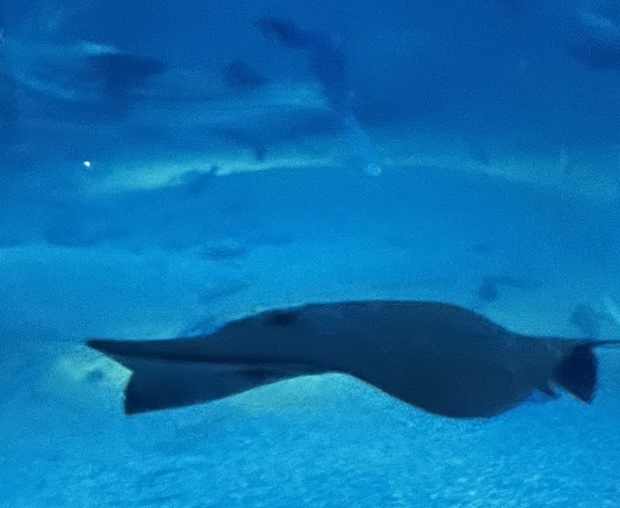
The Sharpnose stingray (Telatrygon acutirostra) is a saltwater fish of the family Dasyatidae that grows up to 11 cm.
Description
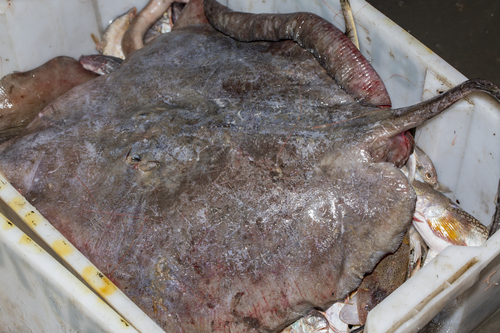
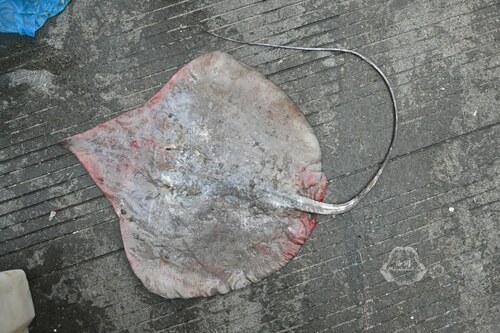
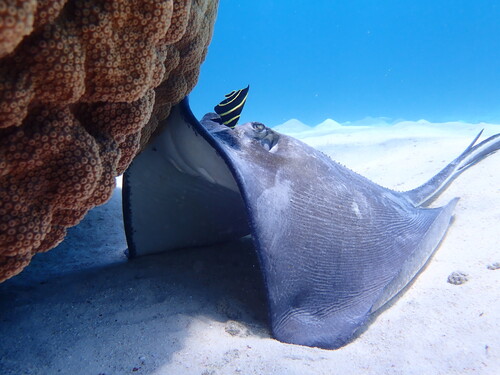
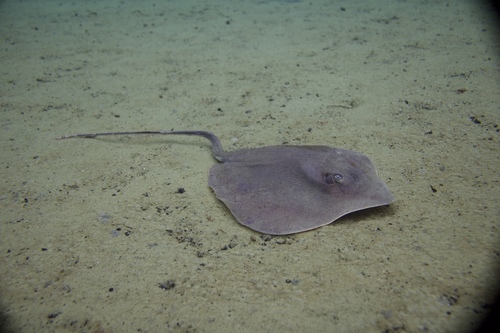
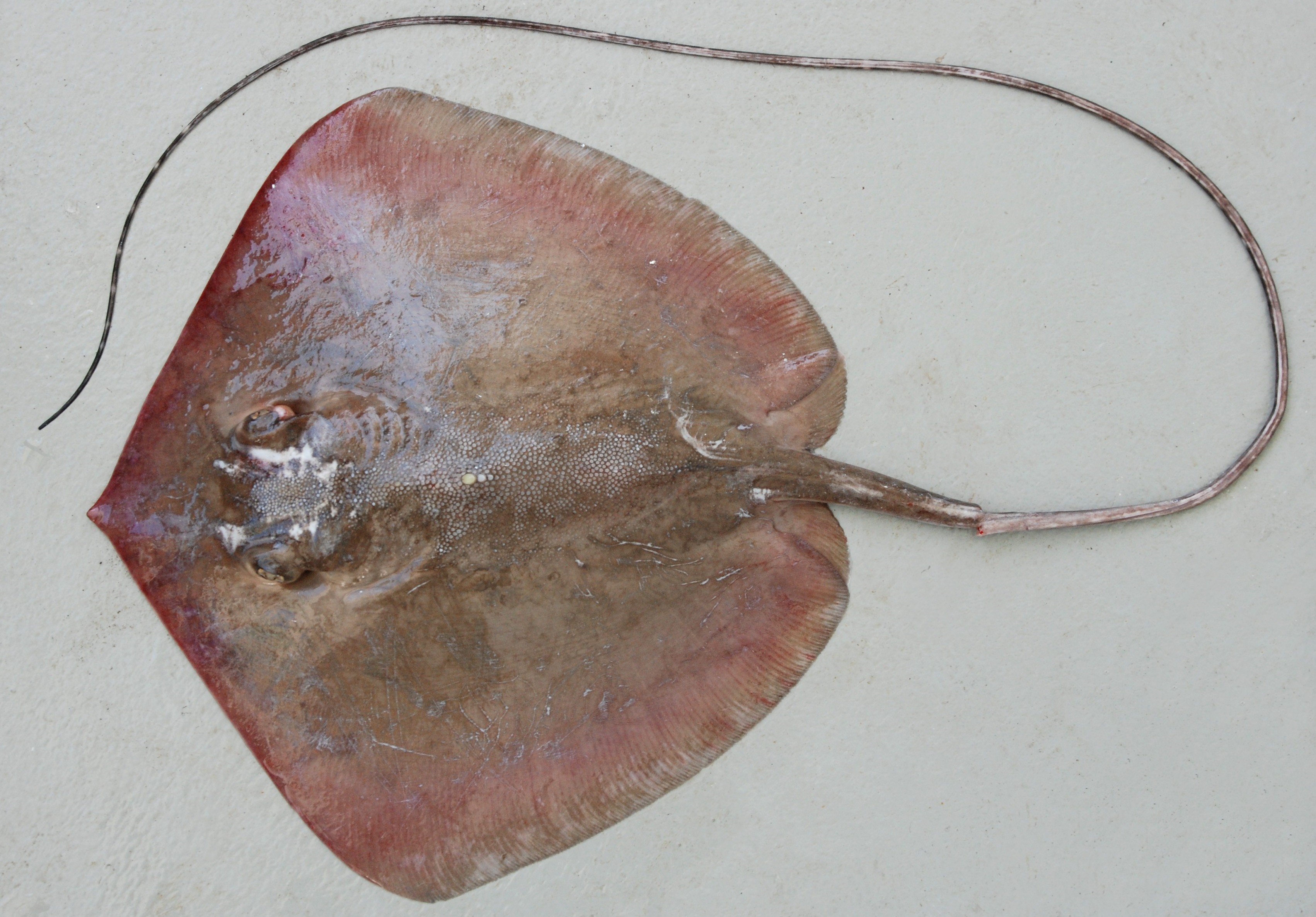
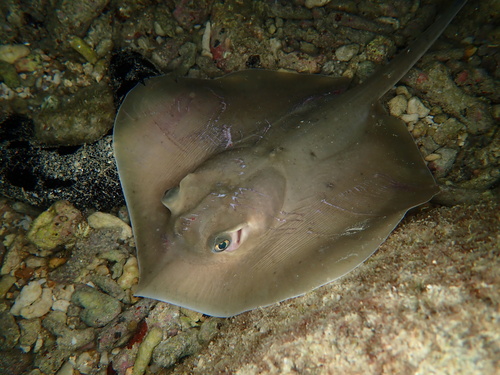
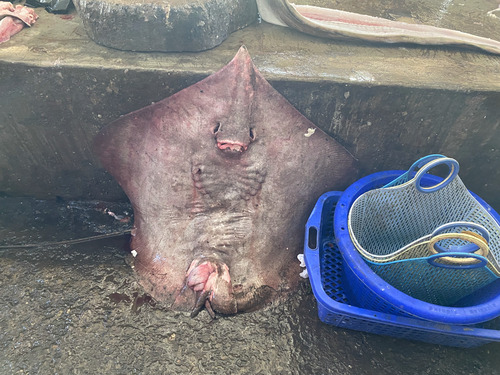
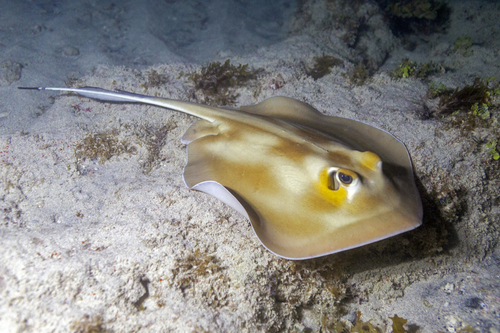
The sharpnose stingray is a stingray (Dasyatidae) from coastal waters of the Indo-West Pacific. The species grows to about 30 cm wide and has a flattened, diamond-shaped, brown-grey body with a conspicuously long, pointed snout and a thin whip tail bearing one or more venomous spines. As a bottom-dweller it searches sand and mud bottoms for crustaceans, molluscs and worms. The tail spine can give an extremely painful sting wound.
Frequently asked questions
How do you recognise the Sharpnose stingray?
The Sharpnose stingray has an irregular in shape body and is mainly brown. Bears venomous spines or tissue; handle with great care.
Where does the Sharpnose stingray live?
The Sharpnose stingray lives in the sea (marine waters) and is mostly found around sand or mud bottom. Asia: Ecuador, Japan, Korea (South)
How big does the Sharpnose stingray get?
The Sharpnose stingray grows to a maximum of about 11 cm.
Is the Sharpnose stingray dangerous to humans?
The Sharpnose stingray is venomous — handle spines with care and seek medical help after a sting if needed. For a sting from the tail spine: rinse the wound with seawater, apply pressure to limit bleeding and immerse the part for 30-90 minutes in water as hot as can be tolerated (about 45 C). The wound is often deep and may contain spine fragments; seek medical care, have the wound cleaned and check tetanus status.
More photos

Want the complete picture on the Sharpnose stingray?
Point your camera at the fish and Fin names the species in seconds. Free, and the Sharpnose stingray is one of 12,519 species in the app.
All data
Identification
Appearance
Habitat & distribution
Behaviour & biology
For anglers
Safety
Status & sources
Same genus Telatrygon
More from the family Dasyatidae


Want the complete picture on the Sharpnose stingray?
Point your camera at the fish and Fin names the species in seconds. Free, and the Sharpnose stingray is one of 12,519 species in the app.