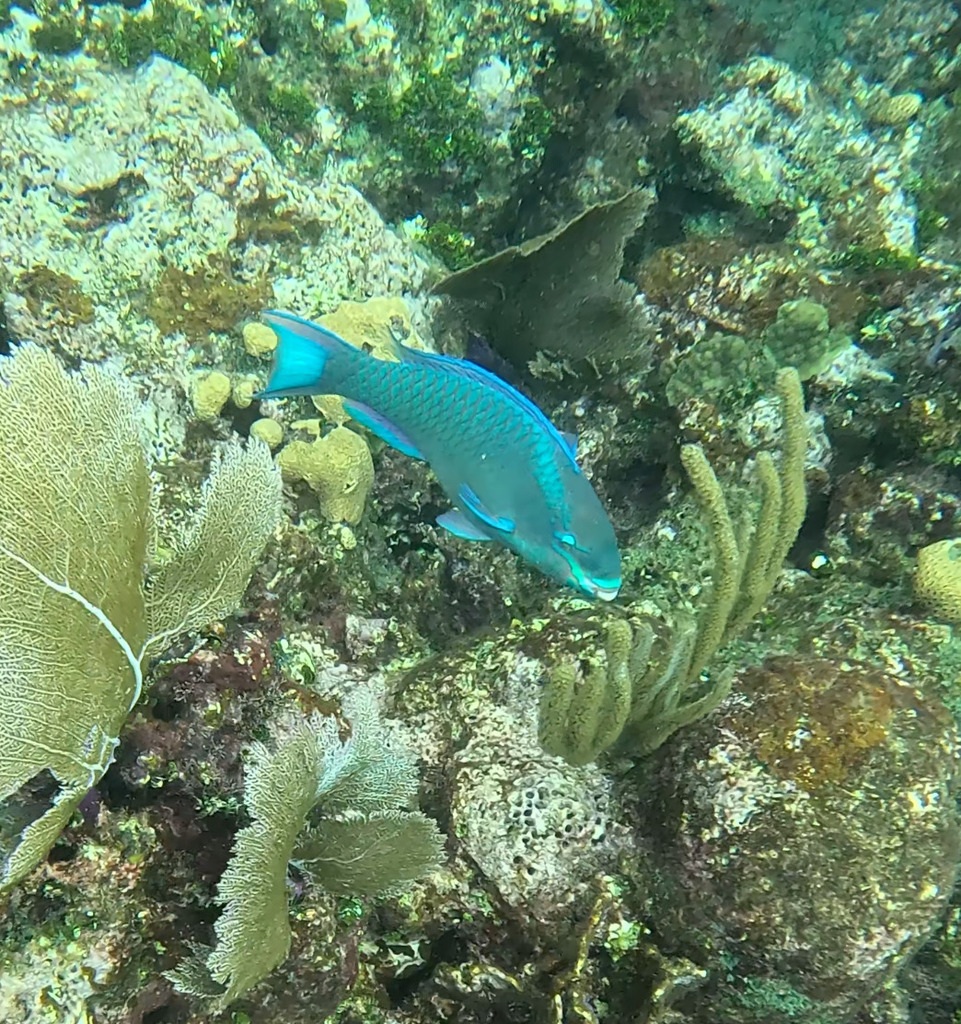
The Blownose (Scarus vetula) is a saltwater fish of the family Scaridae that grows up to 61 cm.
Description
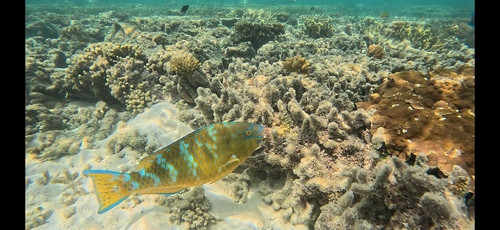
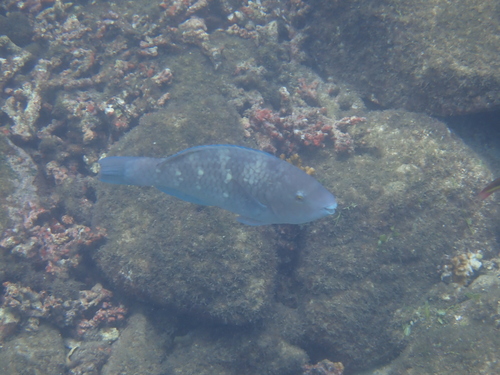
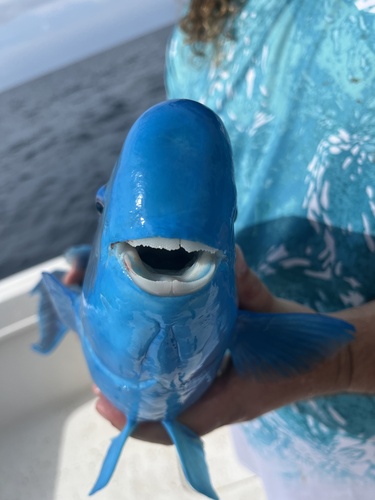
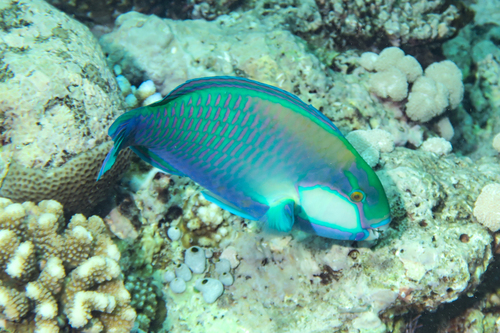
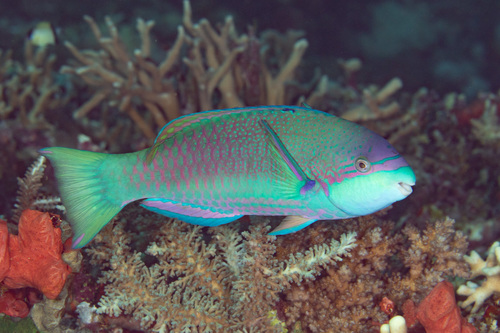
The queen parrotfish is a large parrotfish of the family Scaridae from the western Atlantic and Caribbean. The species grows to about 61 cm; terminal-phase males are handsomely blue-green with yellow and pink accents around the mouth, while initial-phase females are grey-brown with a white lateral band. With its teeth fused into a strong beak it scrapes algae from coral and rocks, biting off limestone that it excretes as sand - parrotfishes thus produce large amounts of reef sand. Like many parrotfishes it changes sex (female to male) and at night spins a mucus cocoon around itself, probably against predators and parasites. The species is harmless to humans.
Frequently asked questions
How do you recognise the Blownose?
The Blownose has a torpedo-shaped body, is mainly blue and shows a plain pattern.
Where does the Blownose live?
The Blownose lives in the sea (marine waters) and is mostly found around stony or rocky ground.
How big does the Blownose get?
The Blownose grows to a maximum of about 61 cm. On average the species is around 32 cm.
Is the Blownose dangerous to humans?
The Blownose is venomous — handle spines with care and seek medical help after a sting if needed.
Is the Blownose edible?
Yes, the Blownose is commonly eaten.
Download Fin's Fish Guide
Identify fish in seconds, log your catches and dives. Join the TestFlight beta.
All data
Identification
Appearance
Habitat & distribution
Behaviour & biology
For anglers
Safety
Status & sources
Same genus Scarus
More from the family Scaridae
Download Fin's Fish Guide
Identify fish in seconds, log your catches and dives. Join the TestFlight beta.