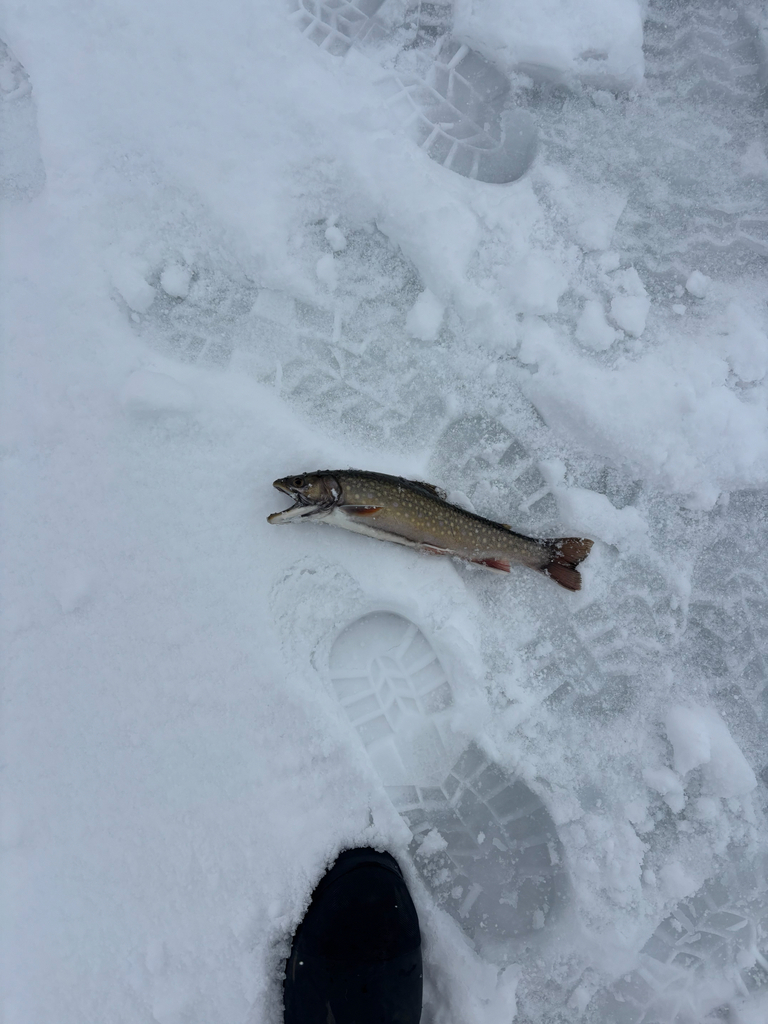
The Brook trout (Salvelinus fontinalis) is a freshwater fish of the family Salmonidae that grows up to 86 cm.
Description
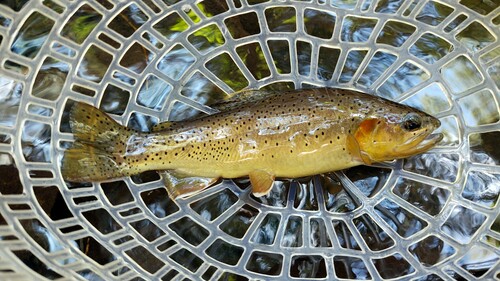
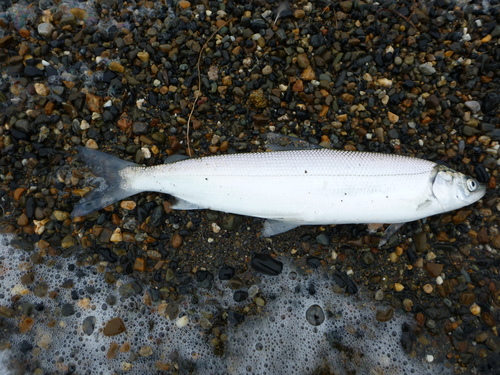
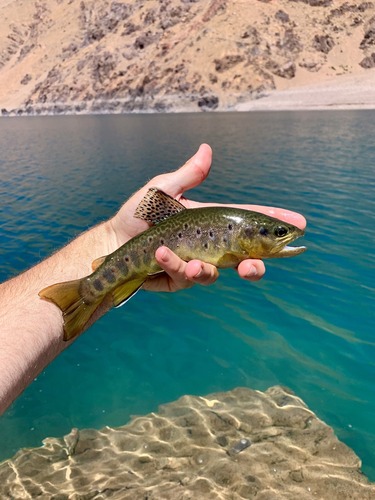
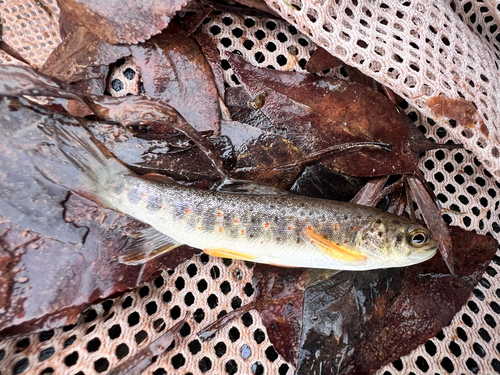
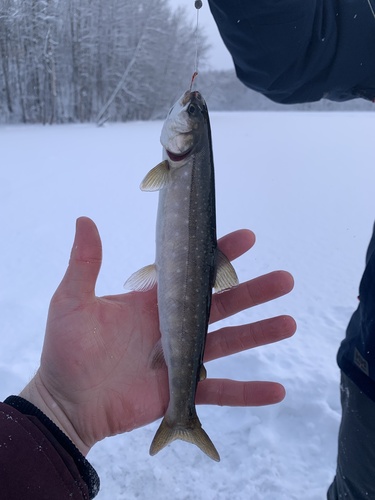
The brook trout is a char of the family Salmonidae that can reach about 86 cm but in streams usually stays much smaller. The body is beautifully marked: the brown-green back and dorsal fin carry a pale marbled pattern, the flanks are dotted with light and red spots ringed in blue, and the pelvic fins have white leading edges with a black stripe. The species is native to cold, clear streams, rivers and mountain lakes of eastern North America and needs high oxygen. As a hunter it eats insects, crustaceans, molluscs and small fish. It has been stocked worldwide for sport fishing, including in Europe, where it locally displaces native species. It is a classic, valued sport and food fish.
Frequently asked questions
How do you recognise the Brook trout?
The Brook trout has a torpedo-shaped body, is mainly brown and shows a marbled pattern.
Where does the Brook trout live?
The Brook trout lives in fresh water and is mostly found around stony or rocky ground.
How big does the Brook trout get?
The Brook trout grows to a maximum of about 86 cm. On average the species is around 26 cm.
Is the Brook trout dangerous to humans?
No, the Brook trout is harmless to humans.
Is the Brook trout edible?
Yes, the Brook trout is a highly prized food fish.
Download Fin's Fish Guide
Identify fish in seconds, log your catches and dives. Join the TestFlight beta.
All data
Identification
Appearance
Habitat & distribution
Behaviour & biology
For anglers
Safety
Status & sources
Same genus Salvelinus
More from the family Salmonidae

Download Fin's Fish Guide
Identify fish in seconds, log your catches and dives. Join the TestFlight beta.