Home · Parazenidae · Rosy dory
Rosy dory (Cyttopsis rosea) — Parazenidae

Rosy dory

Cyttopsis rosea
Family: Parazenidae
LC · Least Concern

The Rosy dory (Cyttopsis rosea) is a saltwater fish of the family Parazenidae that grows up to 31 cm.

Length
31 cm
Water
Saltwater
Depth
150.0–730.0 m
Diet
Carnivore
Behaviour
Solitary
Activity
Nocturnal
Body shape
Flat / disc-shaped
Substrate
Open water
Danger
Harmless
Range
Widespread in warm and temperate seas worldwide, above the deeper continental slope area and around seamounts.
Edibility
Not eaten

Want the complete picture on the Rosy dory?

Get the app

Description

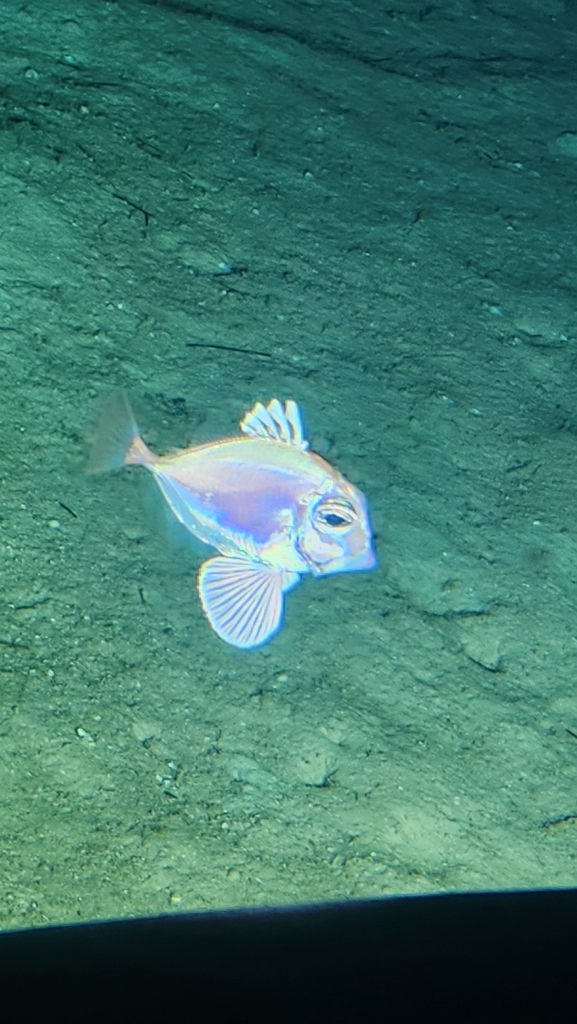
The rosy dory is a deep, strongly compressed deep-water fish of the family Parazenidae (related to the dories) reaching about 31 cm. The rosy-red, almost disc-shaped body has large eyes and a far-protrusible, tube-shaped mouth; the red colour is virtually invisible at depth. The species is widespread in warm and temperate seas worldwide and lives above the deeper continental slope and around seamounts. As a slow hunter it approaches prey slowly and sucks in small fish and crustaceans in a flash with its protrusible mouth. Because of its deep lifestyle it is only rarely seen, though it comes up as bycatch of the deep-sea fishery.

Frequently asked questions

How do you recognise the Rosy dory?

The Rosy dory has a flattened, disc-shaped body, is mainly red-orange and shows a plain pattern. Deep-bodied, red-pink deep-water dory with large eyes and a greatly protrusible mouth; almost disc-shaped in build.

Where does the Rosy dory live?

The Rosy dory lives in the sea (marine waters) and is mostly found around open water. Widespread in warm and temperate seas worldwide, above the deeper continental slope area and around seamounts.

How big does the Rosy dory get?

The Rosy dory grows to a maximum of about 31 cm. On average the species is around 25 cm.

Is the Rosy dory dangerous to humans?

No, the Rosy dory is harmless to humans. None required: this species is harmless to humans.

Is the Rosy dory edible?

The Rosy dory is not usually eaten.

More photos
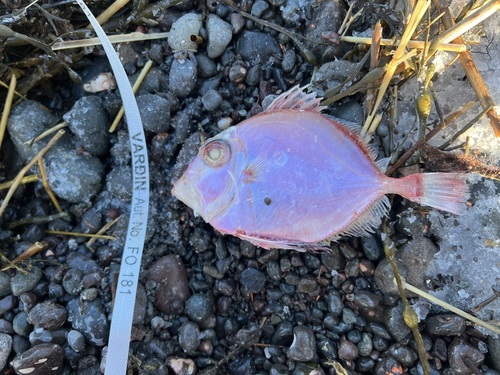
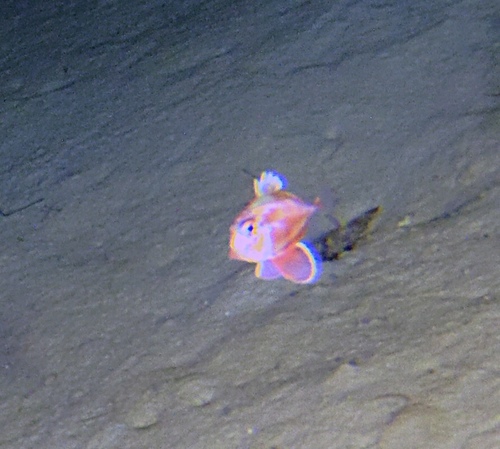
Rosy dory (Cyttopsis rosea) — Parazenidae — 2
iNaturalist ((c) Karen Jenner, some rights reserved (CC BY-NC))
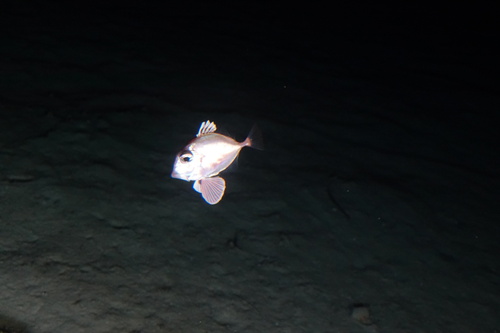
Rosy dory (Cyttopsis rosea) — Parazenidae — 3
iNaturalist ((c) ddufresne, some rights reserved (CC BY-NC))
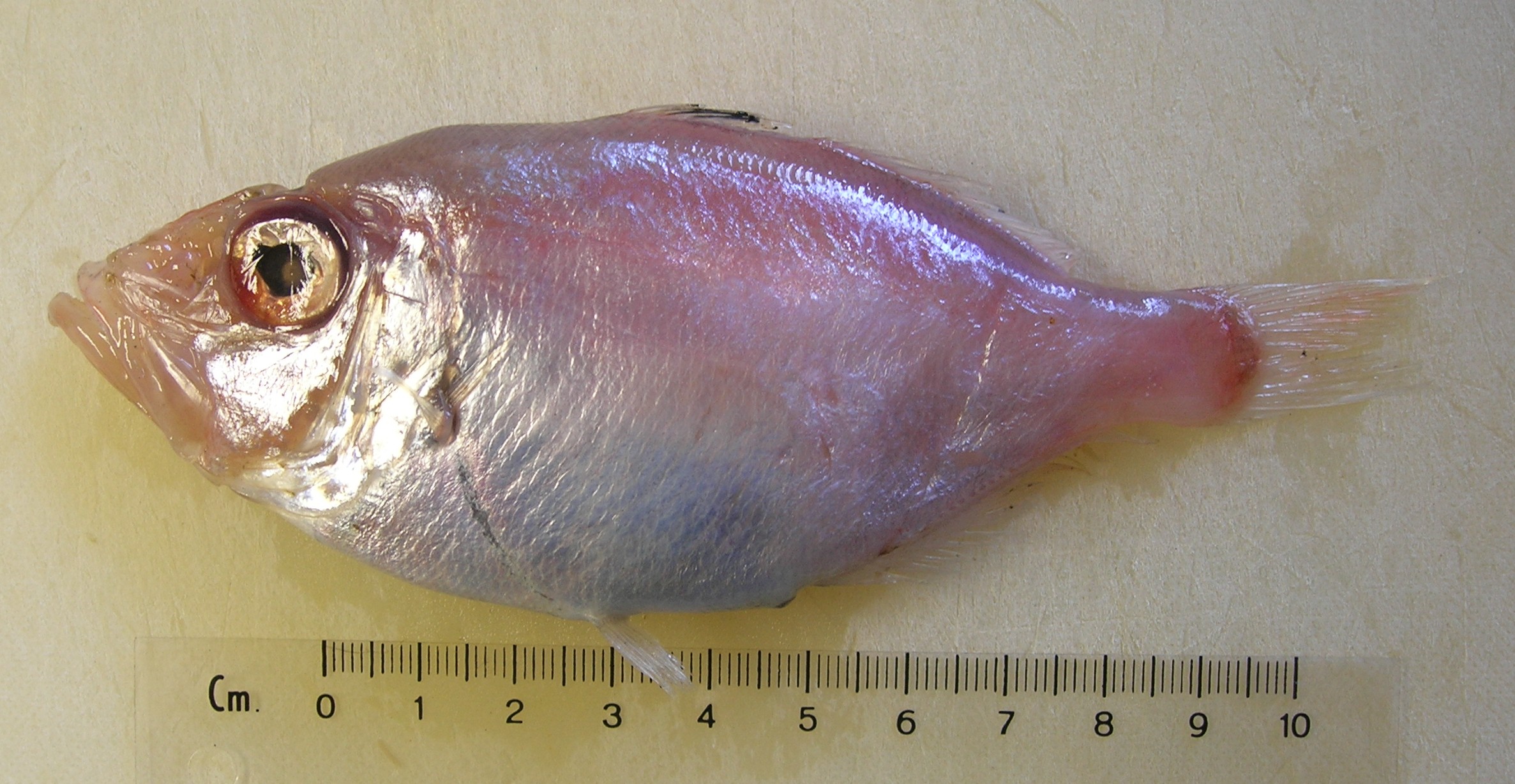
Rosy dory (Cyttopsis rosea) — Parazenidae — 4
iNaturalist ((c) Barna Takats, some rights reserved (CC BY-NC))
Fin

Want the complete picture on the Rosy dory?

Point your camera at the fish and Fin names the species in seconds. Free, and the Rosy dory is one of 12,519 species in the app.

Get the app →

All data

Identification

English name
Rosy dory verified
Scientific name
Cyttopsis rosea
Family
Parazenidae
Other names
Red Dory; Red dory; Rose dory; Dory verified

Appearance

Size class
Medium verified
Max length (cm)
31.0 verified
Average length (cm)
25.0 verified
Body shape
Flat / disc-shaped verified
Dominant colour
Red / orange sourced
Pattern
Plain sourced
Tail shape
Rounded inferred
Mouth position
Terminal inferred
Lips
Thin inferred
Barbels
No verified
Dorsal fins
Two separate sourced
Dorsal spines
Yes verified

Habitat & distribution

Water type
Saltwater verified
Substrate
Open water verified
Min depth (m)
150.0 verified
Max depth (m)
730.0 verified
Natural range
Widespread in warm and temperate seas worldwide, above the deeper continental slope area and around seamounts. verified
Origin
Native verified

Behaviour & biology

Diet
Carnivore verified
Diet (detail)
Small fishes and crustaceans, sucked in with the protrusible mouth sourced
Social behaviour
Solitary verified
Territorial
No verified
Activity
Nocturnal inferred
Reproduction
Separate sexes verified
Sexual dimorphism
No verified
Seasonality
Slow deep-water dweller of the slope area; eggs and larvae drift in open water. sourced
Special features
Deep-bodied, red-pink deep-water dory with large eyes and a greatly protrusible mouth; almost disc-shaped in build. sourced

For anglers

Edibility
Not eaten verified
Fishing method
Angling with lures or (dead/live) baitfish by trolling, casting or drift fishing in open water. inferred
Regulations source
FishBase ↗ inferred

Safety

Danger to humans
Harmless verified
First aid
None required: this species is harmless to humans. sourced

Status & sources

Sources
FishBase via GBIF (DwC-A), CC-BY-NC 4.0

More from the family Parazenidae

Fin

Want the complete picture on the Rosy dory?

Point your camera at the fish and Fin names the species in seconds. Free, and the Rosy dory is one of 12,519 species in the app.

Get the app →
Is this the Rosy dory? Get the app