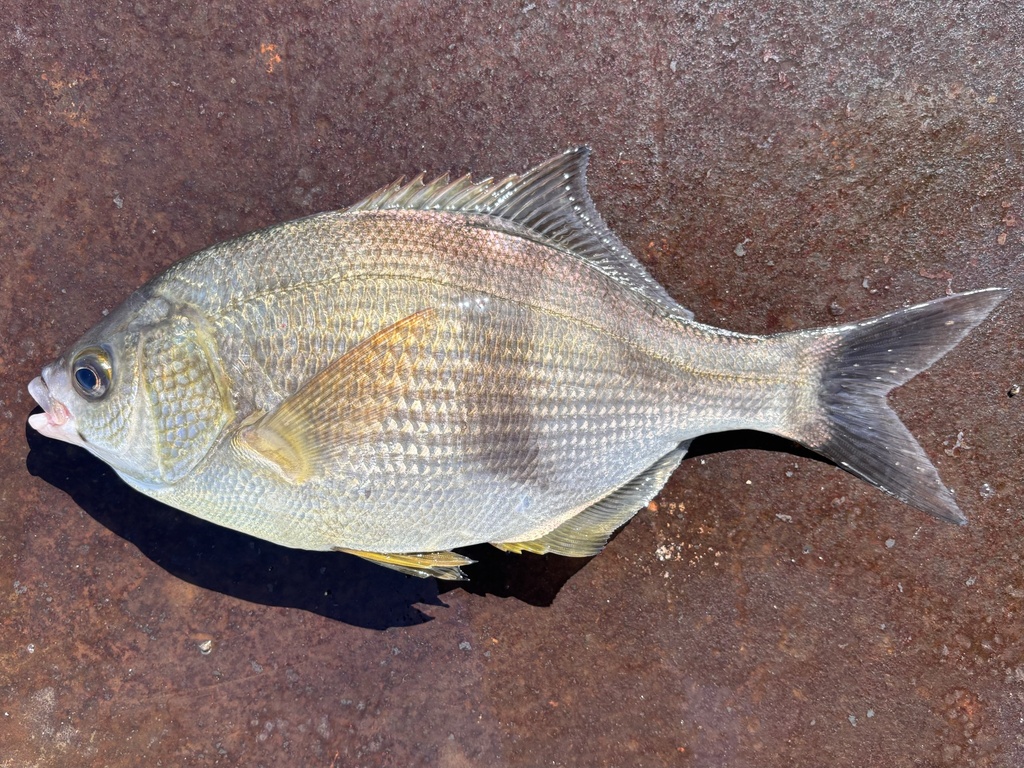
The Pile perch (Rhacochilus vacca) is a saltwater fish of the family Embiotocidae that grows up to 43 cm.
Description
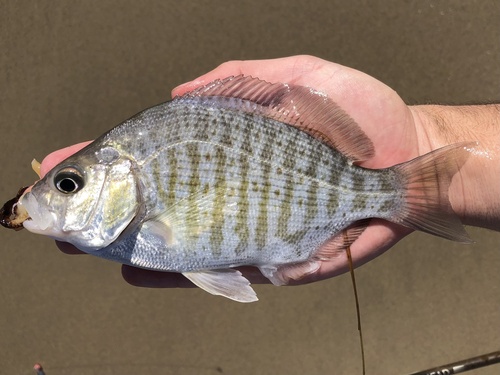
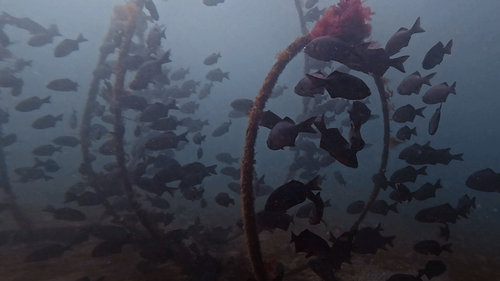
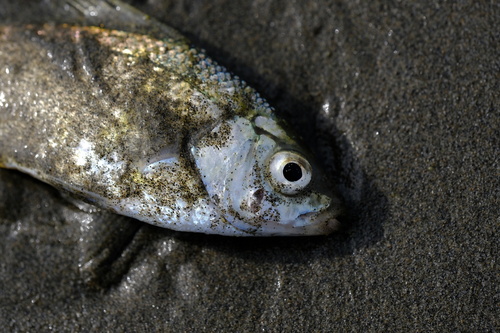
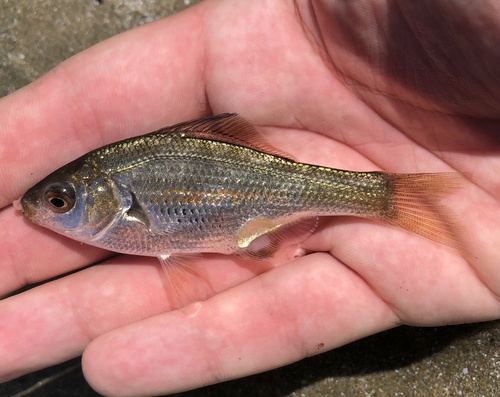
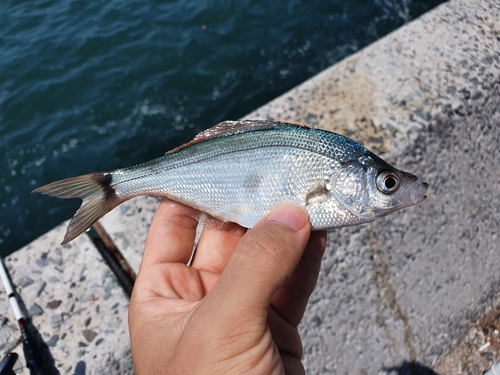
The pile perch is a surfperch of the family Embiotocidae from the north-eastern Pacific. The species grows to about 43 cm and has a deep, laterally compressed, silver-grey body with a dark band and a raised anterior anal fin. It lives around rocky reefs, kelp forests, piers and harbour pilings. With powerful pharyngeal teeth it crushes hard-shelled prey such as mussels, snails, crustaceans and sea urchins. Notably surfperches are livebearers: after internal fertilisation the female gives birth to fully developed young. The species is a popular angling fish and is harmless to humans.
Frequently asked questions
How do you recognise the Pile perch?
The Pile perch has a flattened, disc-shaped body, is mainly silver-grey and shows a plain pattern.
Where does the Pile perch live?
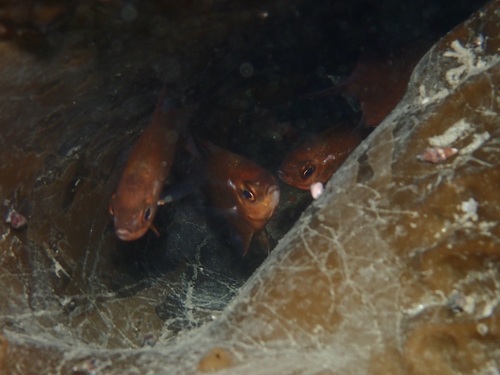
The Pile perch lives in the sea (marine waters) and is mostly found around stony or rocky ground.
How big does the Pile perch get?
The Pile perch grows to a maximum of about 43 cm.
Is the Pile perch dangerous to humans?
No, the Pile perch is harmless to humans.
Is the Pile perch edible?
Yes, the Pile perch is commonly eaten.
Download Fin's Fish Guide
Identify fish in seconds, log your catches and dives. Join the TestFlight beta.
All data
Identification
Appearance
Habitat & distribution
Behaviour & biology
Safety
Status & sources
Same genus Rhacochilus
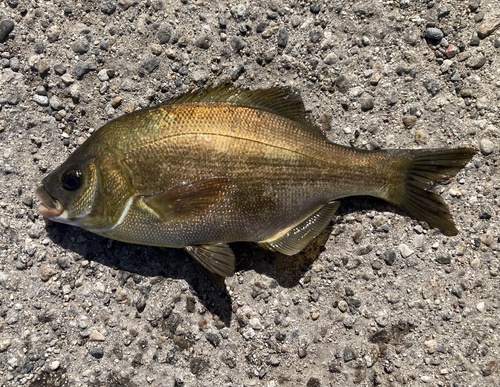
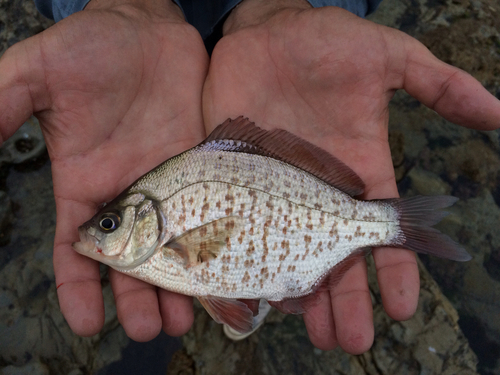
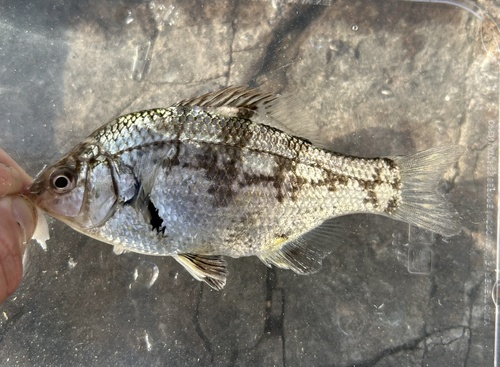
More from the family Embiotocidae
Download Fin's Fish Guide
Identify fish in seconds, log your catches and dives. Join the TestFlight beta.