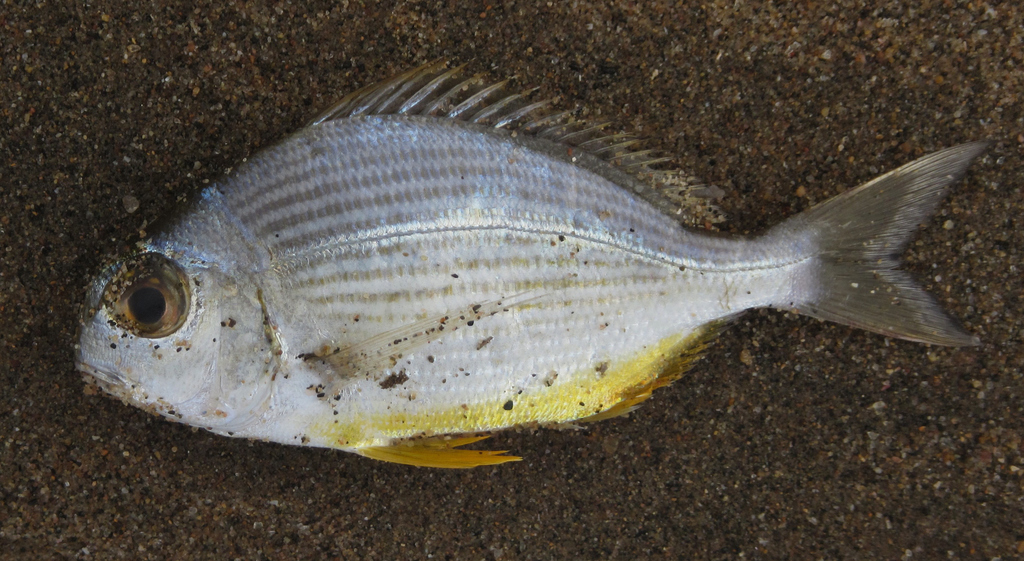
The Bigeye stumpnose (Rhabdosargus thorpei) is a brackish-water fish of the family Sparidae that grows up to 40 cm.
Description
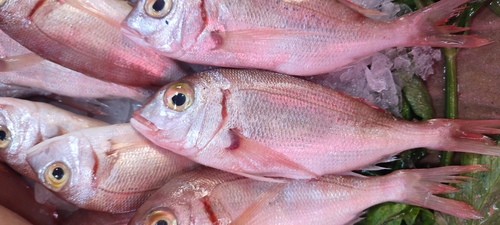
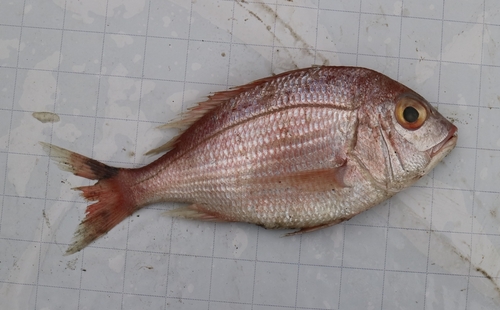
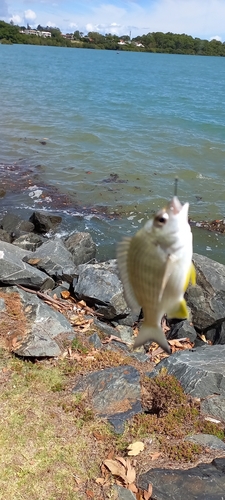
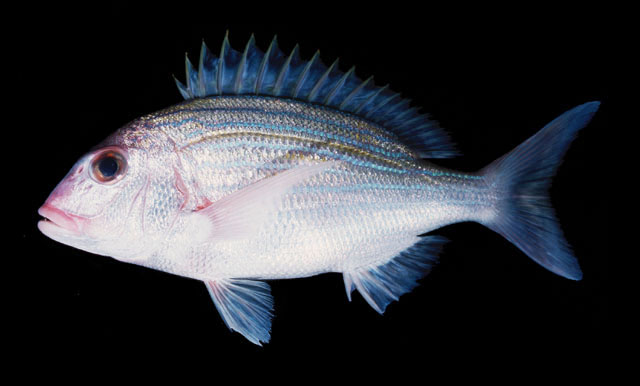
The bigeye stumpnose is a seabream (Sparidae) from coastal and estuarine water of southeastern Africa. The species grows to about 40 cm and has a deep, silvery body with large eyes, a blunt snout and strong molars with which it crushes shellfish. As a bottom-oriented predator it lives over sand and reef bottoms of shallow coastal water and eats molluscs, crustaceans and worms. It is a valued sport and food fish. The fish is harmless to humans.
Frequently asked questions
How do you recognise the Bigeye stumpnose?
The Bigeye stumpnose has a flattened, disc-shaped body and is mainly silver-grey.
Where does the Bigeye stumpnose live?
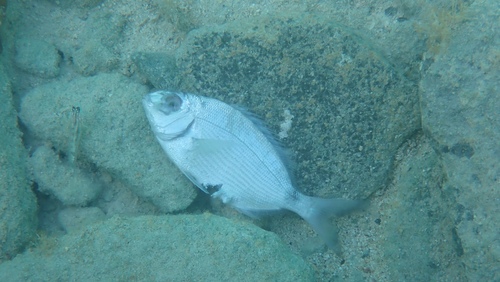
The Bigeye stumpnose lives in brackish water and is mostly found around sand or mud bottom.
How big does the Bigeye stumpnose get?
The Bigeye stumpnose grows to a maximum of about 40 cm. On average the species is around 30 cm.
Is the Bigeye stumpnose dangerous to humans?
No, the Bigeye stumpnose is harmless to humans.
Is the Bigeye stumpnose edible?
Yes, the Bigeye stumpnose is commonly eaten.
Download Fin's Fish Guide
Identify fish in seconds, log your catches and dives. Join the TestFlight beta.
All data
Identification
Appearance
Habitat & distribution
Behaviour & biology
For anglers
Safety
Status & sources
Same genus Rhabdosargus
More from the family Sparidae


Download Fin's Fish Guide
Identify fish in seconds, log your catches and dives. Join the TestFlight beta.