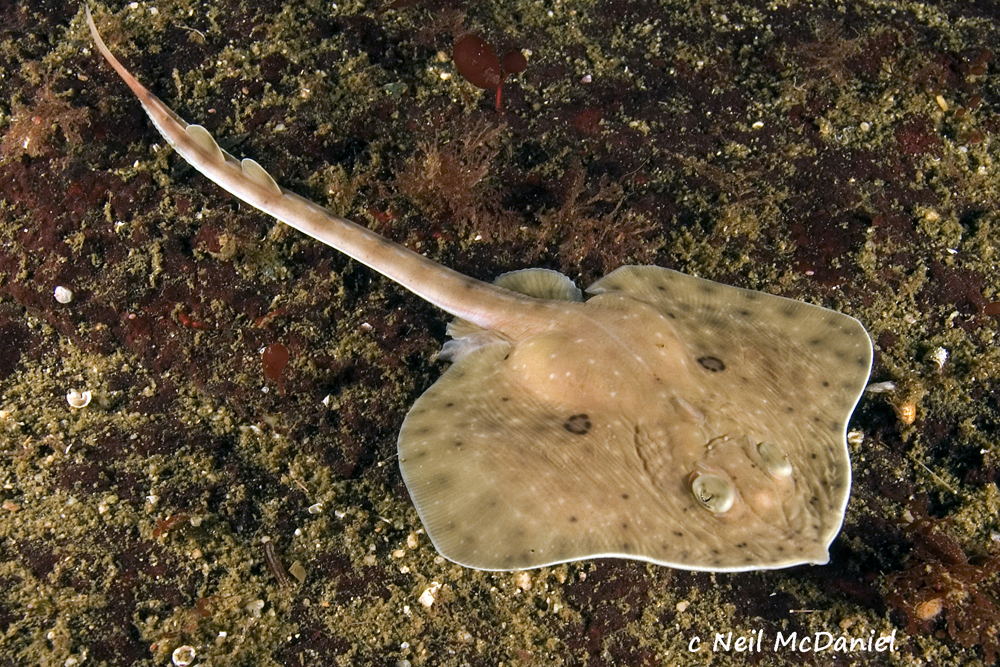
The Longnose skate (Raja rhina) is a fish of the family Rajidae that grows up to 145 cm.
Description
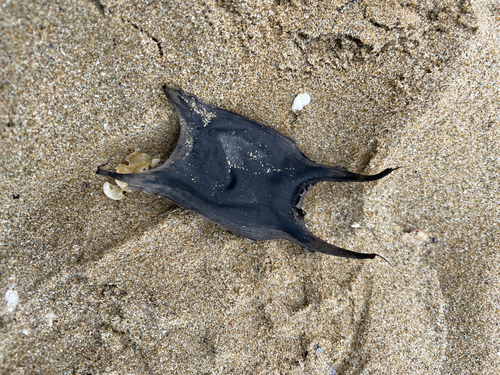
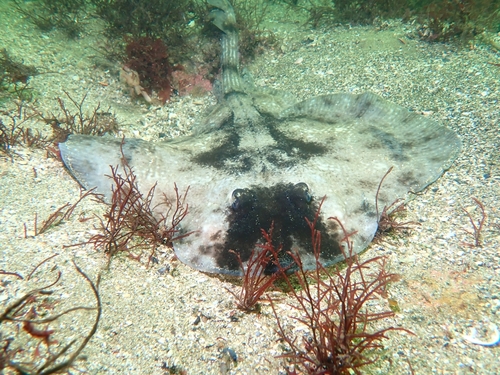
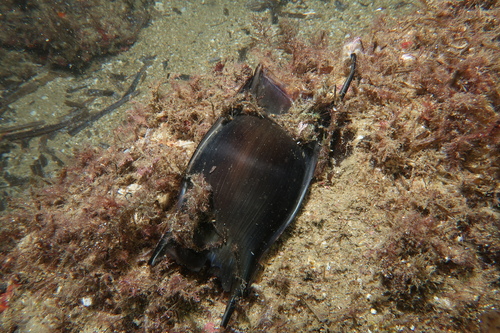
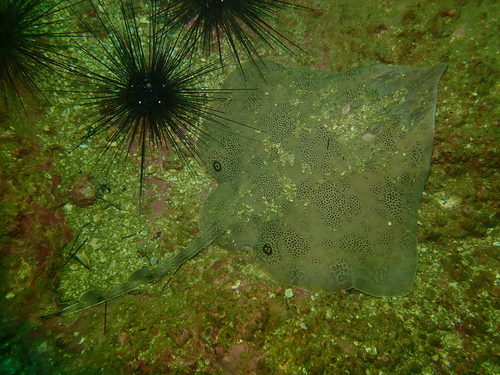
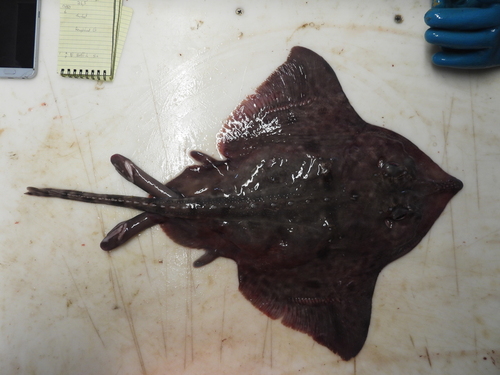
The longnose skate is a true skate (Rajidae) from the northeastern Pacific off the west coast of North America. The species has a flattened, diamond-shaped body with broad pectoral fins and a conspicuously long, pointed snout, to which the name refers; rows of small thorns run along the back and tail. Unlike stingrays it has no venomous tail spine. It lives on soft and rocky bottoms, from shallow to deep water. As a bottom predator it feeds on crustaceans, molluscs and fishes. It reproduces with egg capsules. The species is harmless to humans.
Frequently asked questions
How do you recognise the Longnose skate?
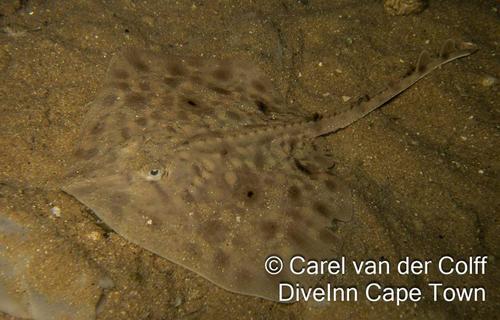
The Longnose skate is mainly brown and shows a spots pattern.
Where does the Longnose skate live?
The Longnose skate is mostly found around sand or mud bottom.
How big does the Longnose skate get?
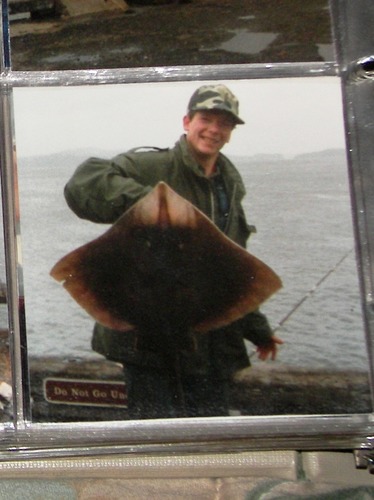
The Longnose skate grows to a maximum of about 145 cm.
Is the Longnose skate dangerous to humans?
No, the Longnose skate is harmless to humans.
Is the Longnose skate edible?
Yes, the Longnose skate is commonly eaten.
Download Fin's Fish Guide
Identify fish in seconds, log your catches and dives. Join the TestFlight beta.
All data
Identification
Appearance
Habitat & distribution
Behaviour & biology
For anglers
Safety
Status & sources
Same genus Raja
More from the family Rajidae
Download Fin's Fish Guide
Identify fish in seconds, log your catches and dives. Join the TestFlight beta.